
Blue brings a quieter register to Piaget’s Sixtie. Introduced in 2025, the jewellery-watch collection takes its softly angled silhouette from the house’s late-1960s vocabulary. For 2026, two interpretations exchange the original metal bracelet for a deep-blue alligator strap, allowing the pink-gold case and its concentric ridges to become the focus.
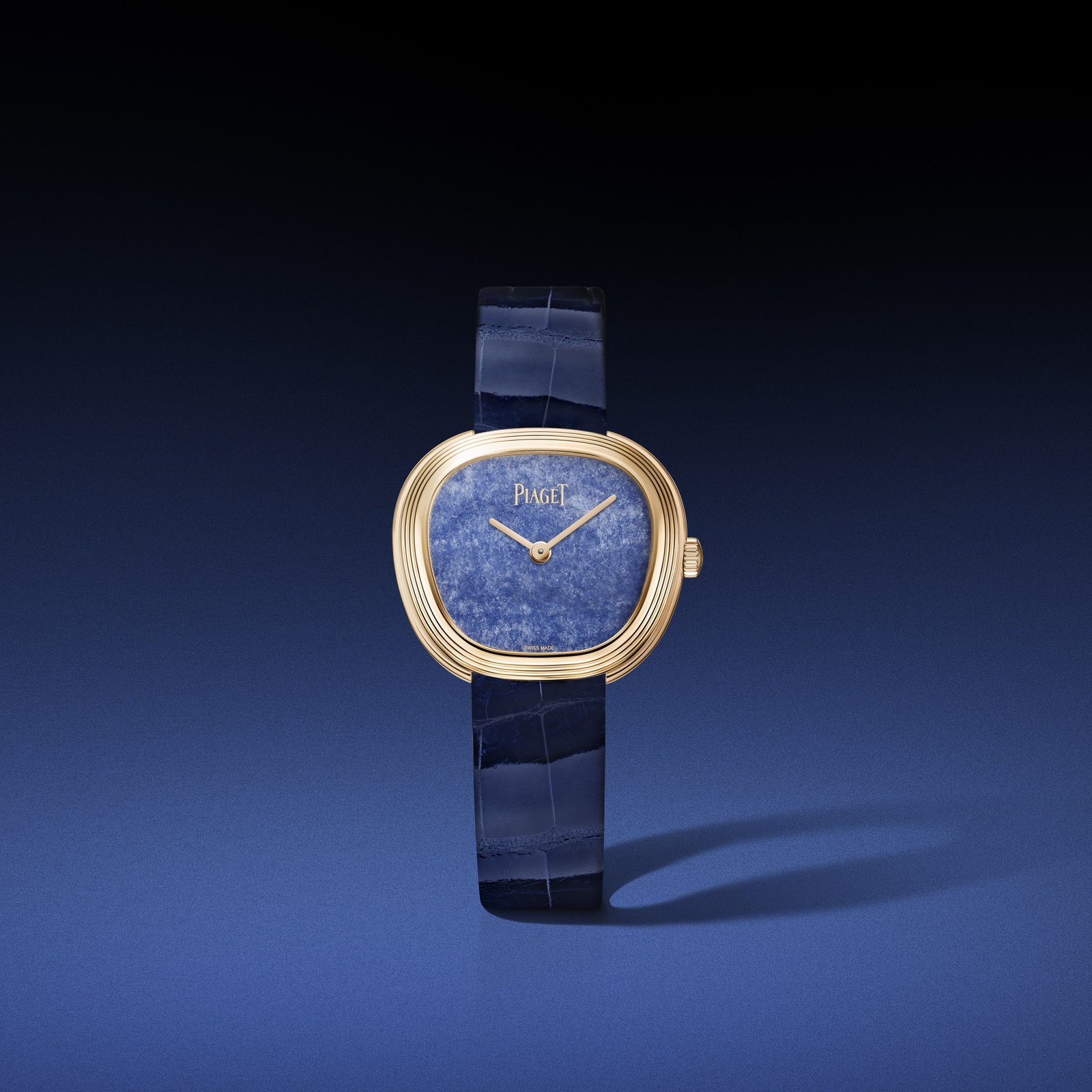
The shape rewards a closer look. Its trapezoid outline has rounded corners and a broad, curved bezel, giving the dial an almost framed quality. The gadroons travel around that outline in fine, repeating contours. Even the pin buckle repeats the trapezoid and its ridged decoration, carrying the design through to a detail that is usually left out of view.
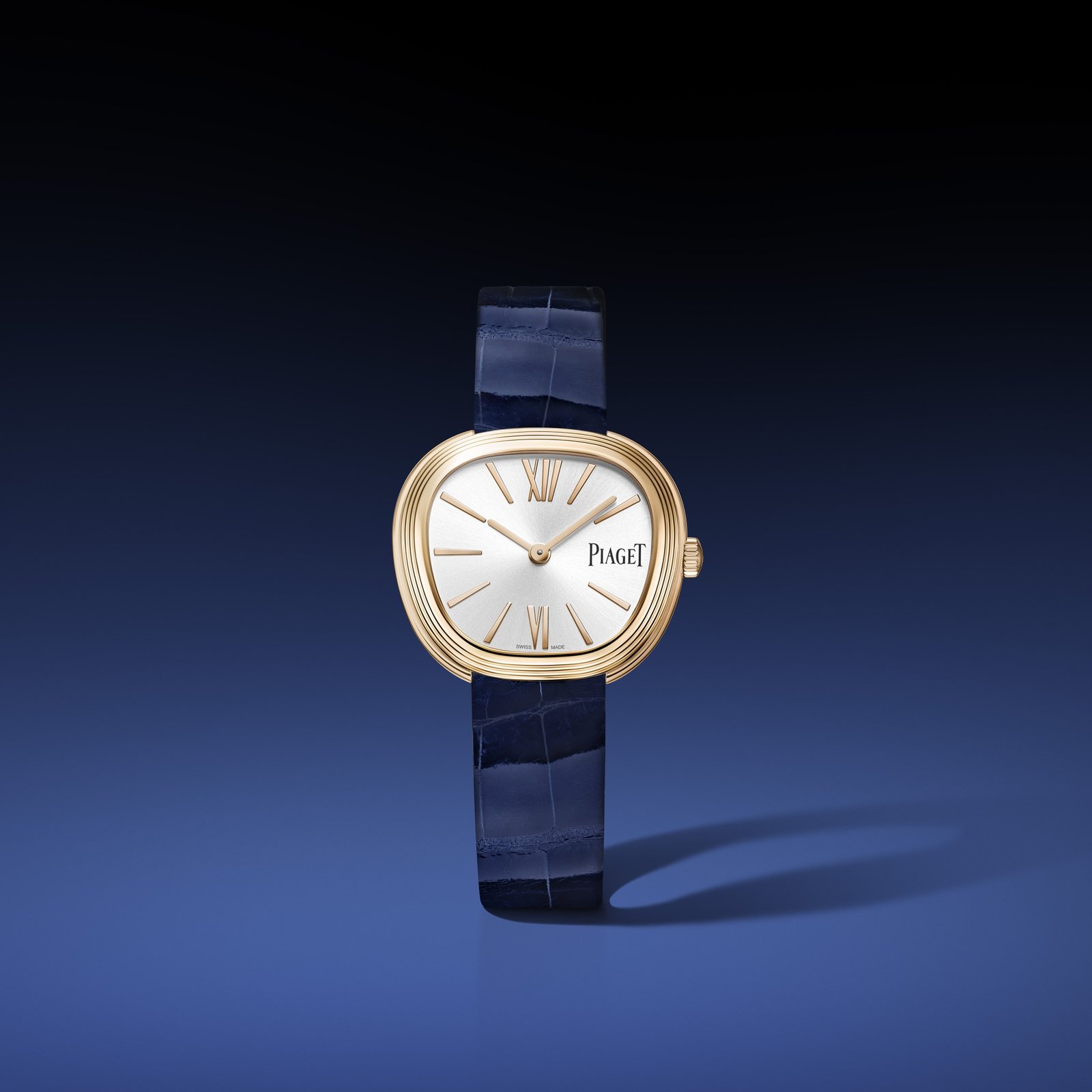
Both watches use an 18-carat pink-gold case measuring 29mm across and 6.5mm thick. One presents a silvered, sunray satin-brushed dial with gold-toned Roman numerals and markers. Against the dark strap, its pale surface gives the watch a crisp, luminous centre. The other replaces that familiar watchmaking finish with blue quartz, an ornamental stone marked by shifting bands and darker veins. The individual pattern of the material lends each dial its own character.
Inside both versions is Piaget’s Manufacture quartz calibre 57P, displaying hours and minutes. The pared-back indication leaves the shape, stone and gold to carry the visual interest. On the blue-quartz model especially, the close relationship between strap and dial creates a continuous field of colour, interrupted by the warmth of the case.
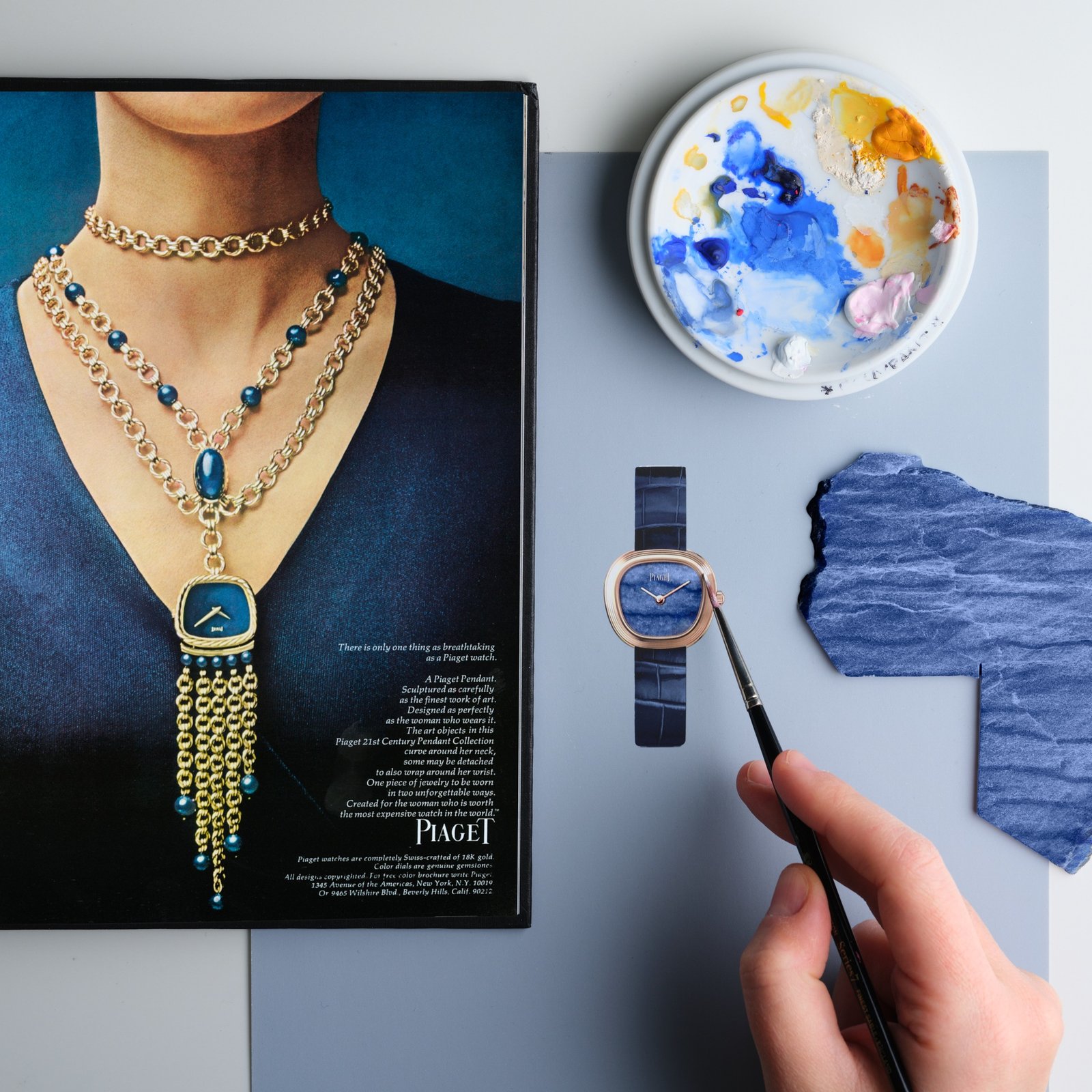
That balance belongs to a long-running Piaget idea. The 21st Century Collection of 1969 explored watches as cuffs and sautoirs, using unconventional outlines, engraved gold and ornamental stones to move timekeeping into jewellery. Sixtie draws on that freedom at an intimate scale. Its appeal lies in the precision of a few decisions: the softened geometry, the depth of the blue and the way the gold catches light along the bezel.