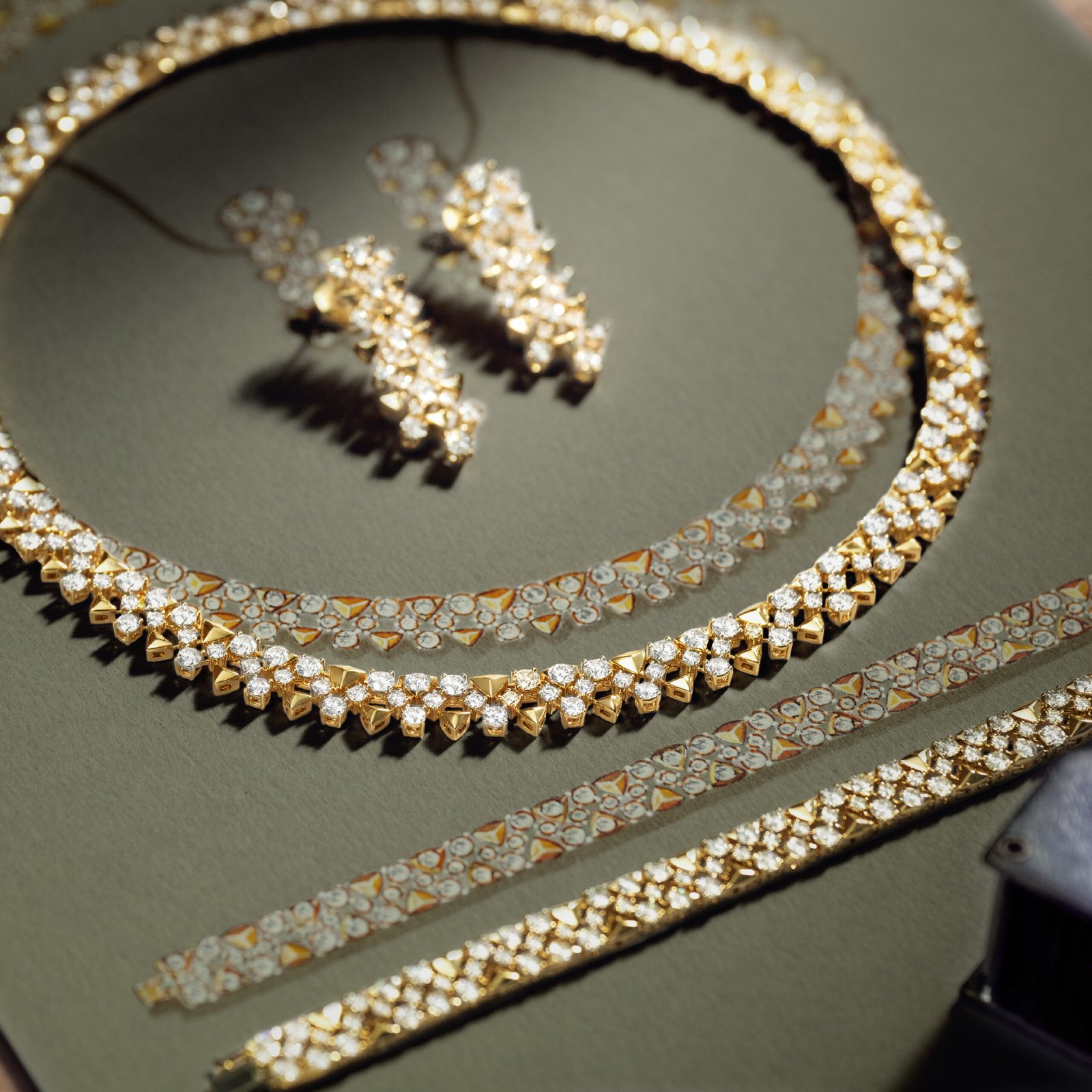
A triangle is usually the beginning of a sharp-edged design. In Mouawad’s Trigonia Signature collection, it becomes something more fluid: a repeated unit that follows the curve of a necklace, travels around a bracelet and gathers into earrings. The interest lies in that change of scale, from a minute feature of a diamond to the outline of a jewel.
The house takes its starting point from trigons, the triangular markings found on diamonds. The geological distinction matters: GIA describes trigons as triangular etch pits. They are not a particular diamond cut, nor does the collection reproduce an unpolished crystal. Mouawad translates their geometry into a pattern of gold elements and brilliant diamonds.
Geometry that follows the body
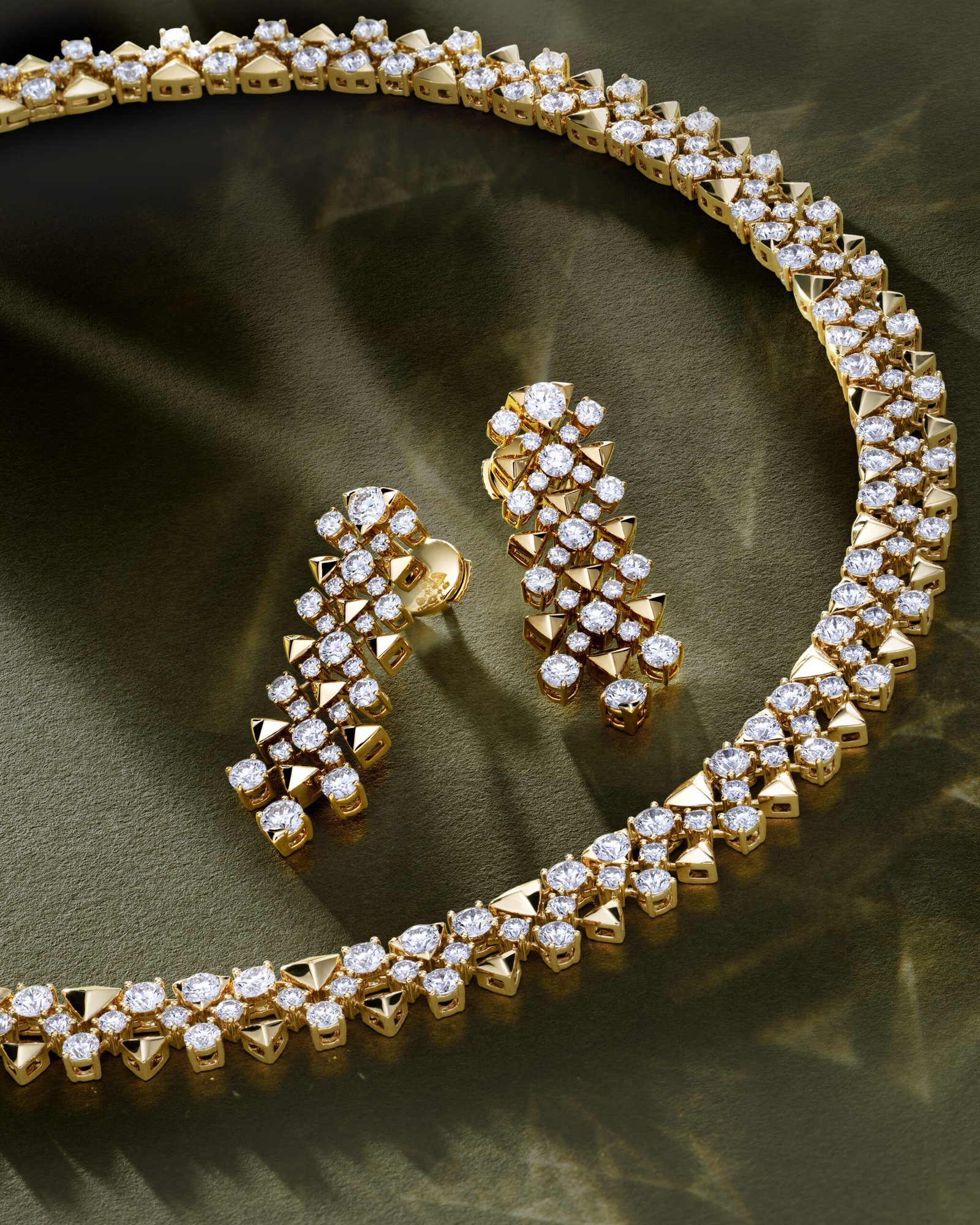
Rather than allowing one large motif to dominate, Trigonia builds its identity through repetition. In the necklace, the triangular rhythm resolves into a continuous curve. The matching bracelet extends the same vocabulary along the wrist, while the earrings compress it into a smaller arrangement. The result is a coordinated collection whose character comes from the relationship between its parts.
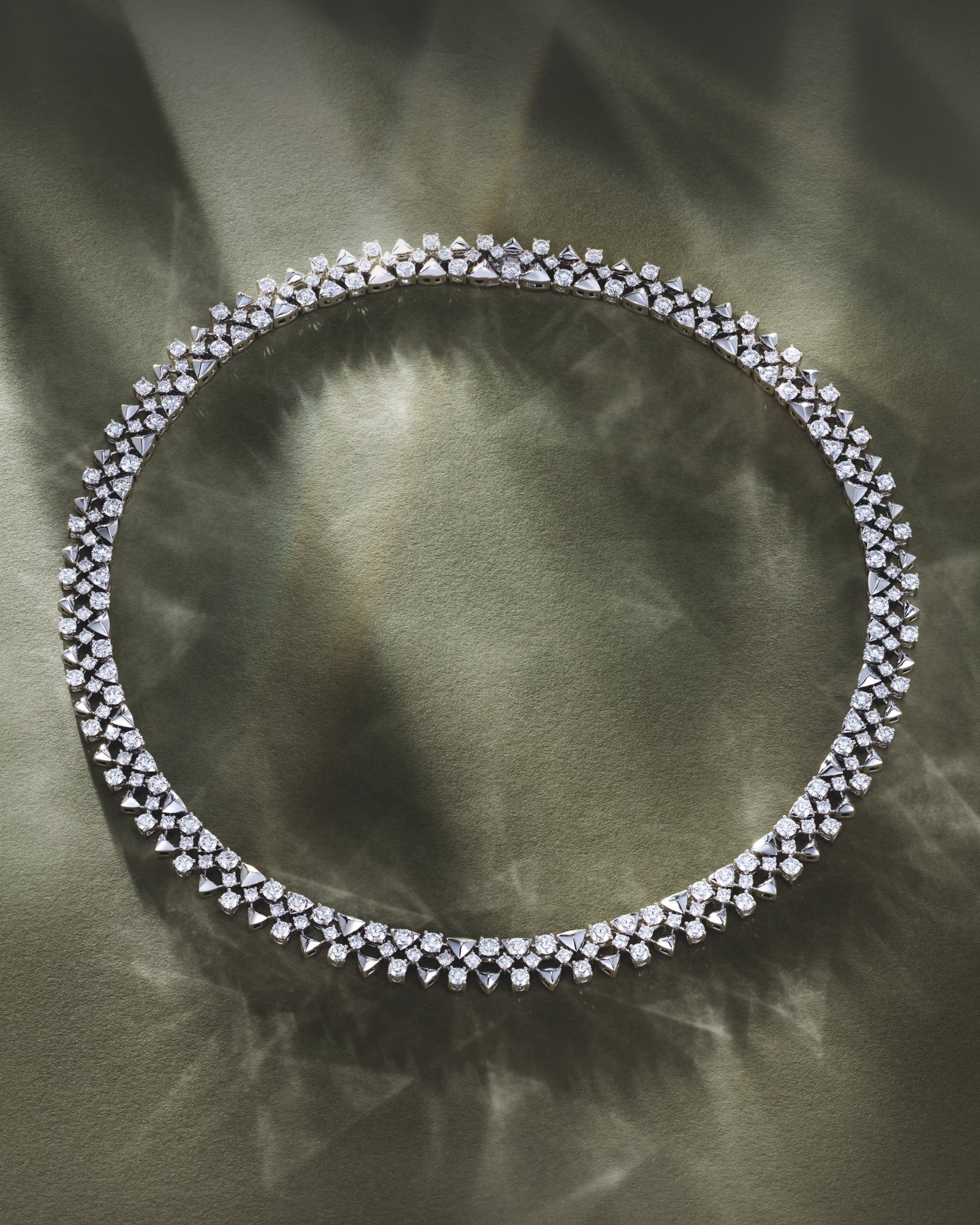
Yellow and white gold offer two readings of that structure. Yellow gold makes the metal’s outline more apparent beside the diamonds; white gold creates a cooler, closer-toned composition. The supplied photographs show how the same repeated forms can change character without changing their underlying design.
The work behind the pattern
Mouawad gives the total diamond weight as 26.60 carats for the yellow-gold set and 26.58 carats for the white-gold set. Those figures refer to each complete set, not to an individual necklace. The house also says that each set requires more than 350 hours of craftsmanship, encompassing the setting and finishing work that turns the repeated elements into finished jewellery.
Trigonia’s strongest idea is not simply that nature provides inspiration. It is the decision to take a small, easily overlooked surface feature and make it legible through proportion and repetition. Diamond jewellery often directs attention towards the finished stone alone. Here, the design also points back to the material before cutting and polishing—a quieter reference, expressed through the gold around it.