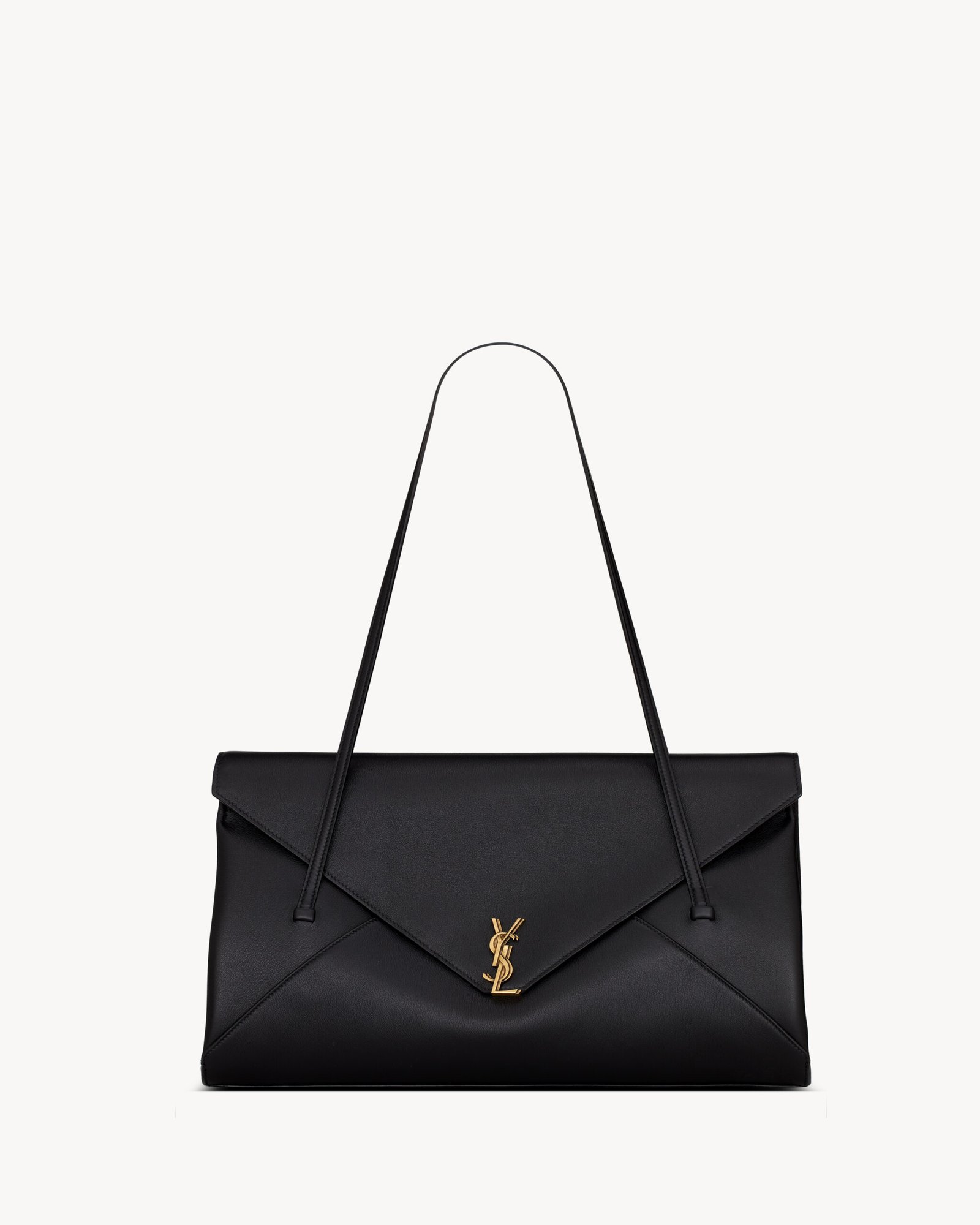
An envelope is a deceptively simple object: its identity comes from a few folds and a pointed flap. Saint Laurent’s Simone bag takes that familiar construction as its starting point, then changes its scale and function. For Women’s Winter 2026, the result is a shoulder bag whose long handles and broad, horizontal body give a personal reference an everyday application.
The house connects the design to Monsieur Saint Laurent’s letters and to envelope pouches of the 1970s and 1980s. That history is visible in the intersecting lines across the front, rather than expressed through elaborate decoration. A new Double Cassandre signature sits at their meeting point, concentrating the metallic detail where the flap closes.
From flat pouch to day bag
The Simone is offered in medium and large versions. Inside, two compartments and a zipped pocket introduce organisation without changing the clean exterior; a magnetic closure keeps the envelope gesture intact. These are practical specifications rather than a promise about what every wearer can fit inside. The collection’s defining feature remains the relationship between the wide body and the narrow, elongated handles.
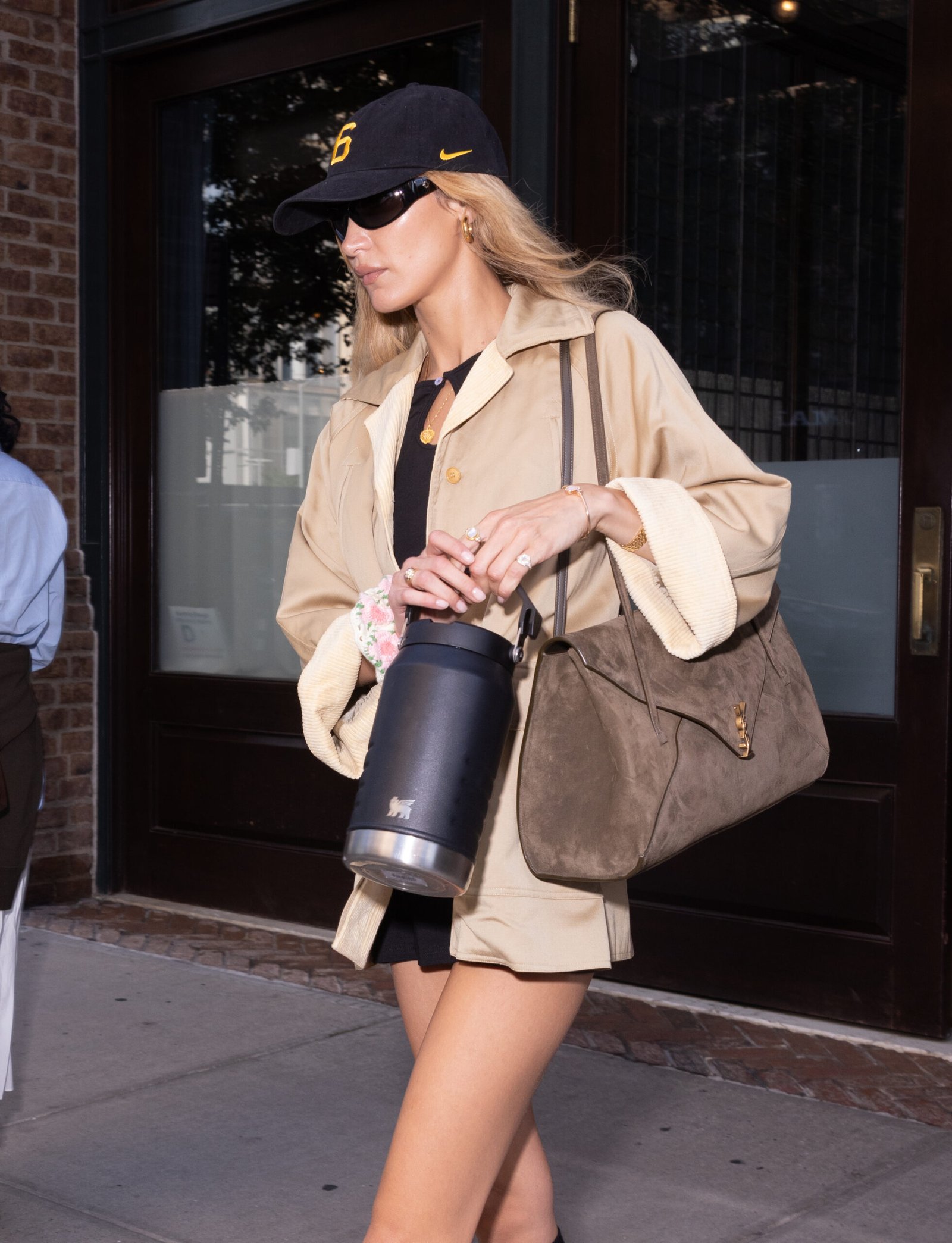
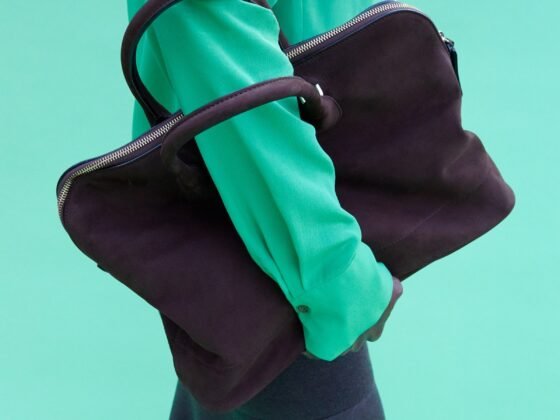
The contrast is particularly clear in the supplied image of Bella Hadid carrying the suede version. The bag retains its recognisable flap, but the softer surface moves it away from the formality of a rigid document case. It is a useful demonstration of proportion, not evidence of a wear test or a claim about comfort.
One silhouette, different surfaces
Smooth leather and suede give the same construction different characters. Black leather emphasises the outline and the contrast with the light-bronze hardware. Suede softens the geometry visually, allowing the intersecting seams and the Double Cassandre to do more of the work. The press collection also includes python and a palette extending beyond black to sour raspberry, dark mandarin and ombré olive.
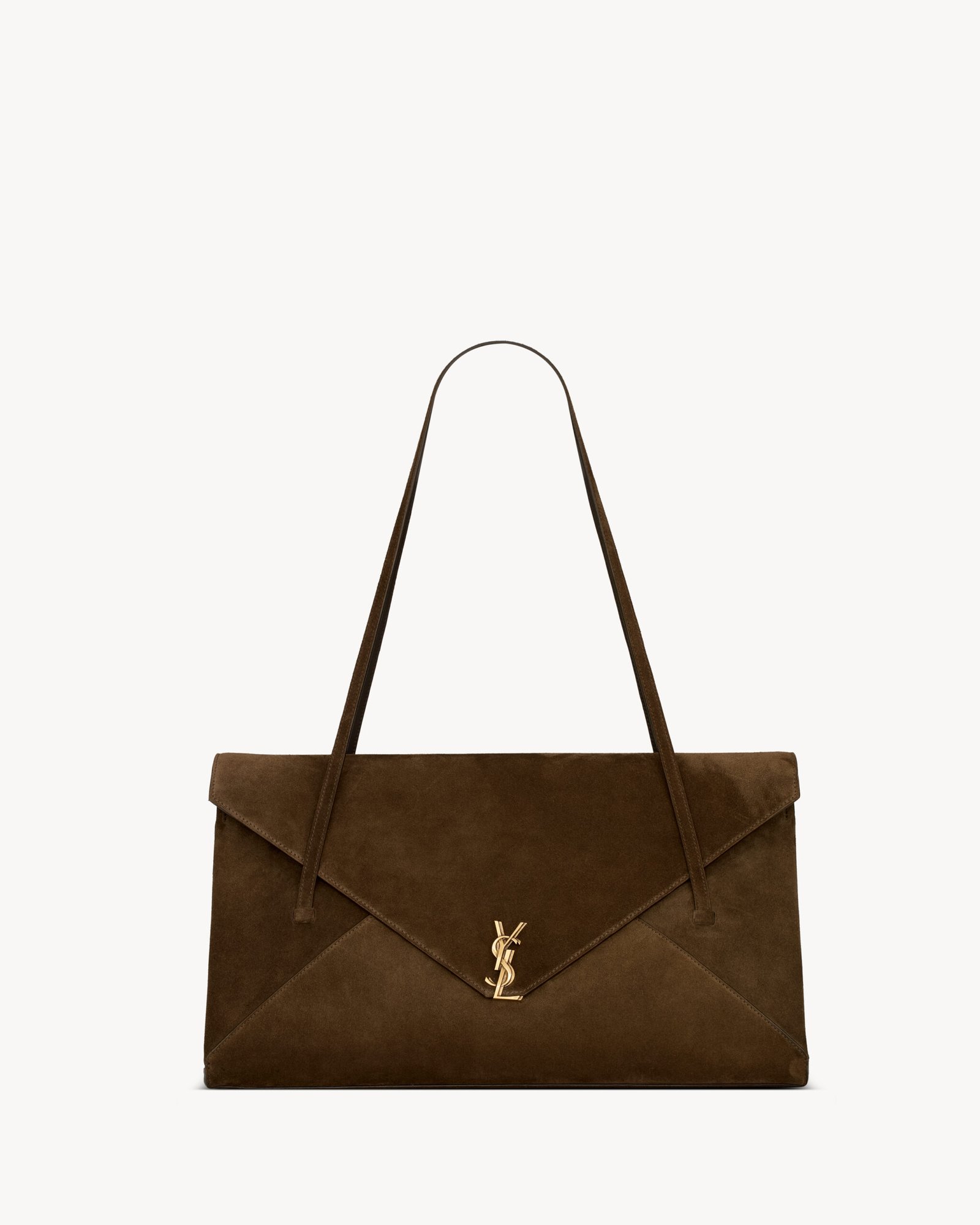
Simone’s interest lies in that restraint. The reference to correspondence gives it a story, but the design does not depend on knowing it. The flap, the handles and the clasp provide a readable structure of their own—an example of a familiar house vocabulary being adjusted through proportion rather than replaced.