A pendant first created in 1997 provides the starting point for Pomellato’s latest exploration of colour. Moneta Orientale returns this October as part of Memorie d’Archivio, the Milanese house’s series of reinterpretations drawn from its own history. The original was a pierced disc in matte yellow gold. Its new expression places the mineral world at the centre of the design.
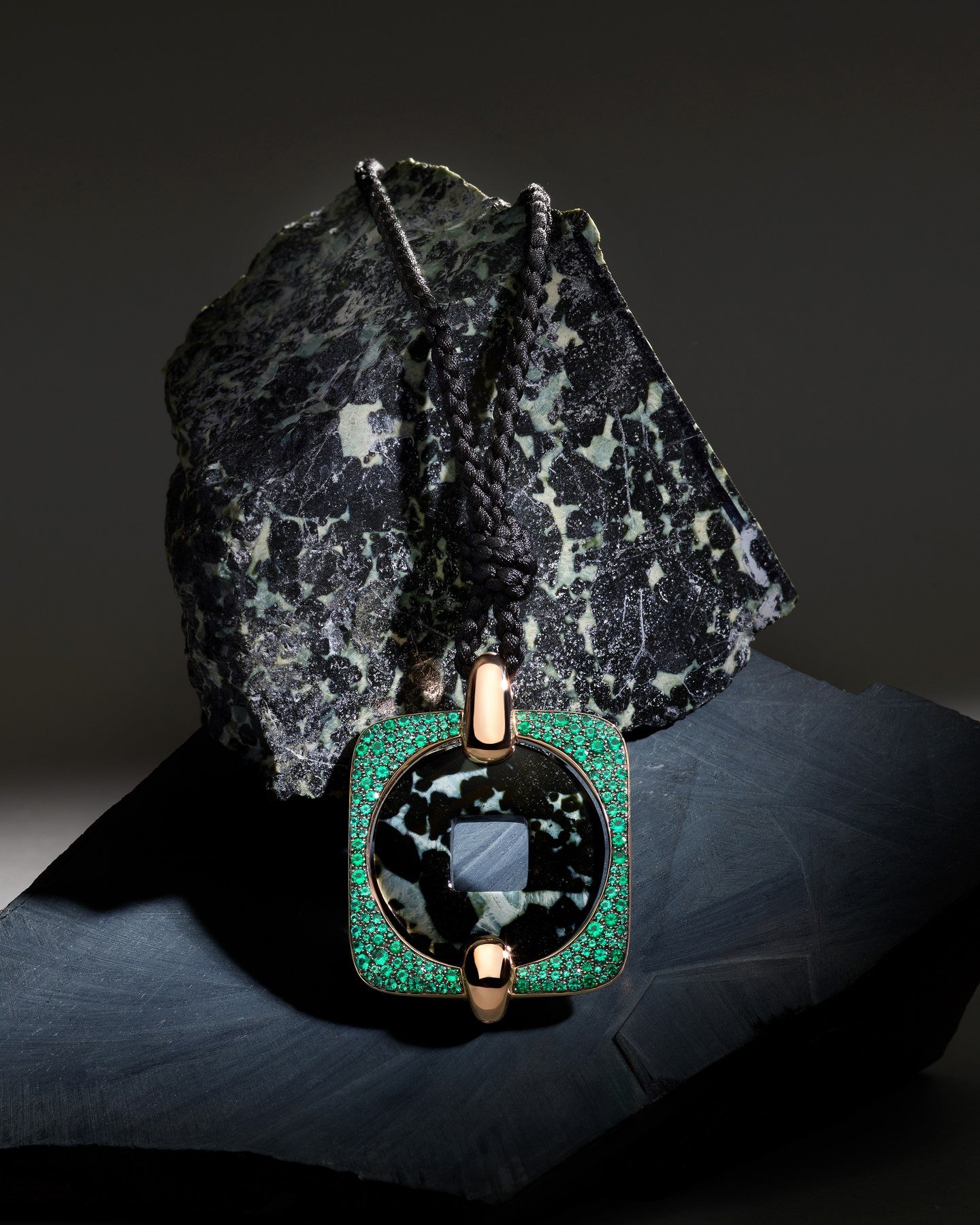
The essential relationship remains between a circle and a square. Each hardstone coin has a deliberately irregular circumference, held within a rounded-square frame that echoes the opening at its centre. The effect is both graphic and tactile: a recognisable outline made individual by the colour, pattern and character of the stone.
Thirty-three ways to work with colour
The collection comprises 33 combinations of stones and pavé. Black jade, rutilated quartz, amazonite, sodalite and red agate are among the materials described in the release, while diamonds, sapphires, rubies and demantoids bring another register of colour and light to the settings. Pomellato’s irregular pavé uses stones of different sizes, giving the frame a surface whose rhythm complements the organic centre.
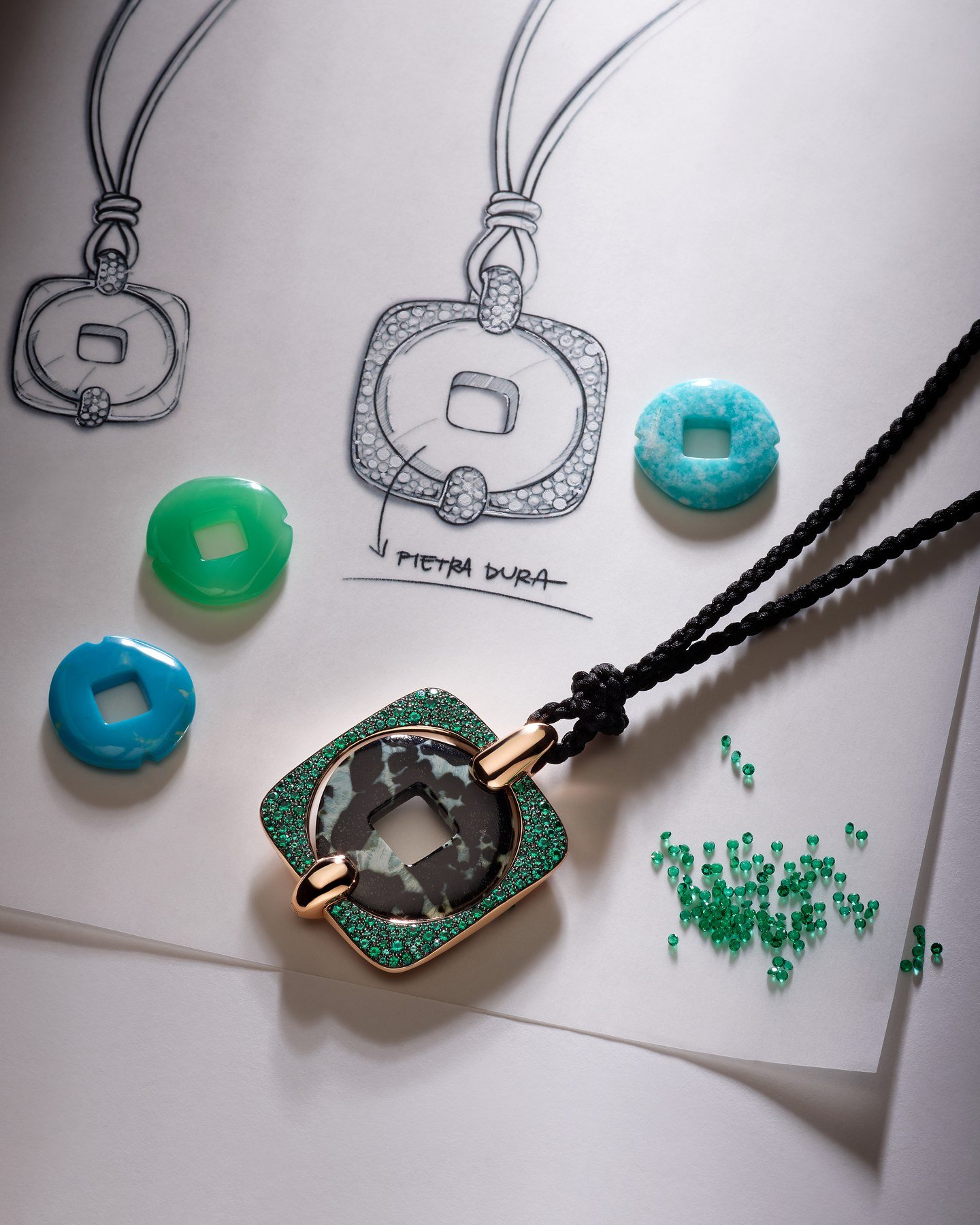
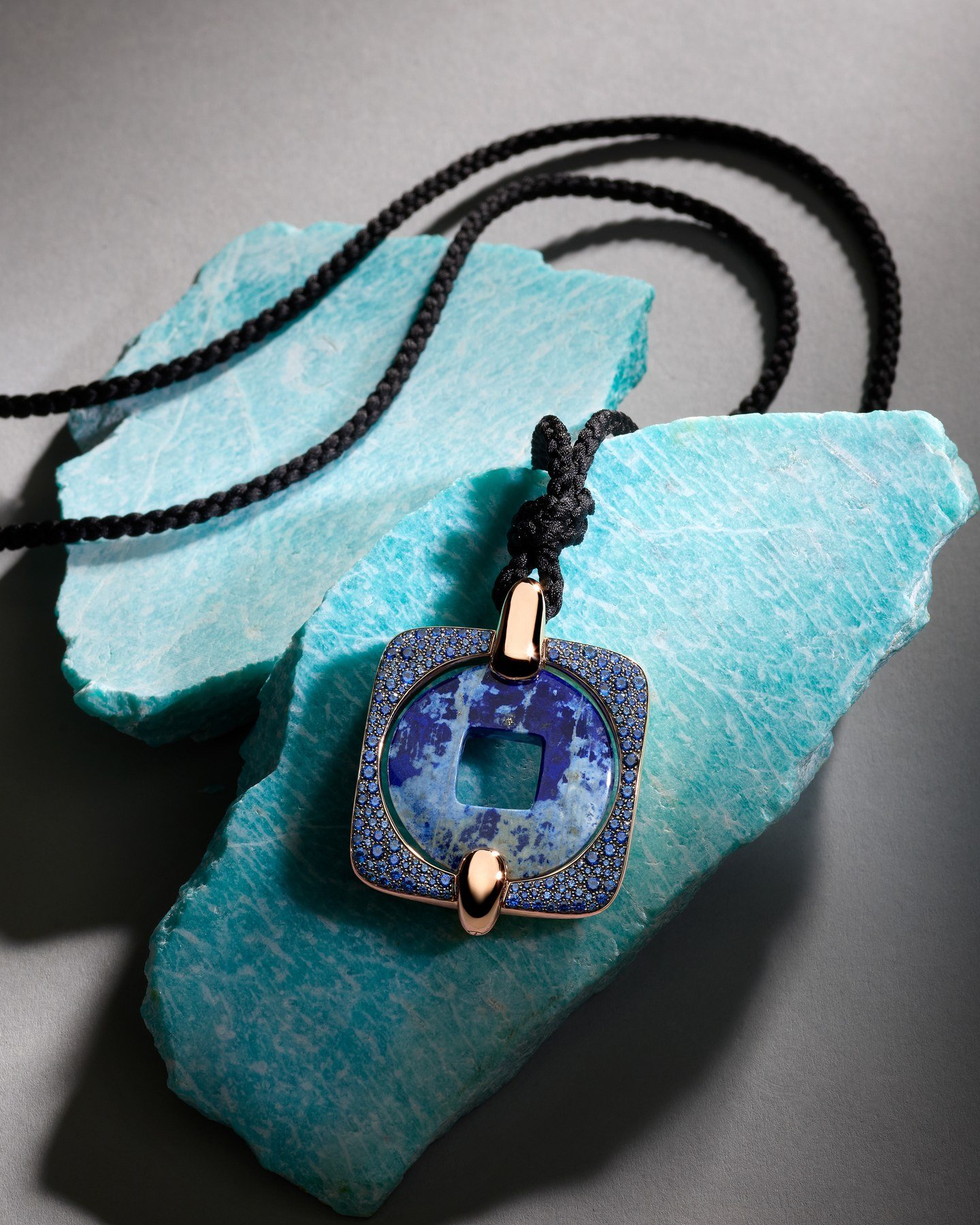
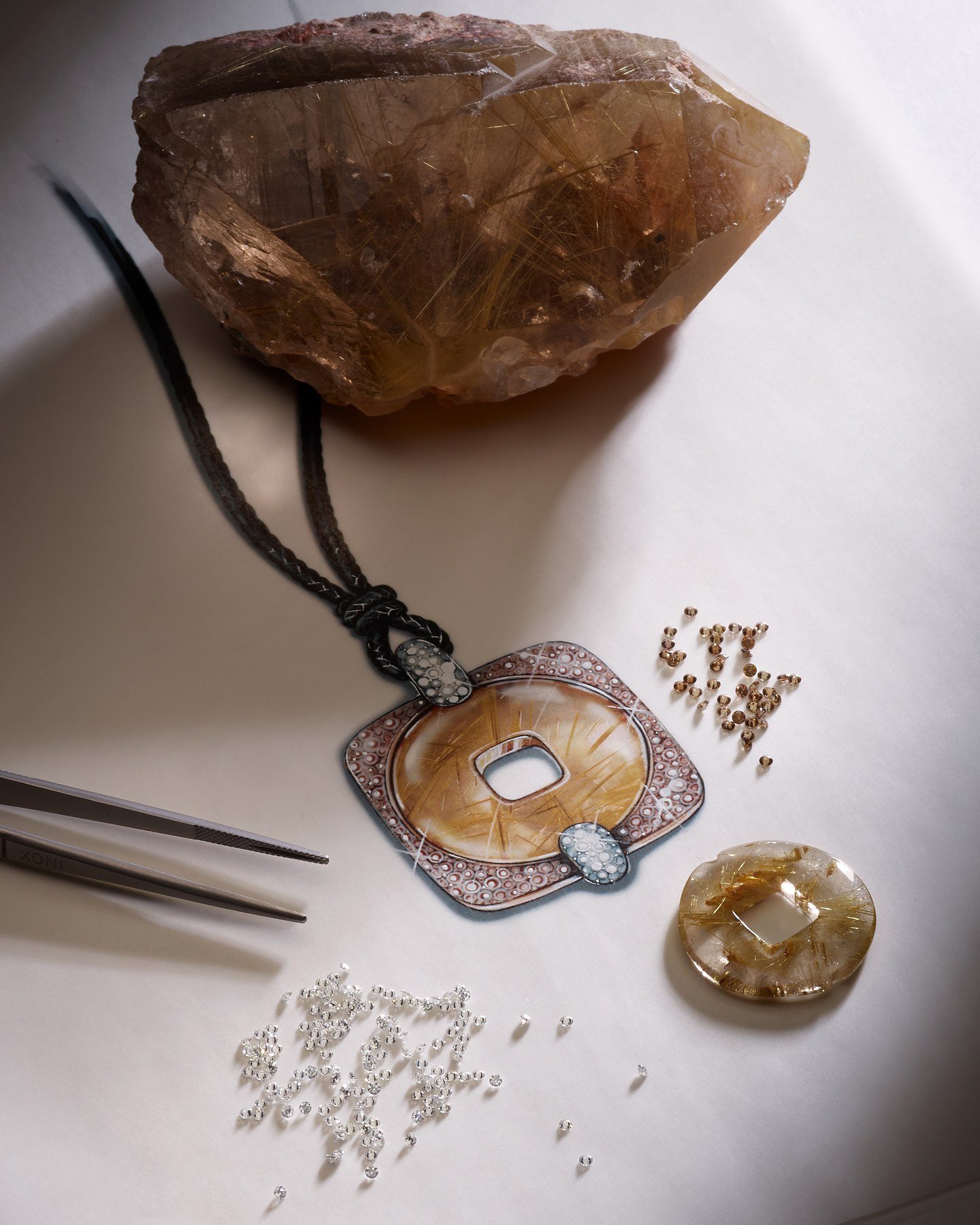
The supplied still lifes make that relationship particularly clear. A dark gabbro pendant is framed by emeralds and photographed beside a piece of stone; a blue composition brings lapis root and sapphires together against a saturated mineral backdrop. Elsewhere, rutilated quartz appears with diamonds, tools and the loose elements of the setting, drawing attention to how the jewel is assembled.
Two proportions, one considered form
The larger version allows pavé to extend around the entire frame and, in its most fully set form, onto the claws. The smaller pendant uses a finer coin with a polished rose-gold frame, reserving pavé for the claws. The distinction gives the same design a different balance of surface, scale and brilliance.
Each piece is made by hand at Casa Pomellato in Milan. Moneta Orientale’s return shows what an archive can offer when approached through material and technique: an established form whose character changes with every new stone placed within it.
Featured image: Courtesy Pomellato.