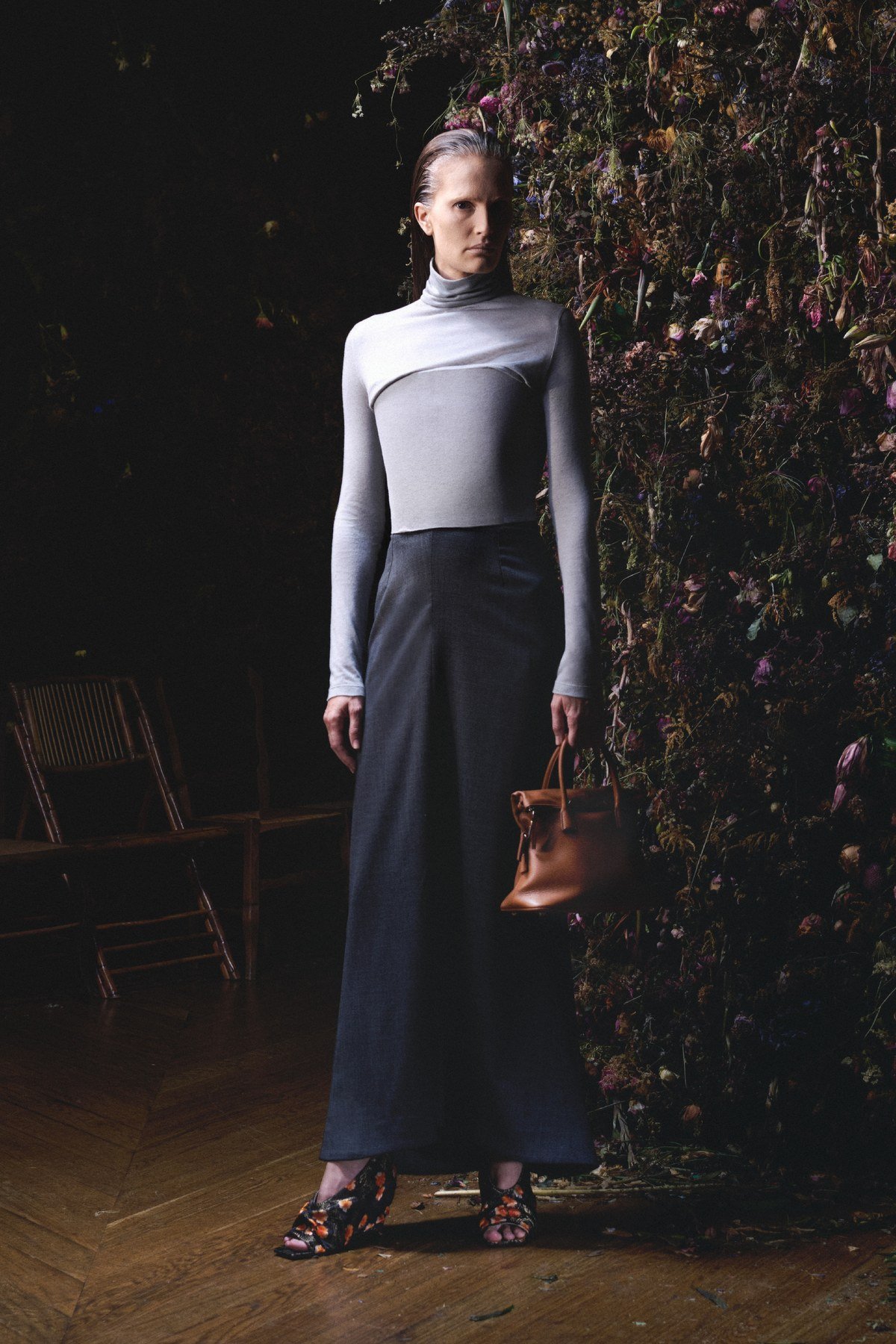
Maison Margiela’s spring–summer 2027 collection asks what happens when a garment’s supporting structure becomes the starting point for its silhouette. The house frames the exercise through two qualities, hard and soft, drawing on the distinction between tailoring and flou in Parisian ateliers. Here, those approaches are brought into conversation within ready-to-wear, with stiffened elements changing how softer fabrics fall.
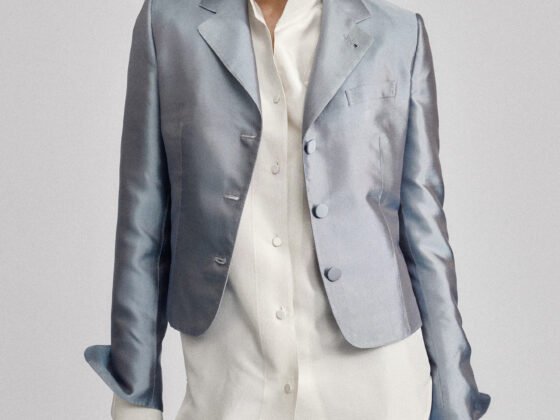
The trench coat provides one clear example. Broad, hardened panels are placed across the waist or vertically along the body, interrupting a familiar outline. Jackets and waistcoats undergo a different transformation: they are folded inwards to conceal their fastenings, with the creases reinforced so that their new lines remain even when the pieces are opened out.
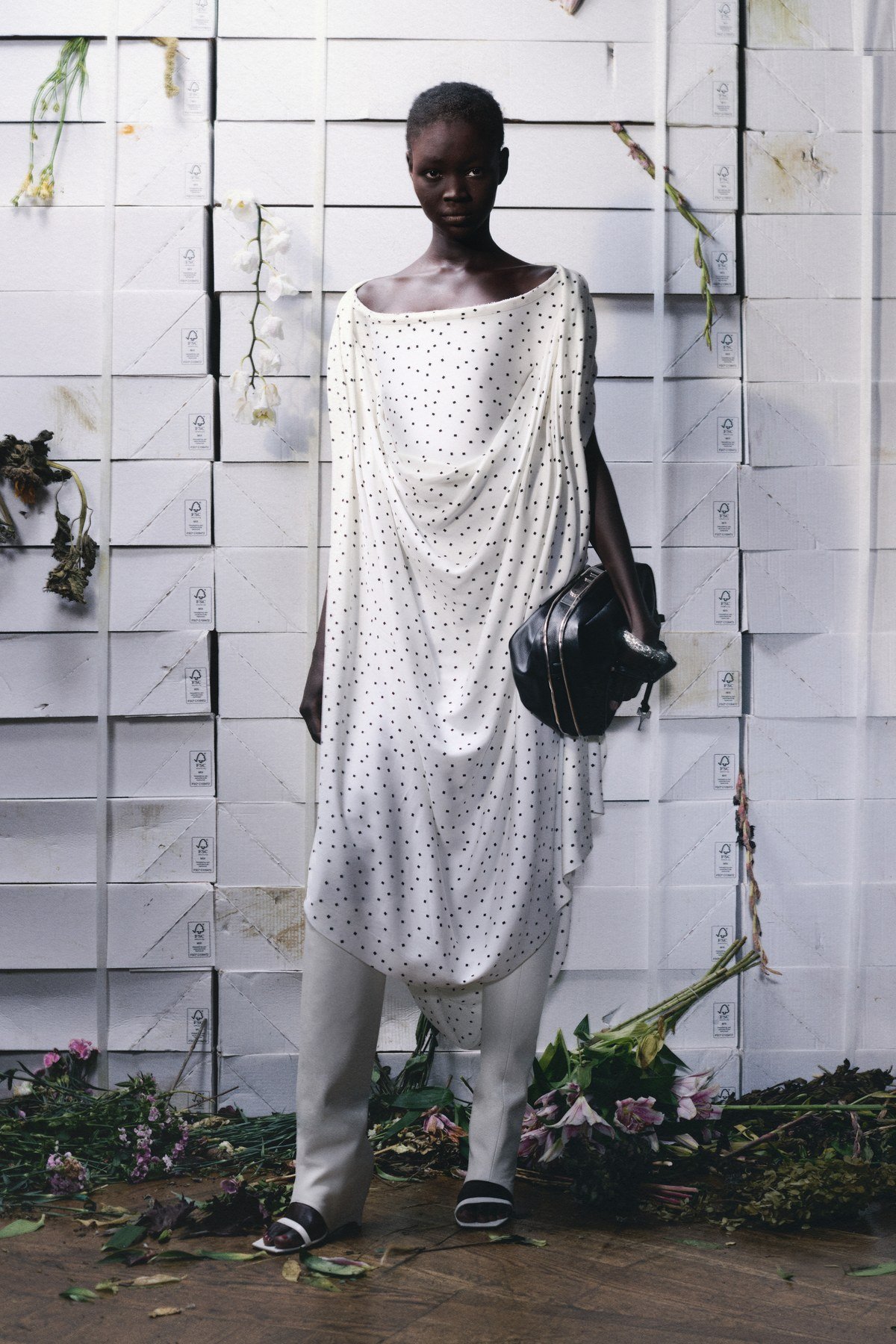
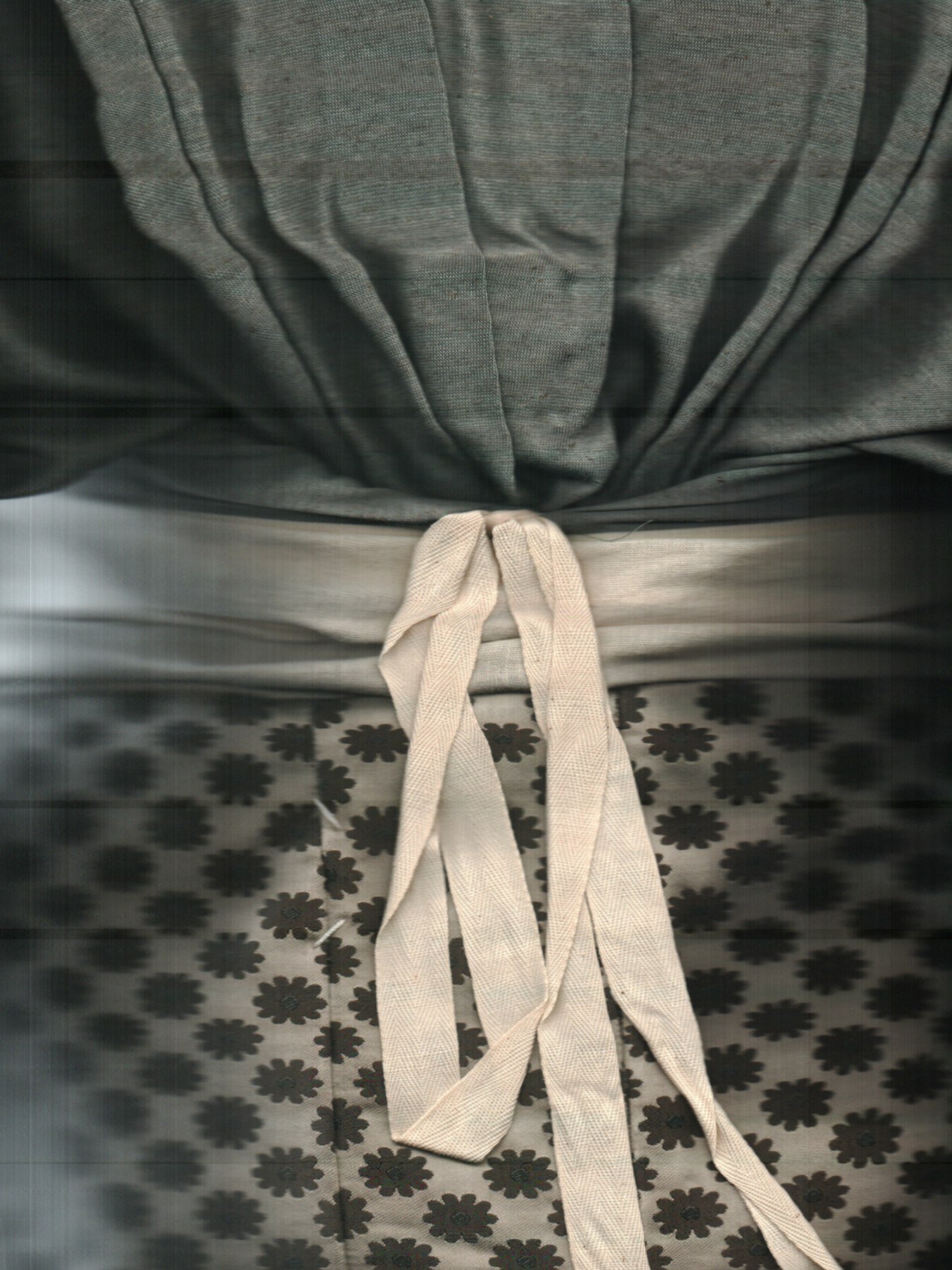
Dresses explore the same principle through draping. Curved chest panels project away from the body, creating a support over which fabric can flow before being held by a tie at the back. Elsewhere, reinforced darts introduce pronounced shapes into soft sleeveless dresses. Another group uses opened-out corsetry to generate deep cowls extending from the chest towards the ankle. The structure does not simply contain the fabric; it determines its movement.
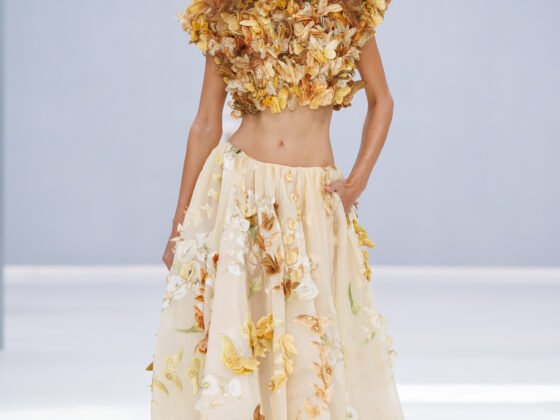
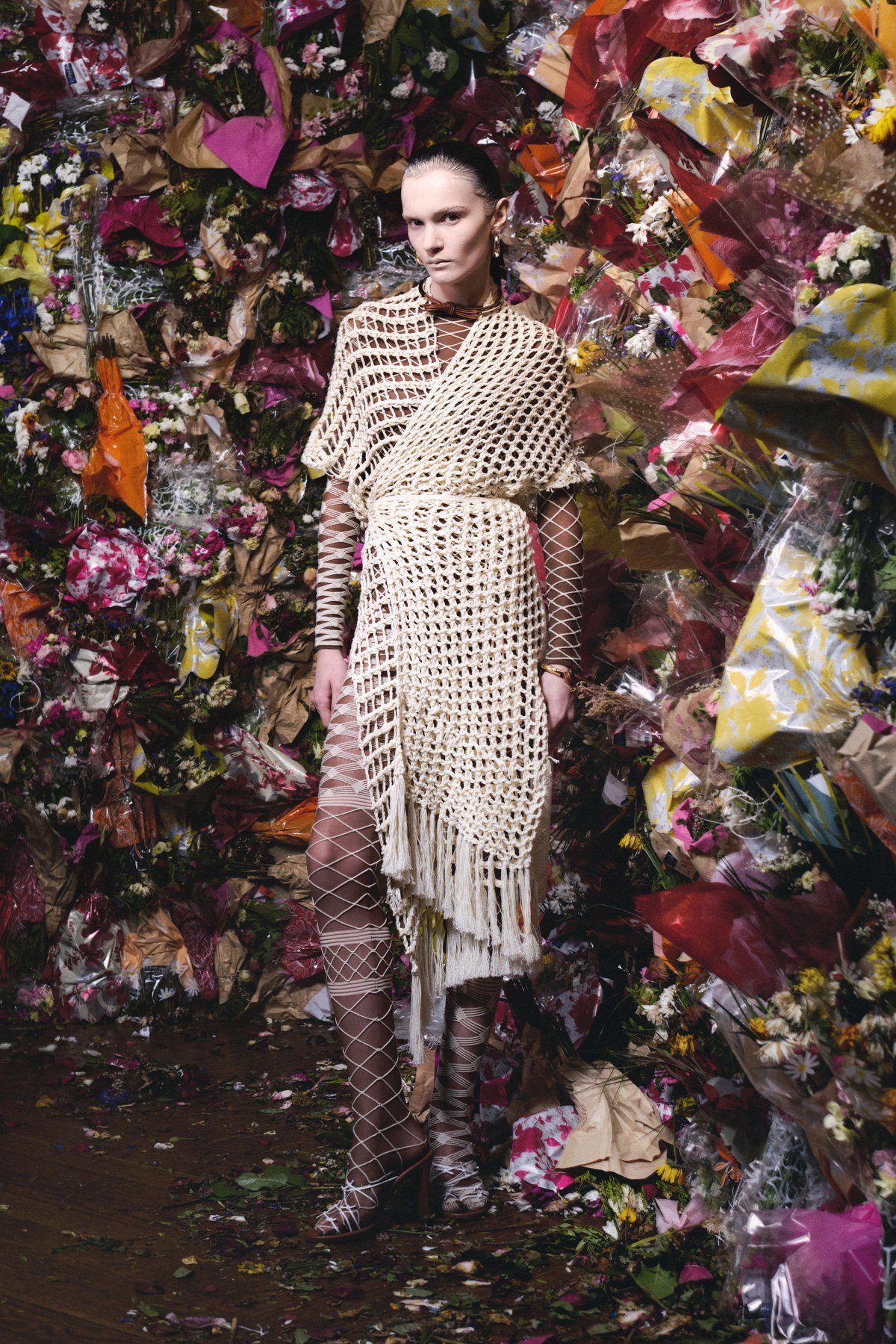
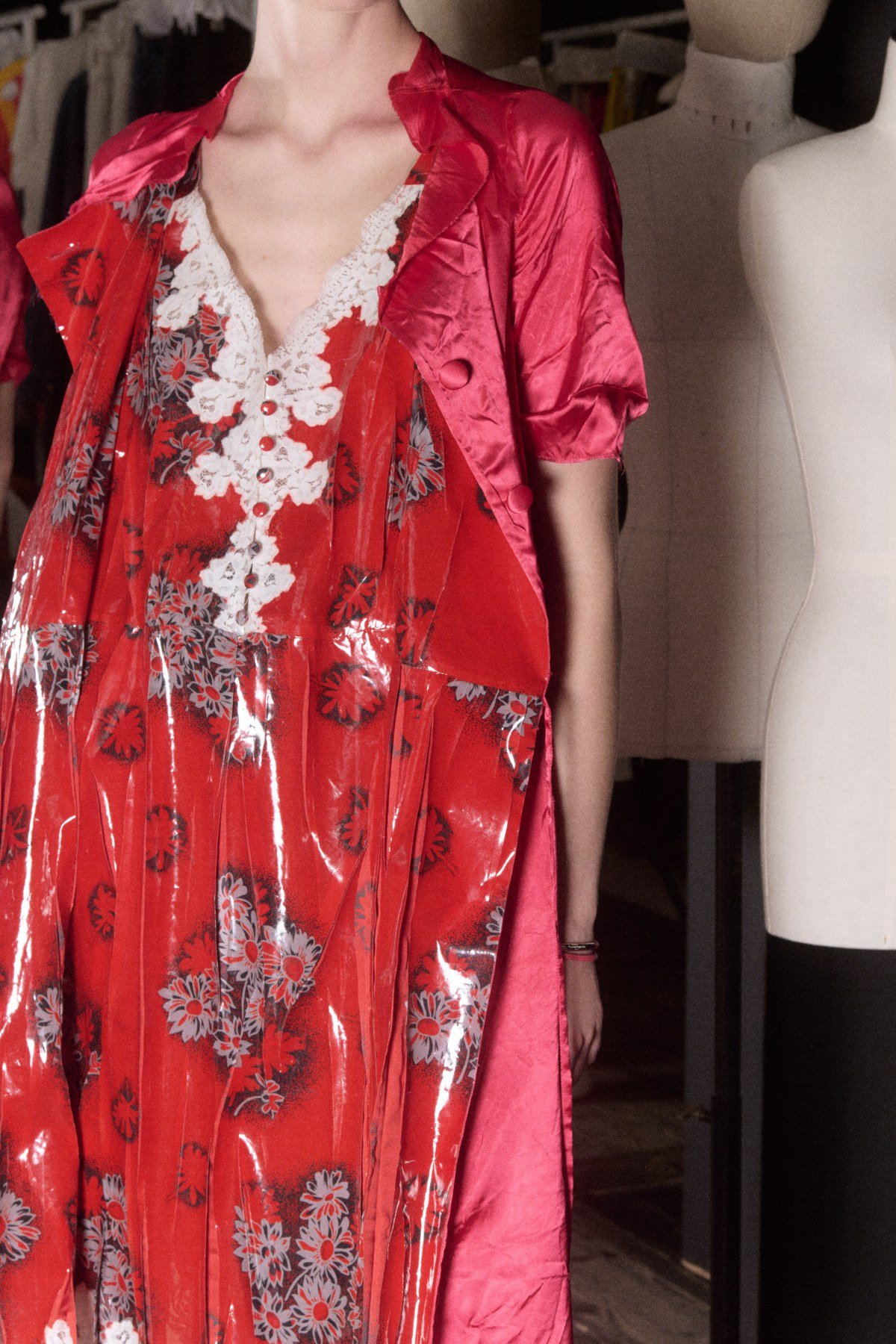
The collection also returns to linings, a recurring element in the house’s work. Coat linings are joined to floral dresses that have been opened at the back and extended, producing the appearance of a coat worn over a dress within a single construction. Soft cotton interrupts more elaborate, fortified fabrics at the waist, while net sits over, or becomes part of, close-fitting knits.
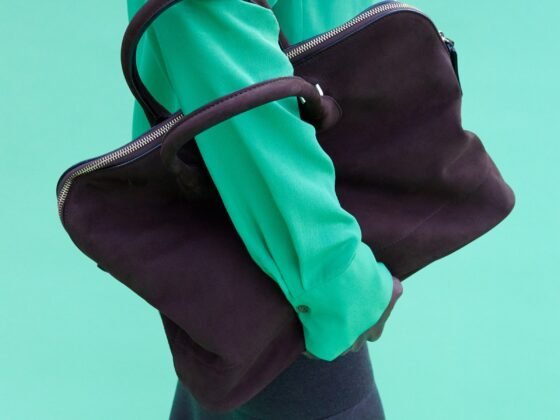
The accessories reverse the balance again. Ghost bags begin with recognisable forms such as briefcases, weekenders and vanity cases, then remove their rigid construction while retaining metal hardware. The 5AC Soft develops its characteristic exposed-lining idea in supple leather. These objects retain the memory of a structured form even as their material becomes yielding.
Mark Colle’s floral set places the collection within a conversation about fashion’s history, referencing Raf Simons’s 2012 couture debut through flowers imagined after the passage of time. Floral prints carry that idea into the clothing. Yet the most direct expression of the collection remains in the garments themselves: a crease that refuses to disappear, a lining brought forward, or a dress whose drape begins with an unexpected foundation.