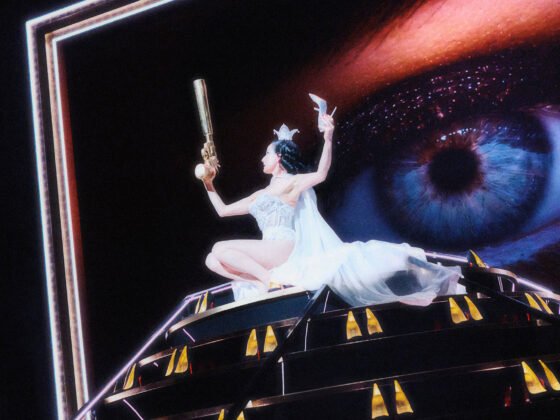
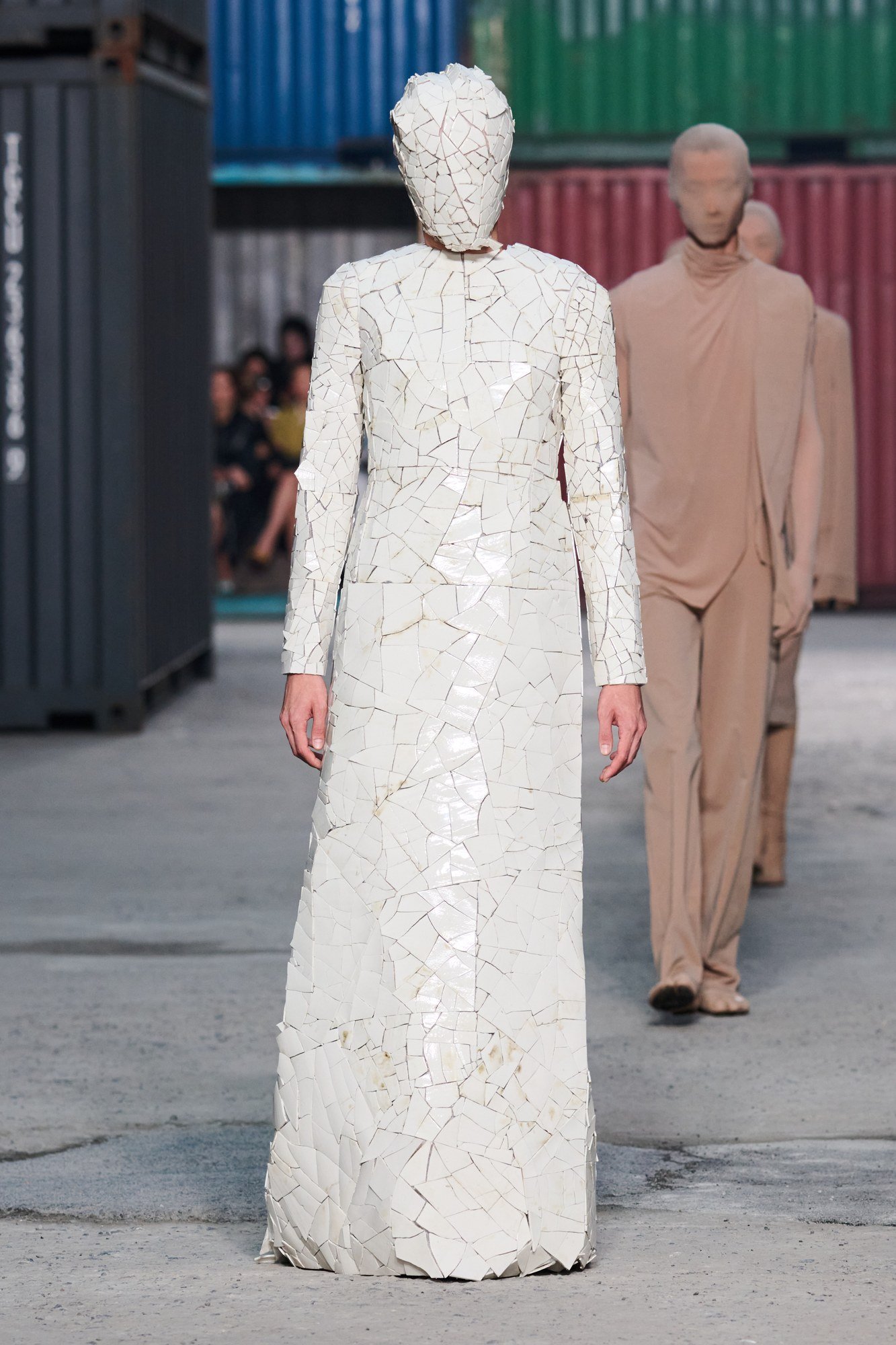
Maison Margiela’s fall–winter 2026 collection begins with the imagined life of a Parisian flea market after closing time. The objects left behind become material for another wardrobe: damaged tapestries, old dresses, porcelain and the traces of earlier garments. Presented in Shanghai, the collection brings ready-to-wear and Artisanal pieces together, placing its most experimental constructions alongside clothes intended for a broader life beyond the show.
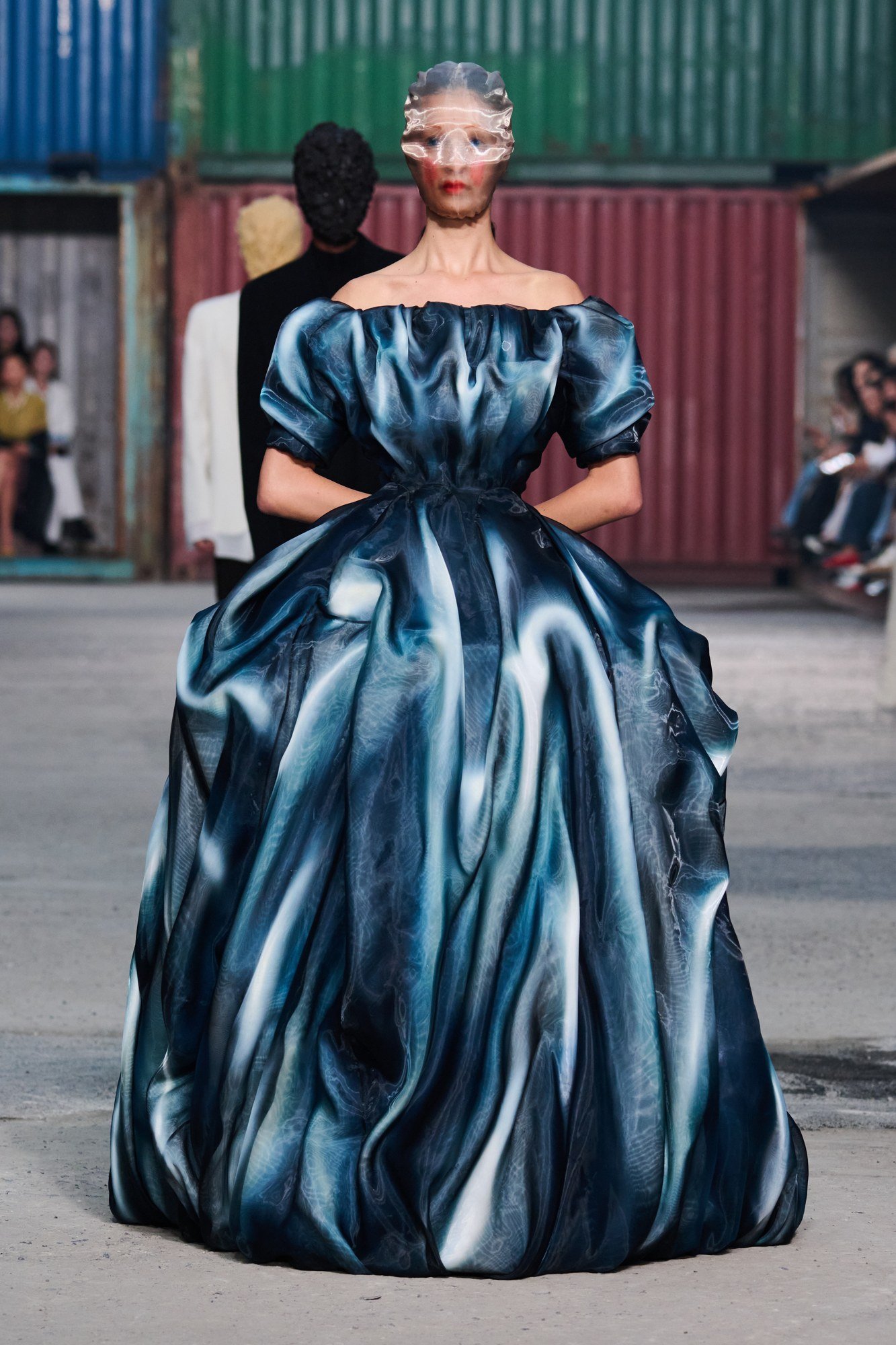
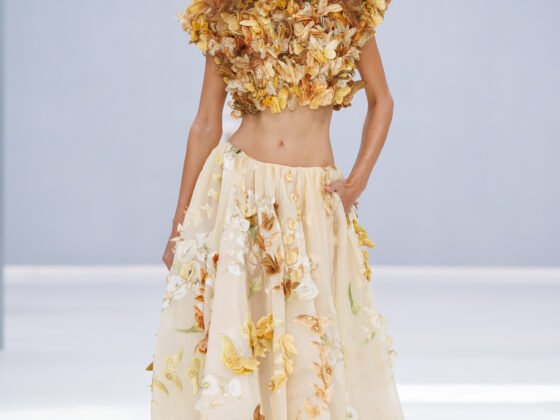
The treatment of porcelain makes that range particularly clear. Layered, printed organza creates its appearance in dresses that sometimes use eight layers of fabric. Elsewhere, actual porcelain is made in separate pieces for the body, broken and fixed to an Artisanal dress. One idea is translated through two very different physical processes.
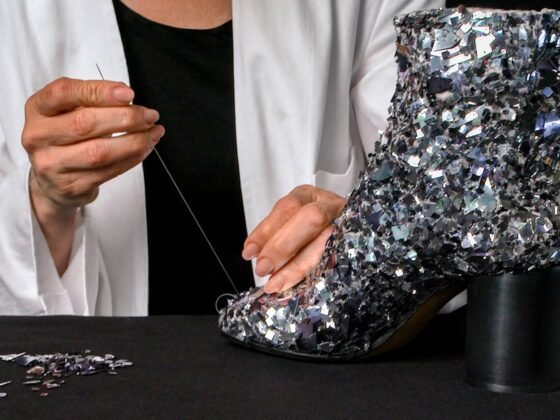
The collection is equally interested in what a garment can leave behind. Fragile vintage dresses are attached to a fabric base and then removed, preserving their impression on a new surface. Worn tapestries are stitched with paillettes where they can no longer be restored in the usual way. An Edwardian painting six metres in length becomes a dress without being cut, while a mould of an Edwardian garment records even the impression of jewellery.
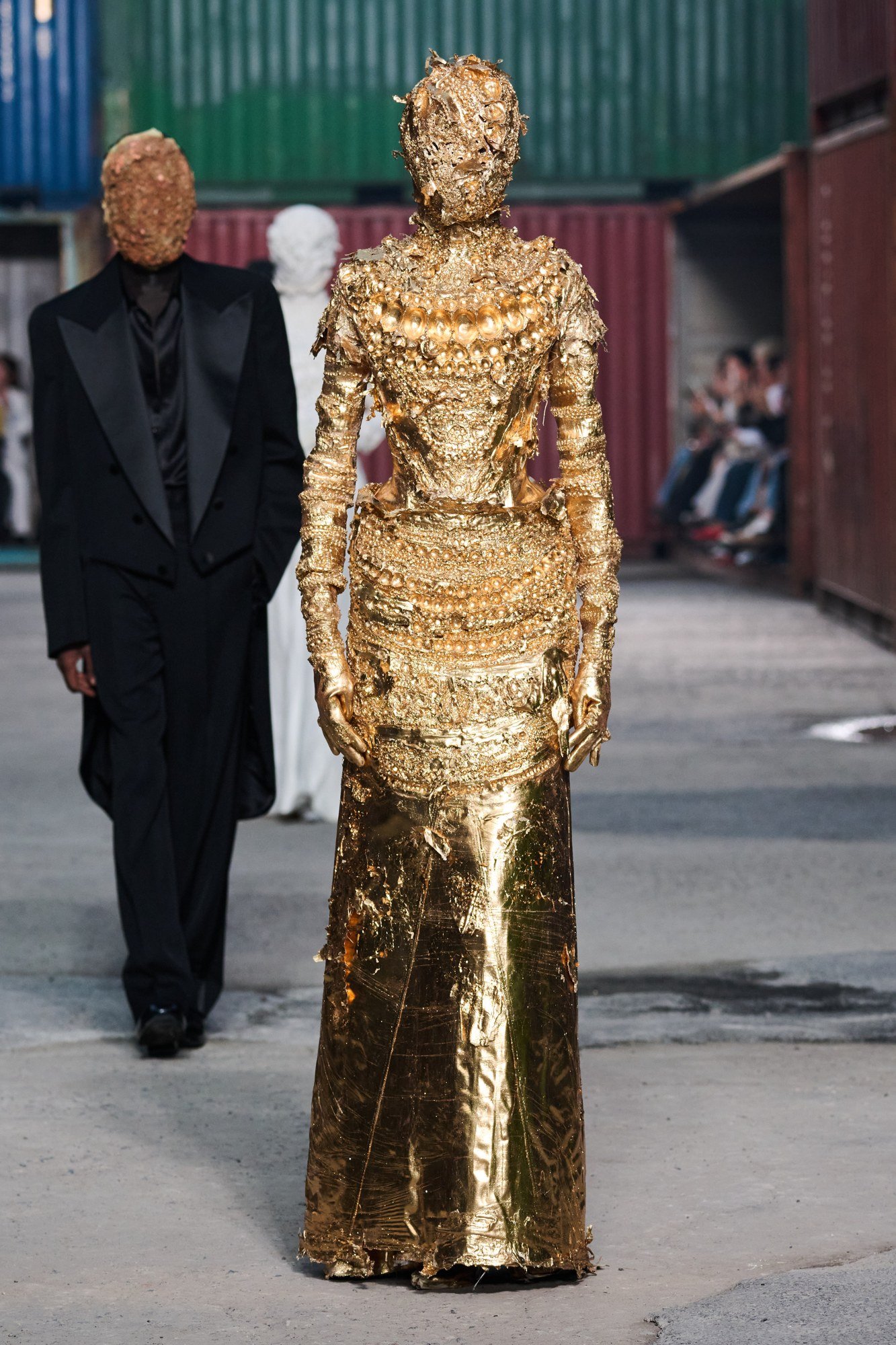
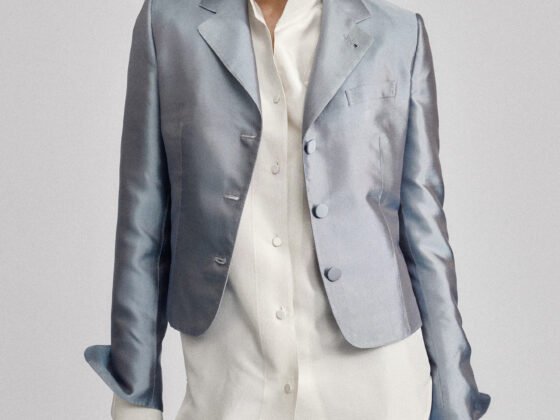
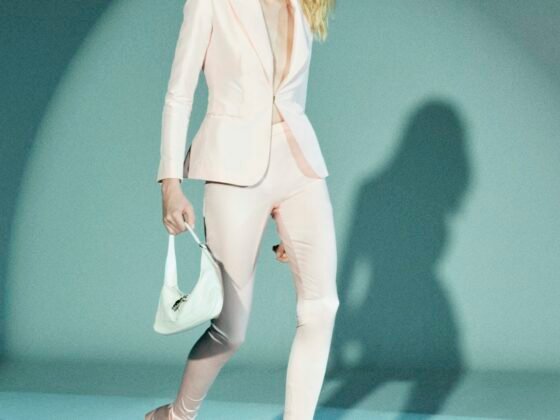
Familiar tailoring is also transformed. Tailcoats lose their tails or receive the house’s white bianchetto treatment. Double-breasted jackets and trench coats are fused with close-fitting jersey; leather meets tweed, and velvet is bonded to tailoring. These combinations preserve enough of the original form to make the intervention visible.
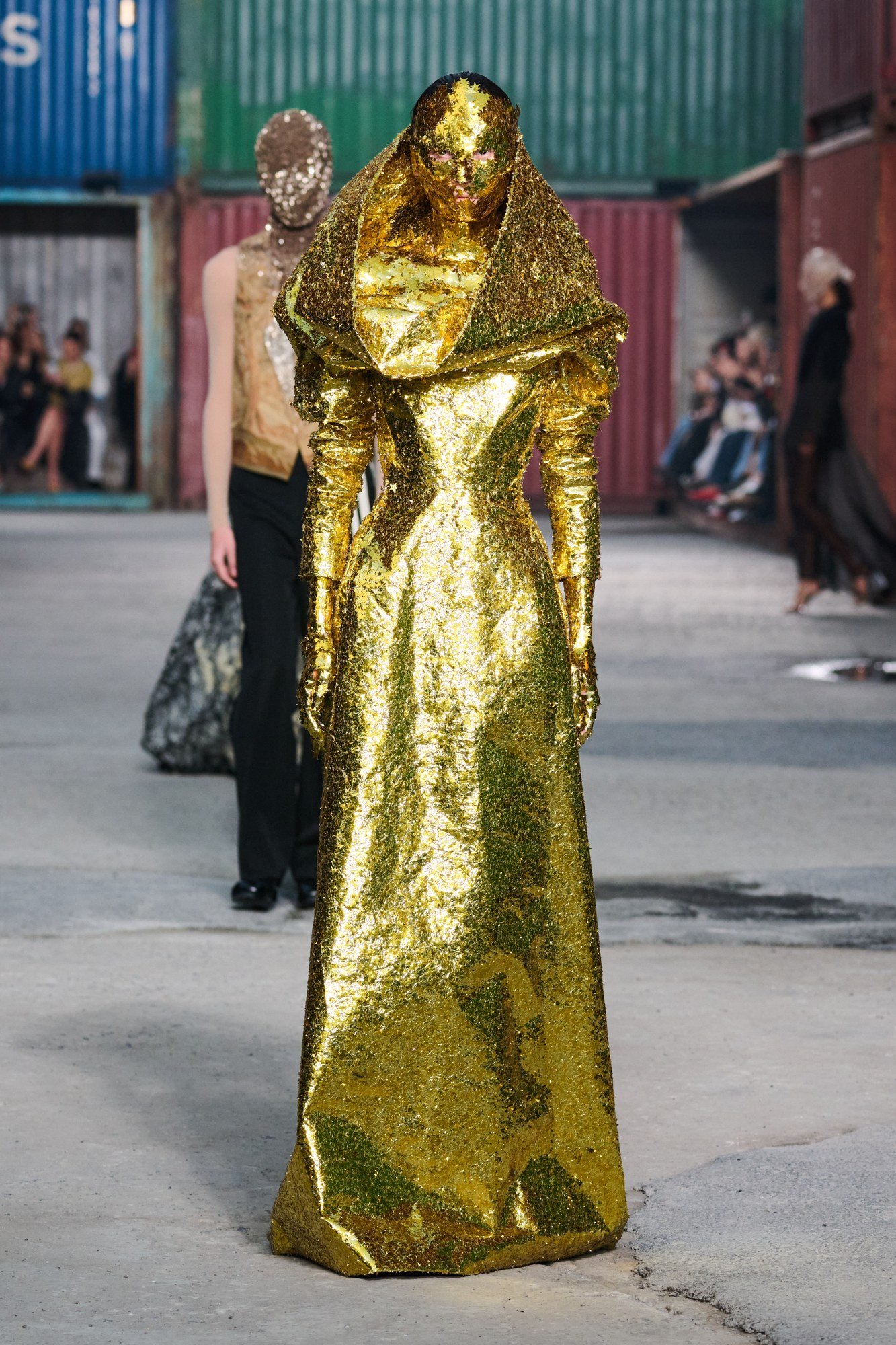
Draping supplies another set of experiments. Stiff furnishing fabrics are bonded to dresses that have already been draped, then opened along the draped line. Other constructions play with the appearance of fabric caught in movement. Edwardian references, including high necklines, pronounced sleeves and long proportions, recur across the collection.
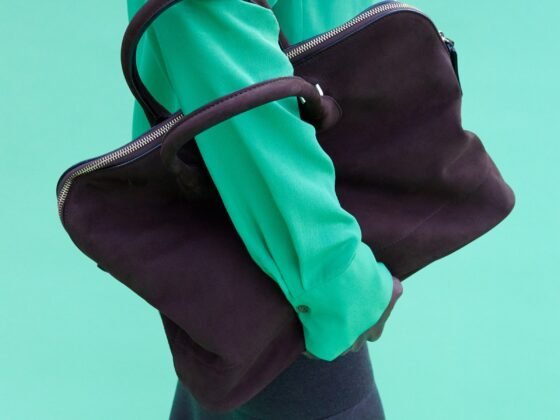
Accessories carry the material ideas forward. The Link bag moves its frame closure to the front and covers its chain in the same material as the bag. Tapestry prints appear on a laser-cut 5AC, while Glam Slam bags are treated to suggest worn sofas or finished with broken mirror. Each look is completed by an Artisanal mask, making anonymity part of the presentation.
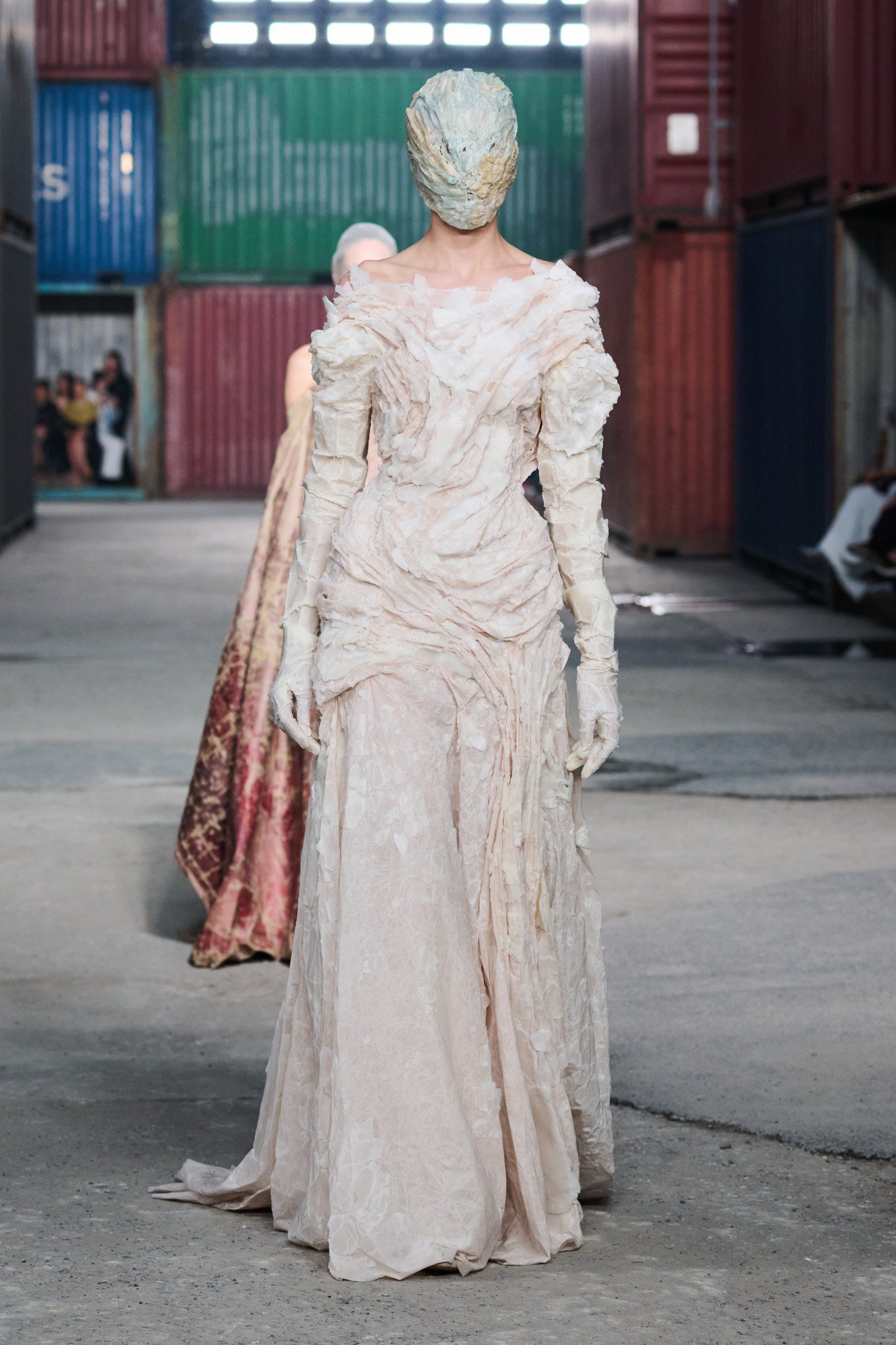
The result is a collection concerned with transformation rather than simple restoration. Its most distinctive gestures preserve a memory of what an object was, while giving it a different structure and purpose.