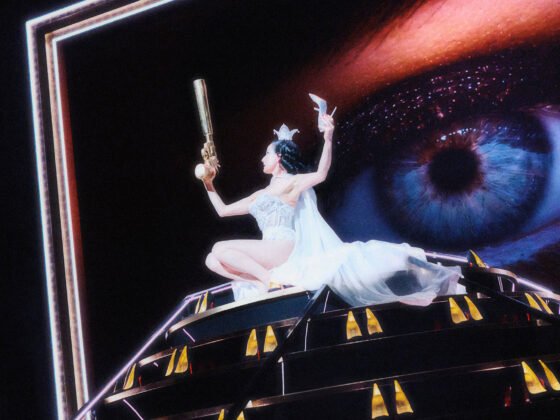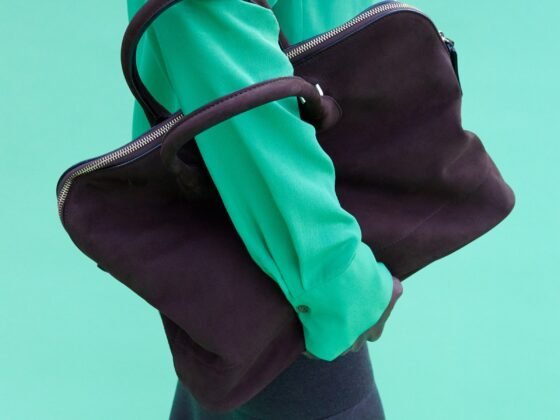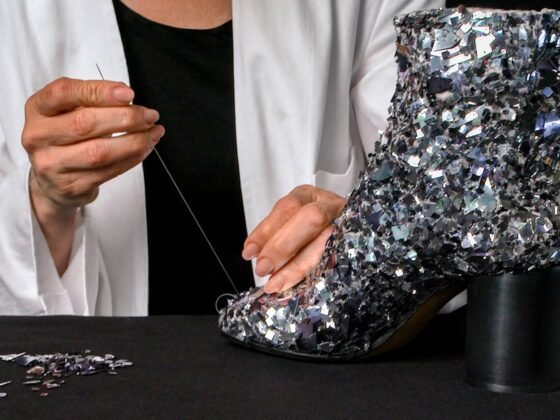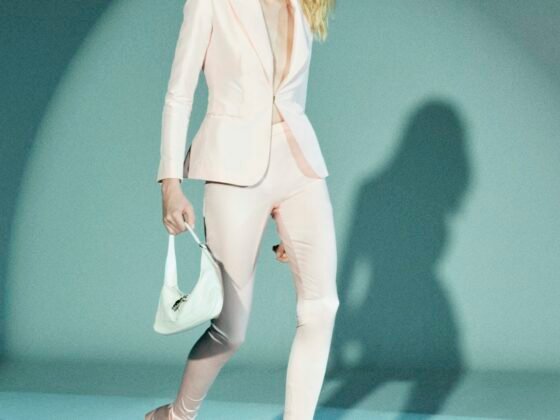
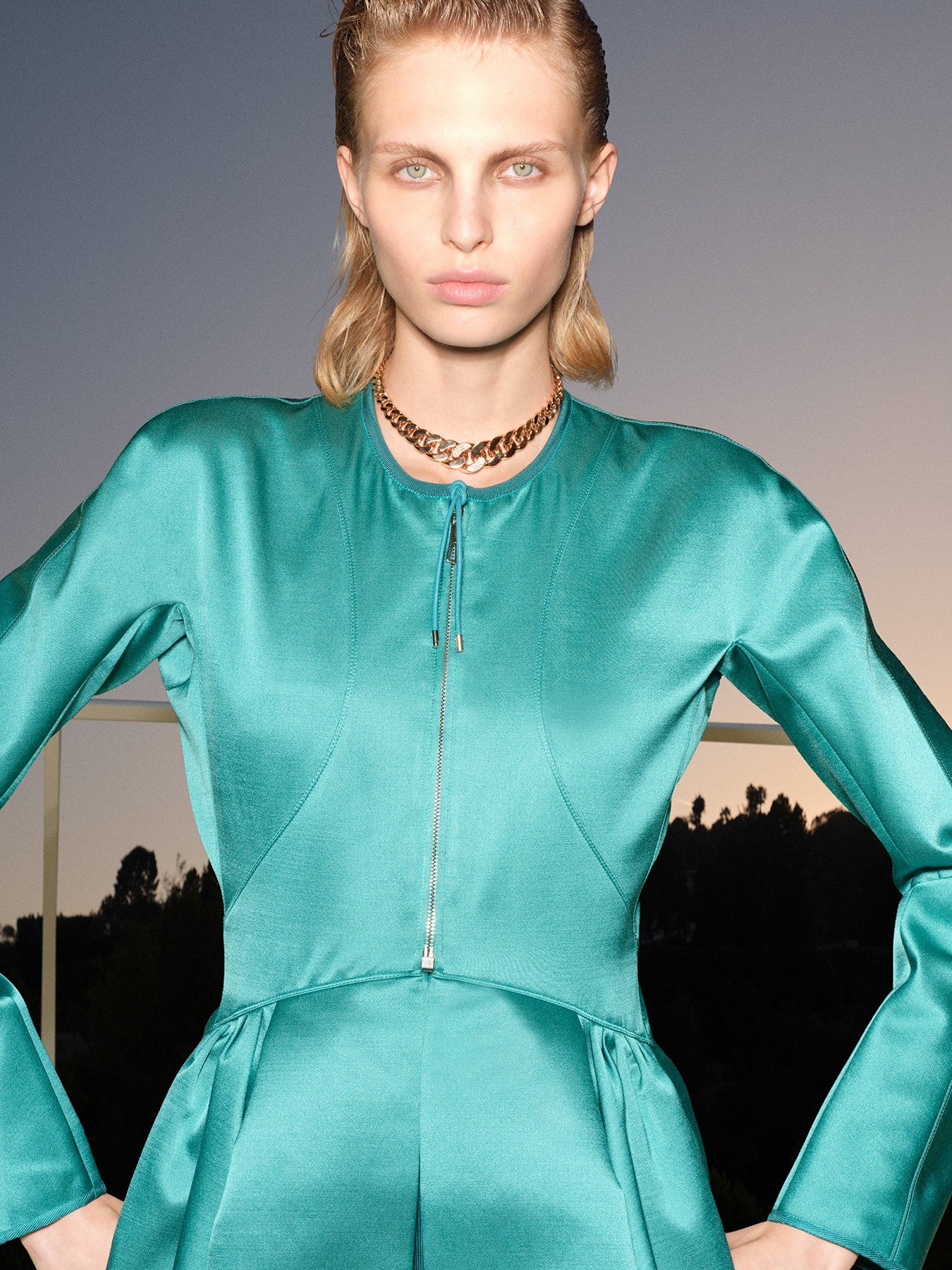
Hermès places the dress at the centre of the second chapter of its women’s fall–winter 2026 collection. Conceived by Nadège Vanhée and presented in Bel Air in June, the collection draws a connection between the discipline of an atelier and the repeated gestures of dance. Both depend on precision; both come alive through movement.
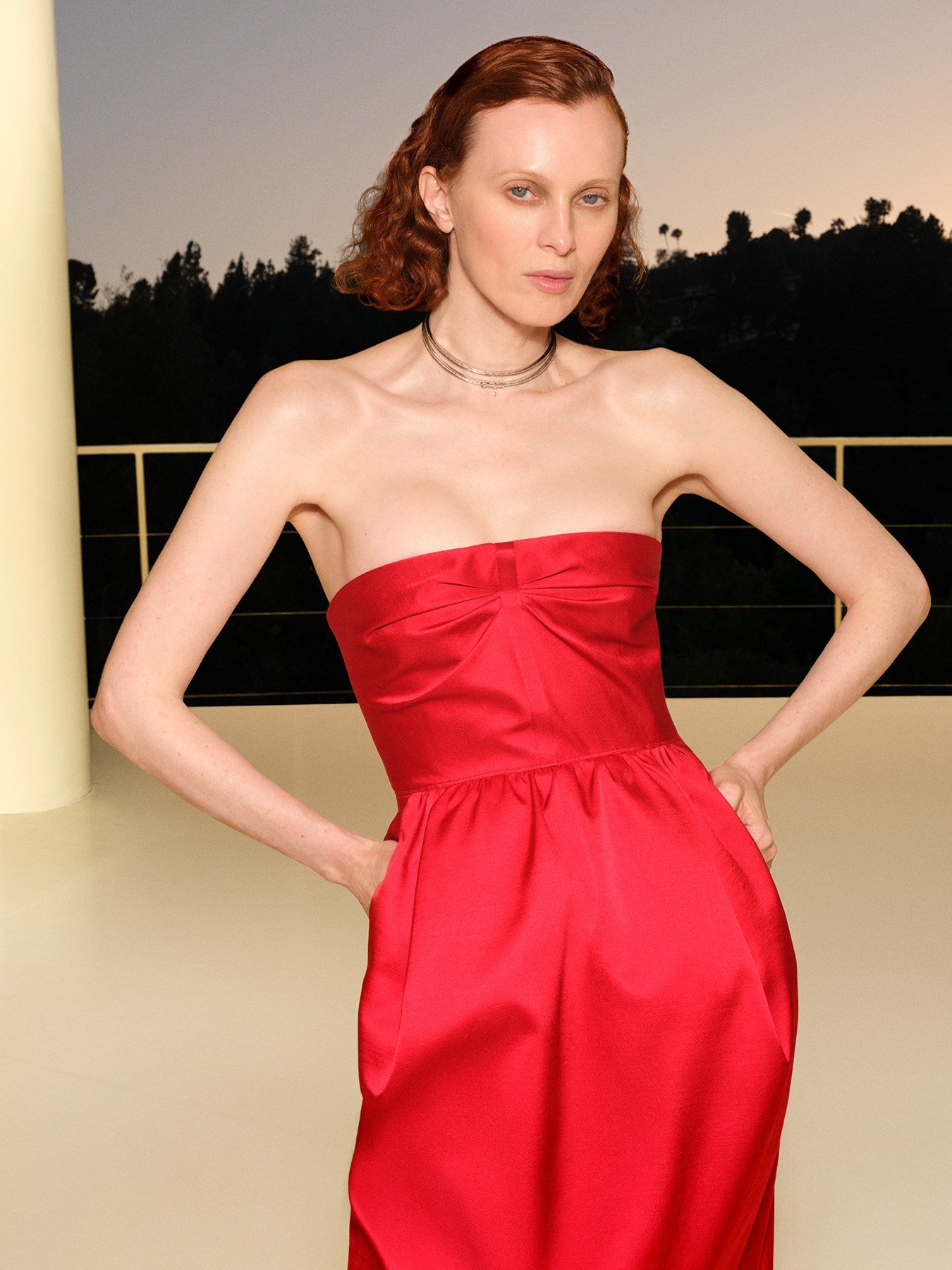
That relationship is worked into the clothing rather than left as a staging device. Satin dresses take their cue from the ballet slipper, using fine piping, grosgrain ribbons and gathered bustiers to define the body. The palette includes rouge tango, vert impérial and jaune flave, bringing jewel-like colour to forms that remain fluid.
Knitwear introduces another aspect of the dancer’s wardrobe. Wrap-style cache-cœur pieces are integrated into dresses, giving their softness a measure of support and structure. Smocked-knit jumpsuits with flared legs and glittering embroidery reinterpret warm-up clothing through a more dressed-up register. These references provide a practical starting point for silhouettes intended to shift with the wearer.
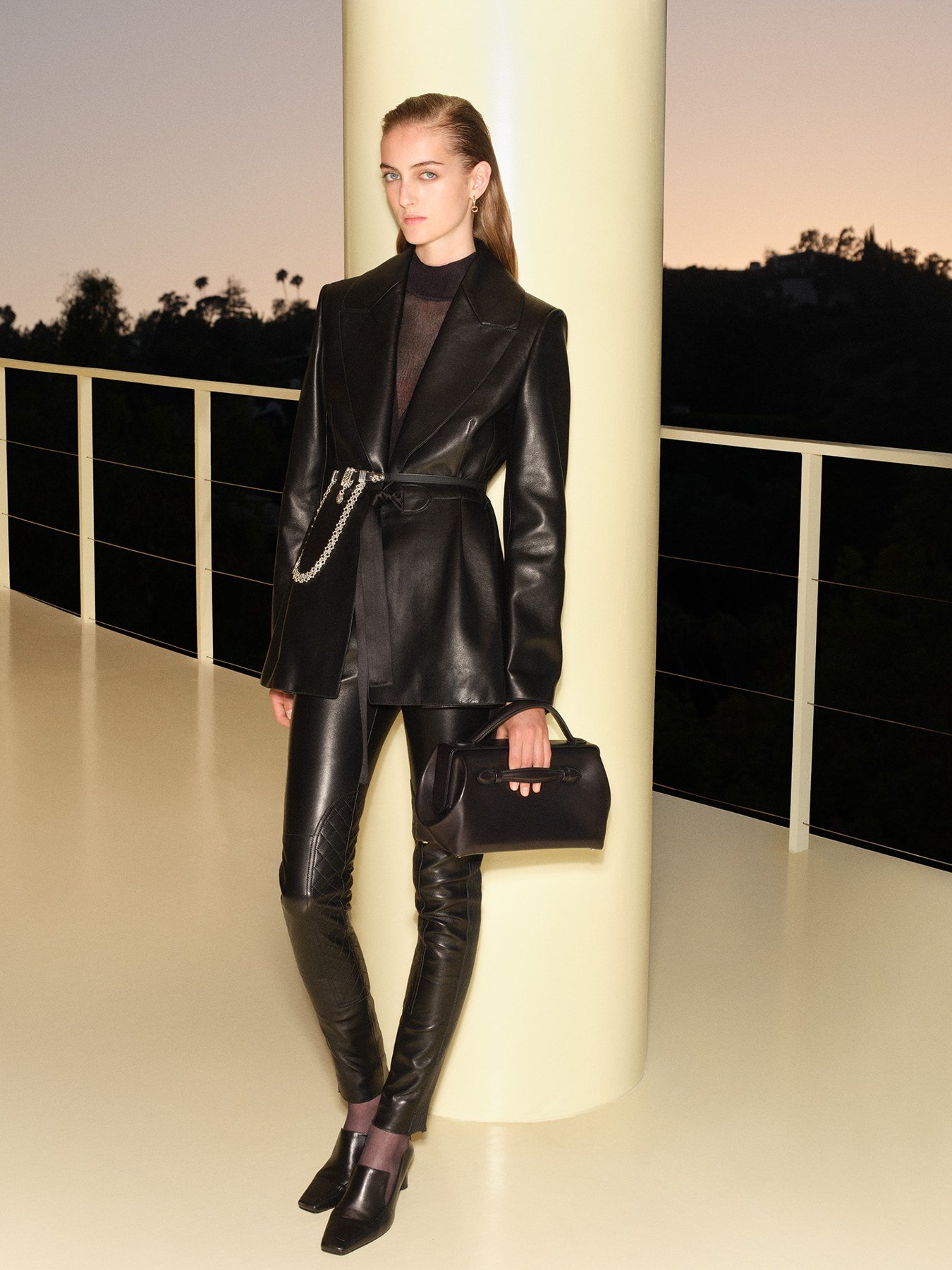
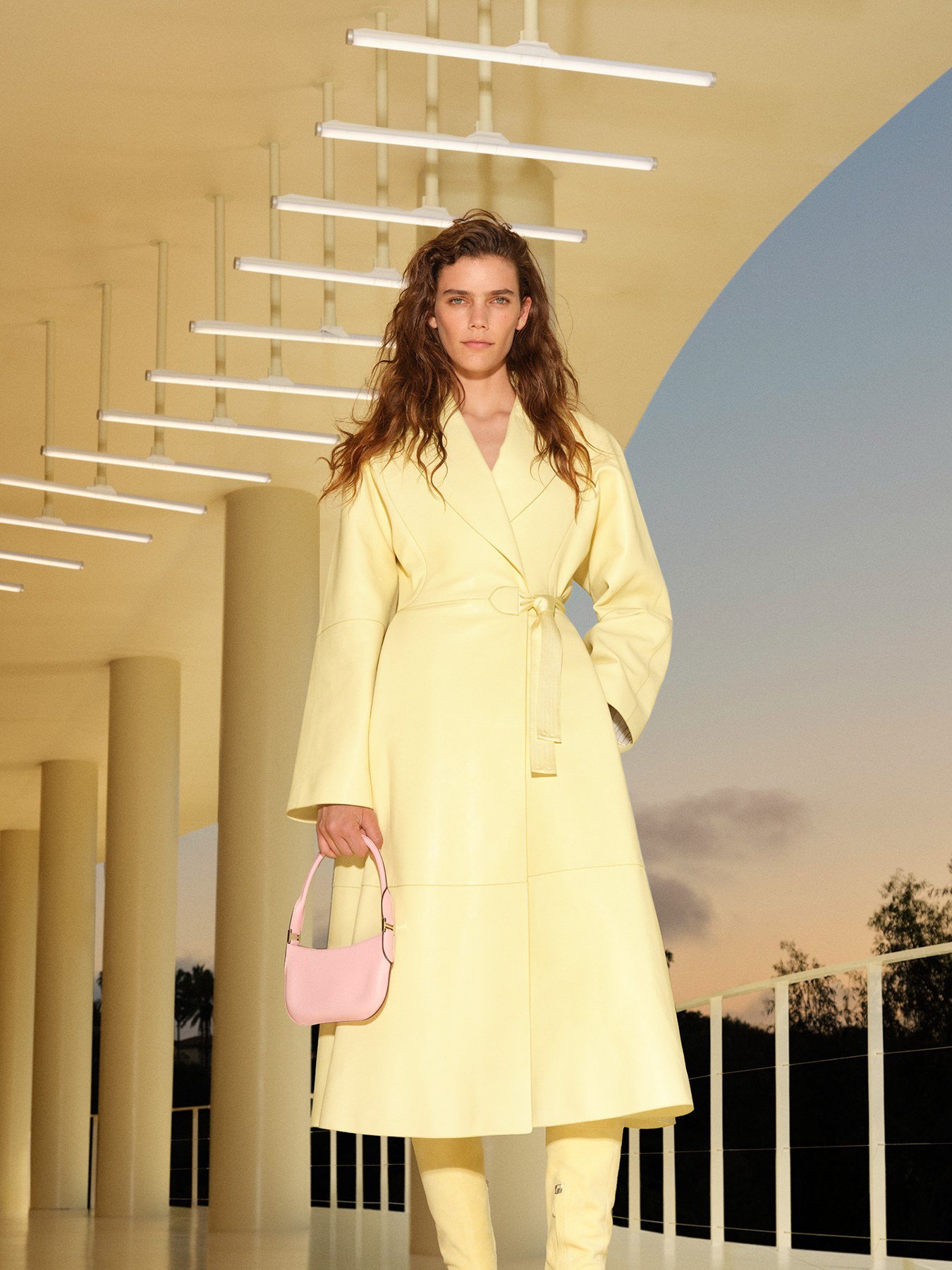
The collection then moves away from the rehearsal room. Luminous silk-velvet foulard dresses are paired with biker jackets and glossy leather coats, placing their movement against a firmer outline. The contrast gives the evening pieces an alternative to a purely formal setting, while keeping leather in dialogue with the house’s expanding exploration of flou.
One of the most specific transformations concerns the Soleil de Soie TATTOO carré. Its familiar format becomes a three-dimensional proposition: smocking, gathering and draping turn the scarf into cascading folds. The gesture connects an established Hermès object to the broader construction of the collection, allowing a recognisable design to take on another shape.
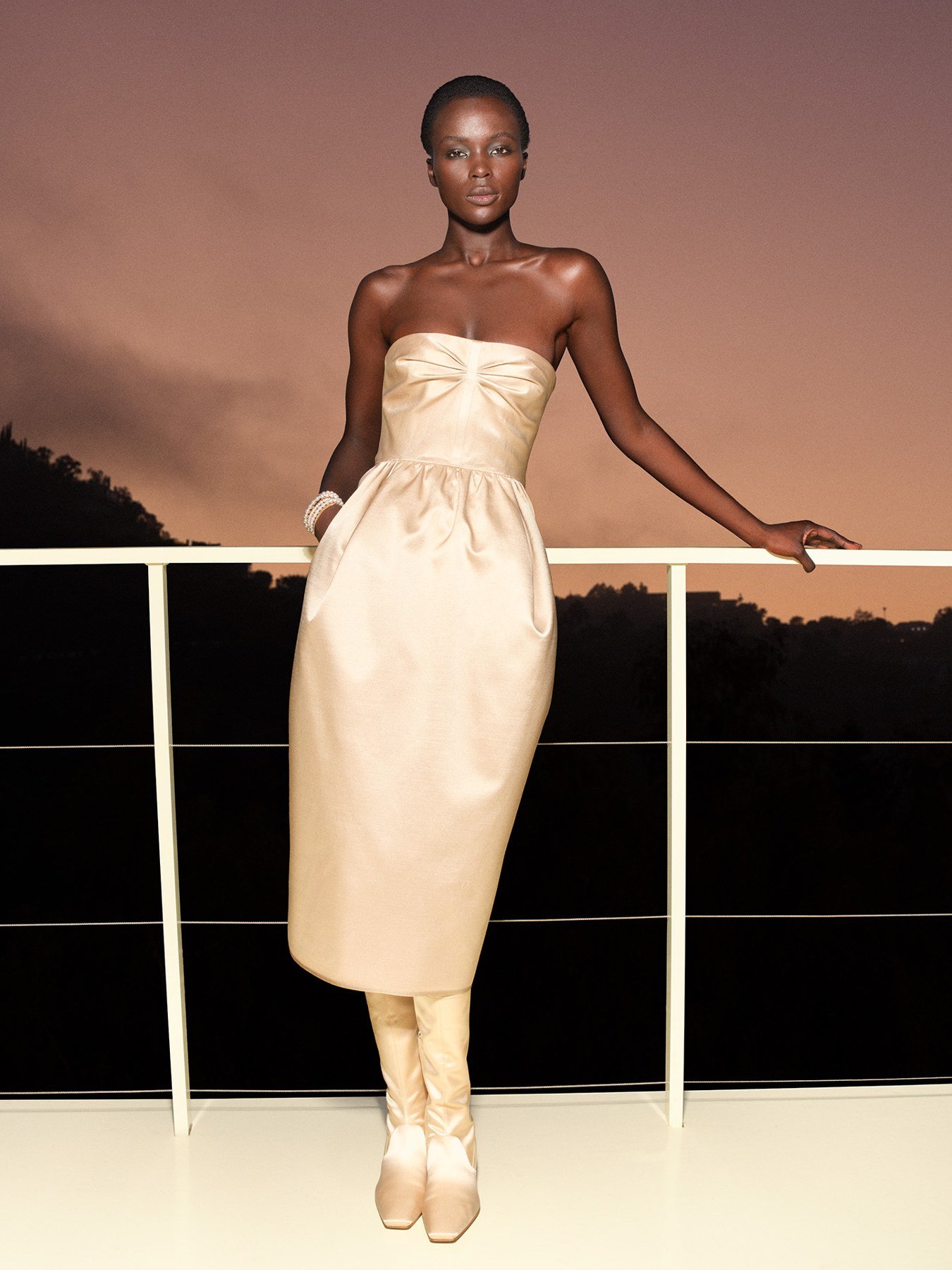
As the palette darkens, embroidered draped gowns appear with black satin and deep velvet. The June presentation used sunset and the approach of night as its setting, but the clothing’s central idea extends beyond that moment. Movement is treated as part of how a garment is designed, with each ribbon, fold and contrasting layer contributing to its changing outline.