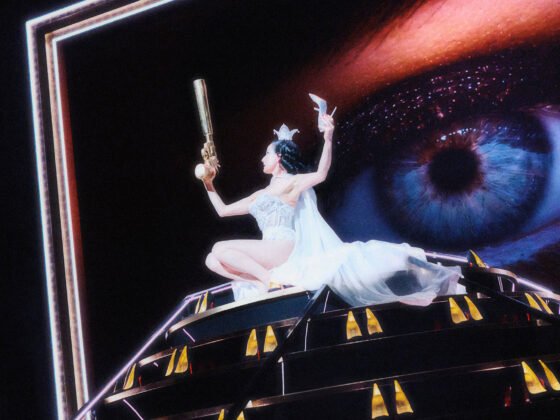
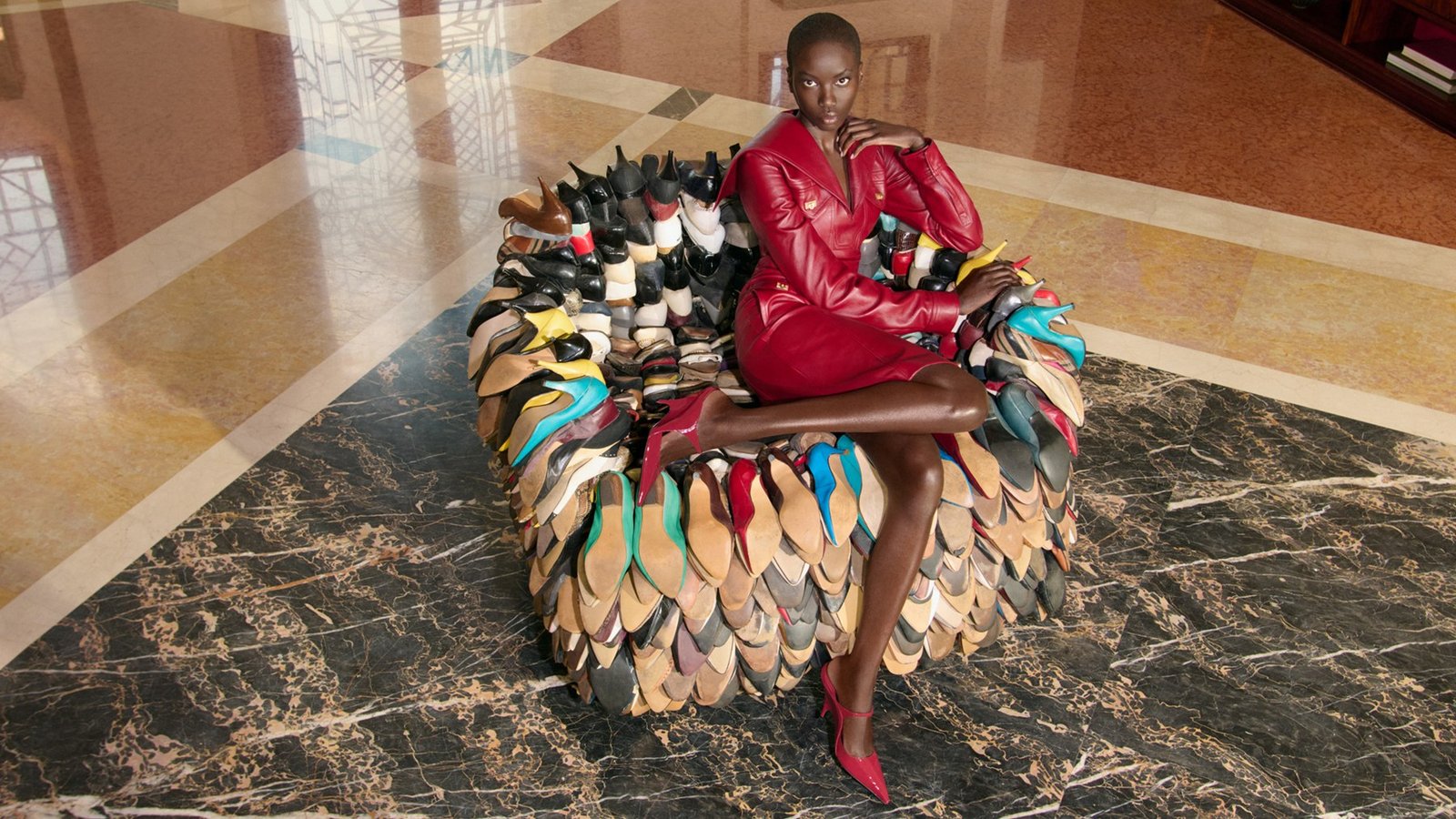
Ferragamo’s autumn–winter 2026 campaign starts with a familiar house obsession: shoes. Rather than treating them only as the finishing detail of a look, photographer Johnny Dufort brings them into the structure of the image itself. At the centre is a 1994 sculpture by contemporary artist Willie Cole, assembled from footwear and used in the campaign as a throne for Anok Yai.
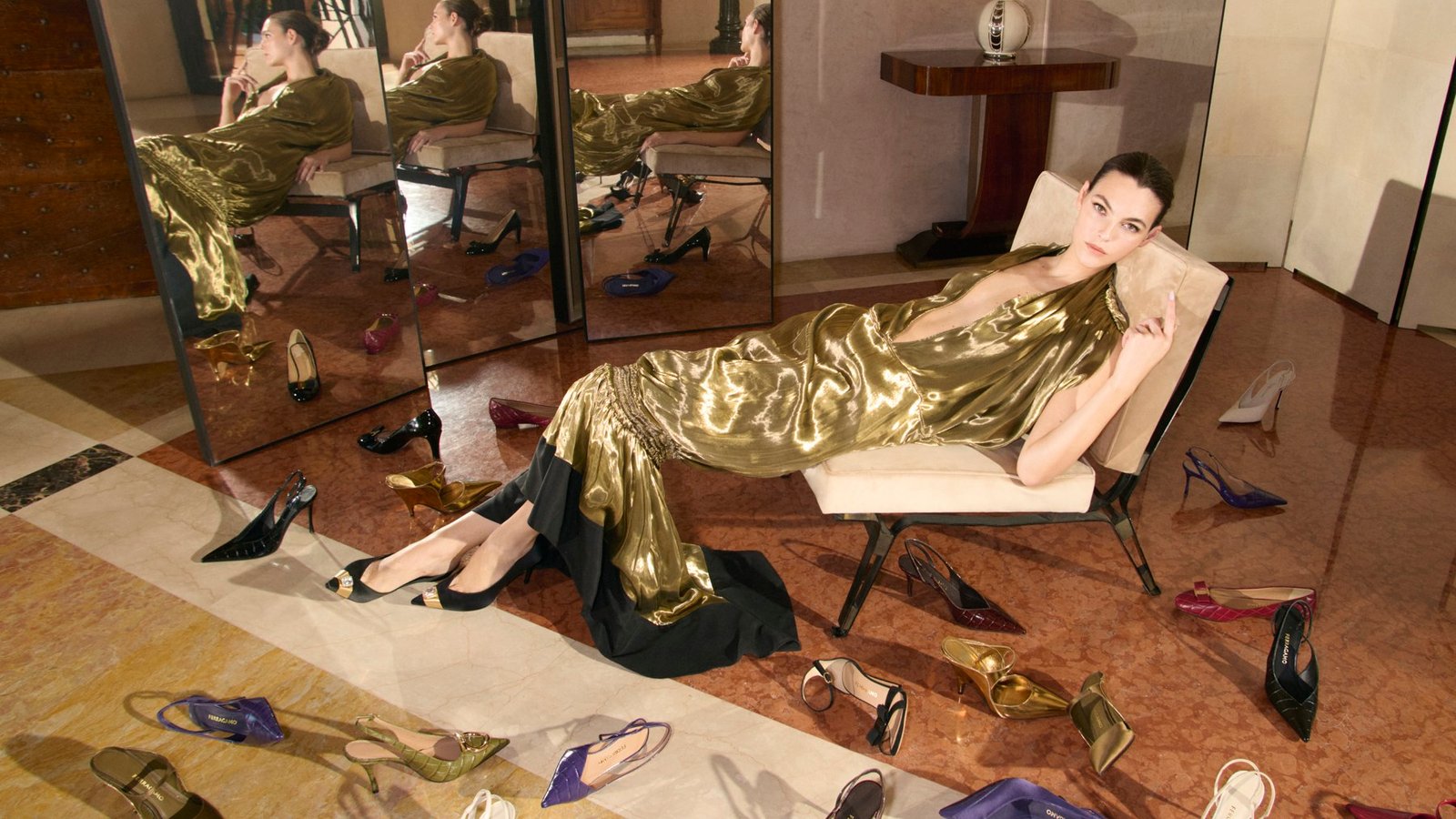
The idea connects two different kinds of transformation. A shoe is an object made for the body; in Cole’s work, multiple shoes become a sculptural form. Placed within Dufort’s photographs, that object gains another role as part of a fashion image. Its recognisable components remain visible even as their original purpose changes.
Creative director Maximilian Davis links the collaboration to the Surrealist and Dadaist references in his recent collections. His interest is in the way Cole takes an everyday object and changes its meaning without making it unfamiliar. The campaign uses that tension to revisit Ferragamo’s visual history, particularly images of actresses and cinematic figures surrounded by an abundance of shoes.
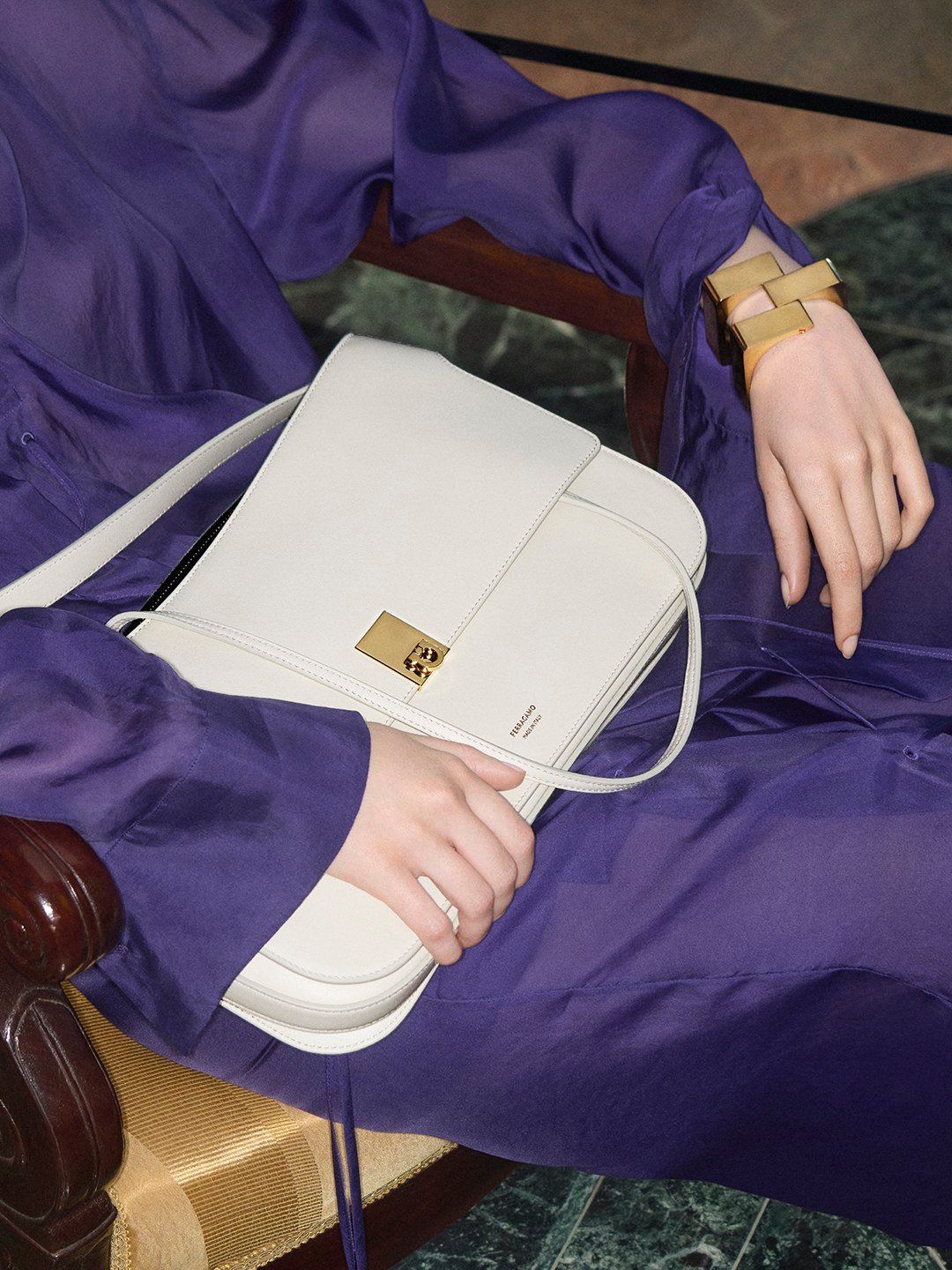
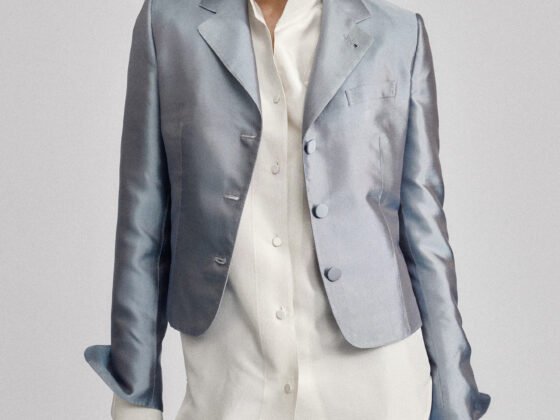
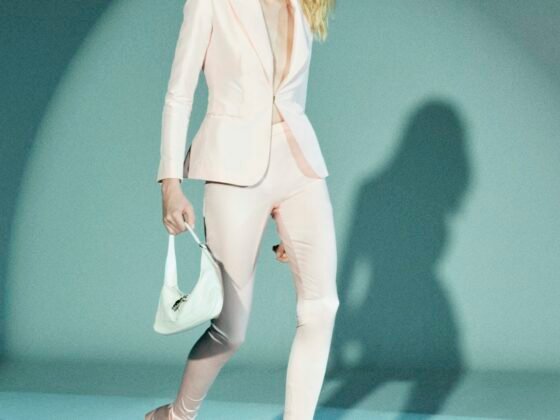
Anok Yai is joined in the campaign by Jingyu Huang, Ning Chang, Vittoria Ceretti and Thibaud Charon. Their presence places the footwear-led imagery within a broader portrait of the autumn wardrobe, while Dufort’s approach keeps the compositions from becoming straightforward product displays.
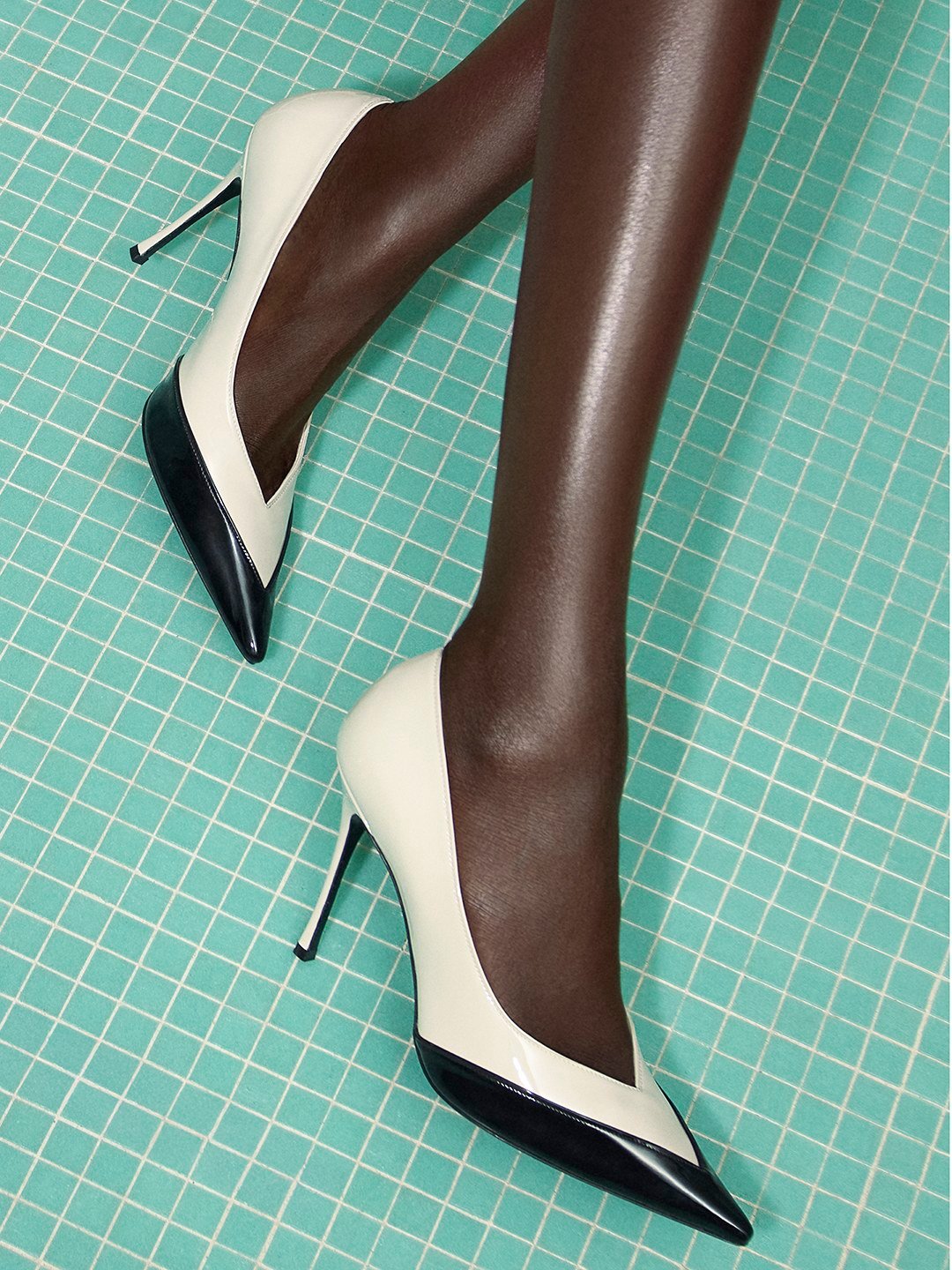
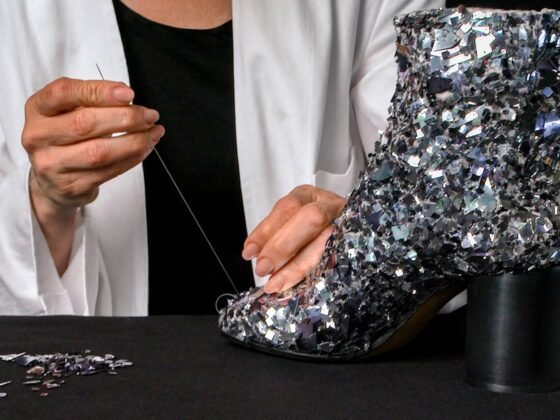
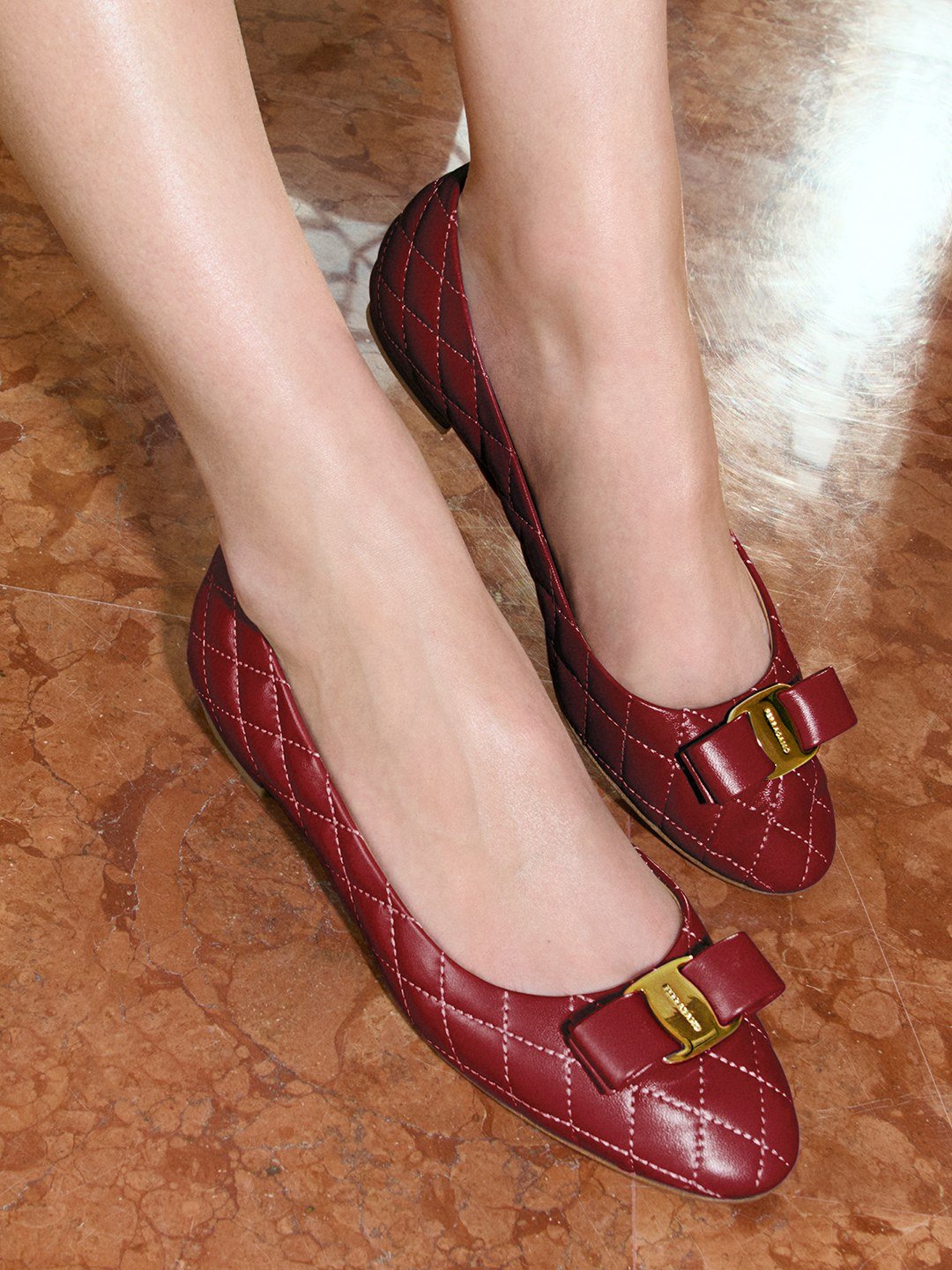
The footwear itself makes the historical conversation more specific. A graphic stiletto refers to a Salvatore Ferragamo design from 1954, while the Opanka develops the architectural shell sole introduced in 1957. A quilted Varina brings another familiar house silhouette into the present. The emphasis is on refining established ideas through sharper lines and considered construction.
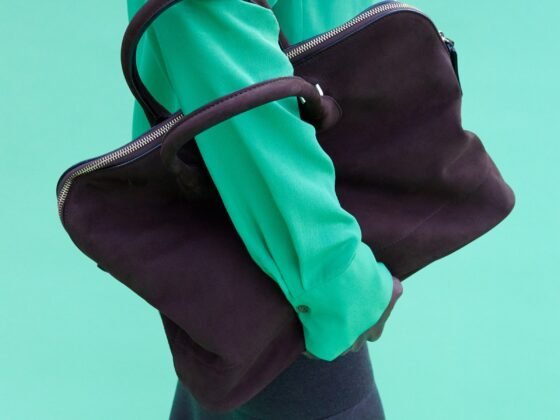
Accessories follow the same approach. The new Cara bag combines calf leather, accordion construction and prominent Gancini hardware, while the Hug takes on an elongated East-West proportion. These changes give the campaign tangible design details to set alongside its art-led imagery.
The strongest connection to the house’s history is also the simplest. Shoes remain the point from which the image grows, but the campaign changes how they are encountered: as something worn, something collected and something capable of becoming art. Cole’s sculpture gives that progression a clear physical form.