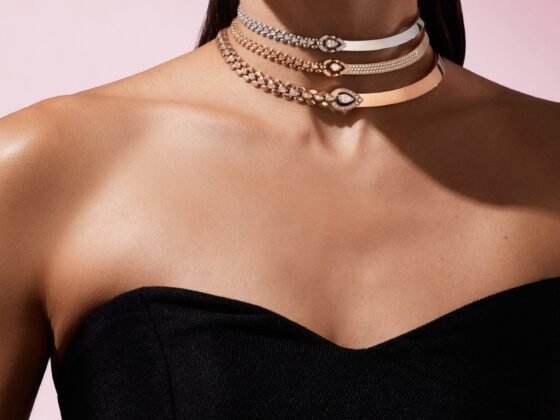
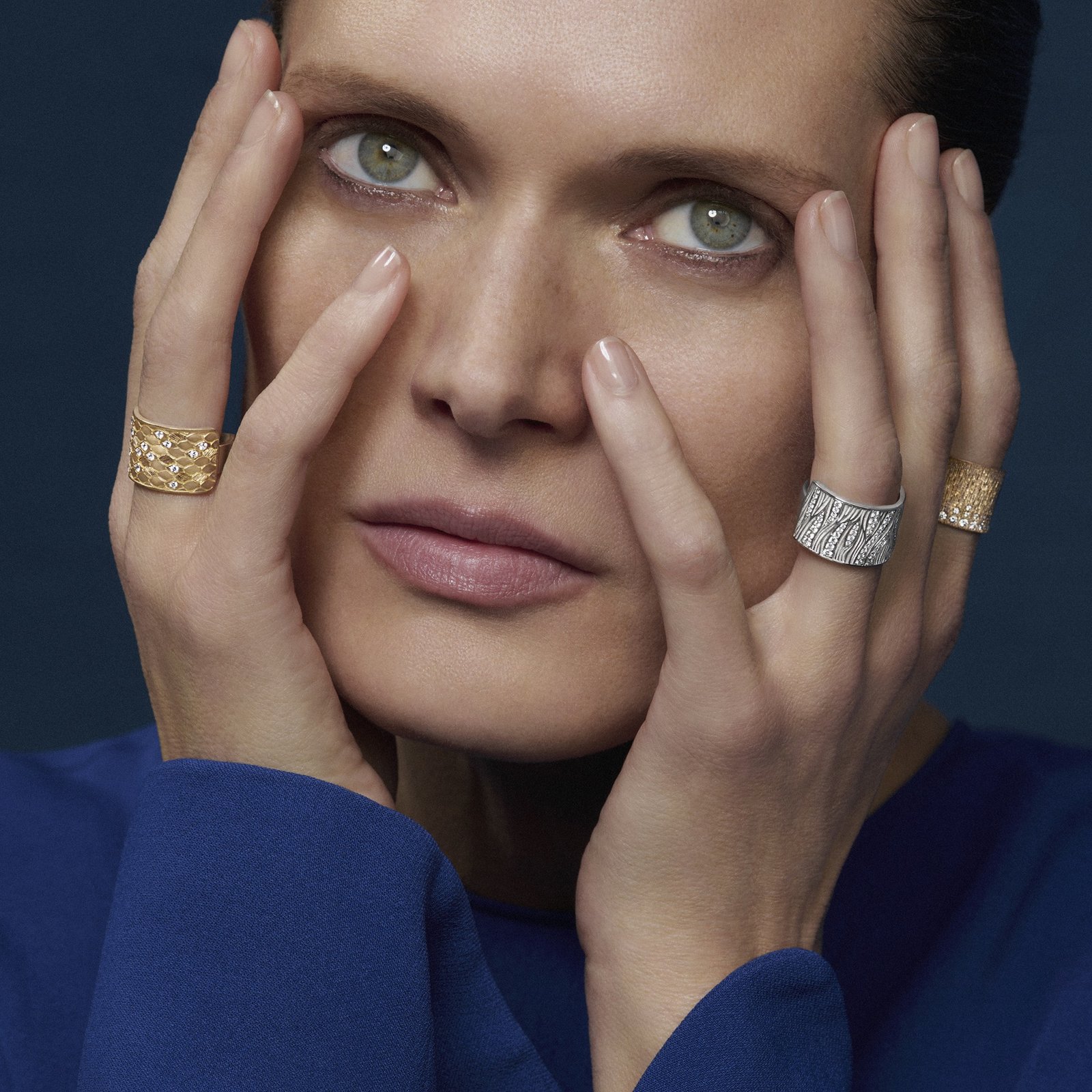
Piaget Glow makes texture the central event. The capsule comprises three sculptural rings, each in a different shade of gold and each with its own treatment of the surface. Broad, gently curved forms give the goldsmith’s work room to be seen, while diamonds interrupt the metal with small points of light. The effect is richly tactile, drawing the eye as much to the spaces between the stones as to the stones themselves.
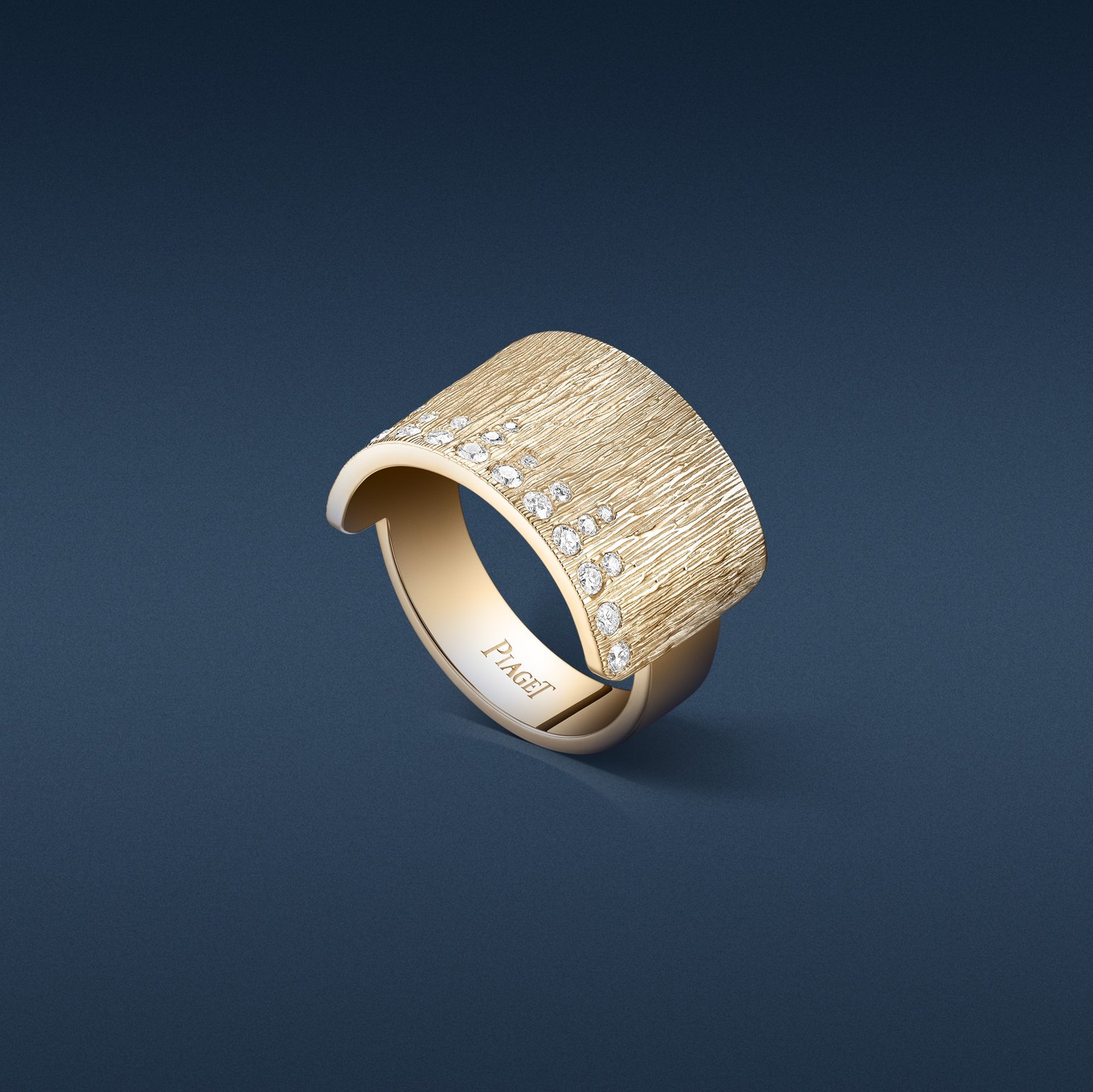
The pink-gold ring revisits Decor Palace, the engraving technique Piaget developed in 1961. Inspired by watchmaking guilloché, the finish moves away from strict geometric repetition towards a more organic grain. Twenty-five diamonds, totalling 0.30 carats, pick their way across the surface. The engraved lines give the wide band an unexpectedly soft appearance, especially as the light changes.
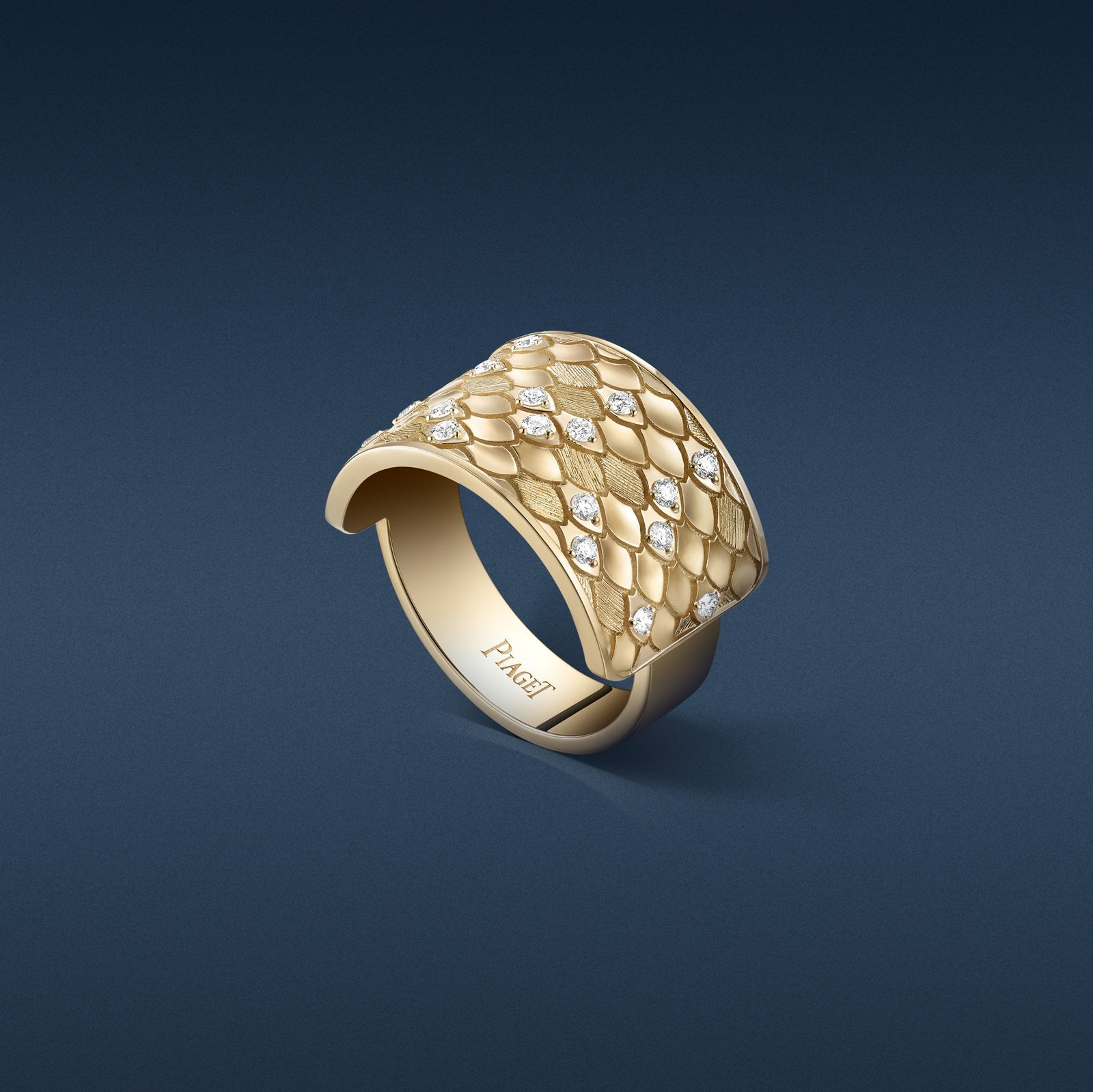
Yellow gold takes on a different rhythm. Its scale-like texture alternates rounded metal forms with 17 diamonds, creating a surface that appears almost woven. The white-gold interpretation is more fluid: asymmetrical waves pass across the ring, scattered with 70 diamonds. Seen together, the three designs show how colour and finish can shift the character of a closely related silhouette.
The collection belongs to a longer Piaget conversation about gold. In 1957, under Gérald and Valentin Piaget, the house committed to working with precious materials, a direction that helped bring its watchmaking and jewellery identities closer together. Glow also follows the Extremely Piaget collection of 2016, which explored gold, diamonds and generous proportions, including a cigar ring.
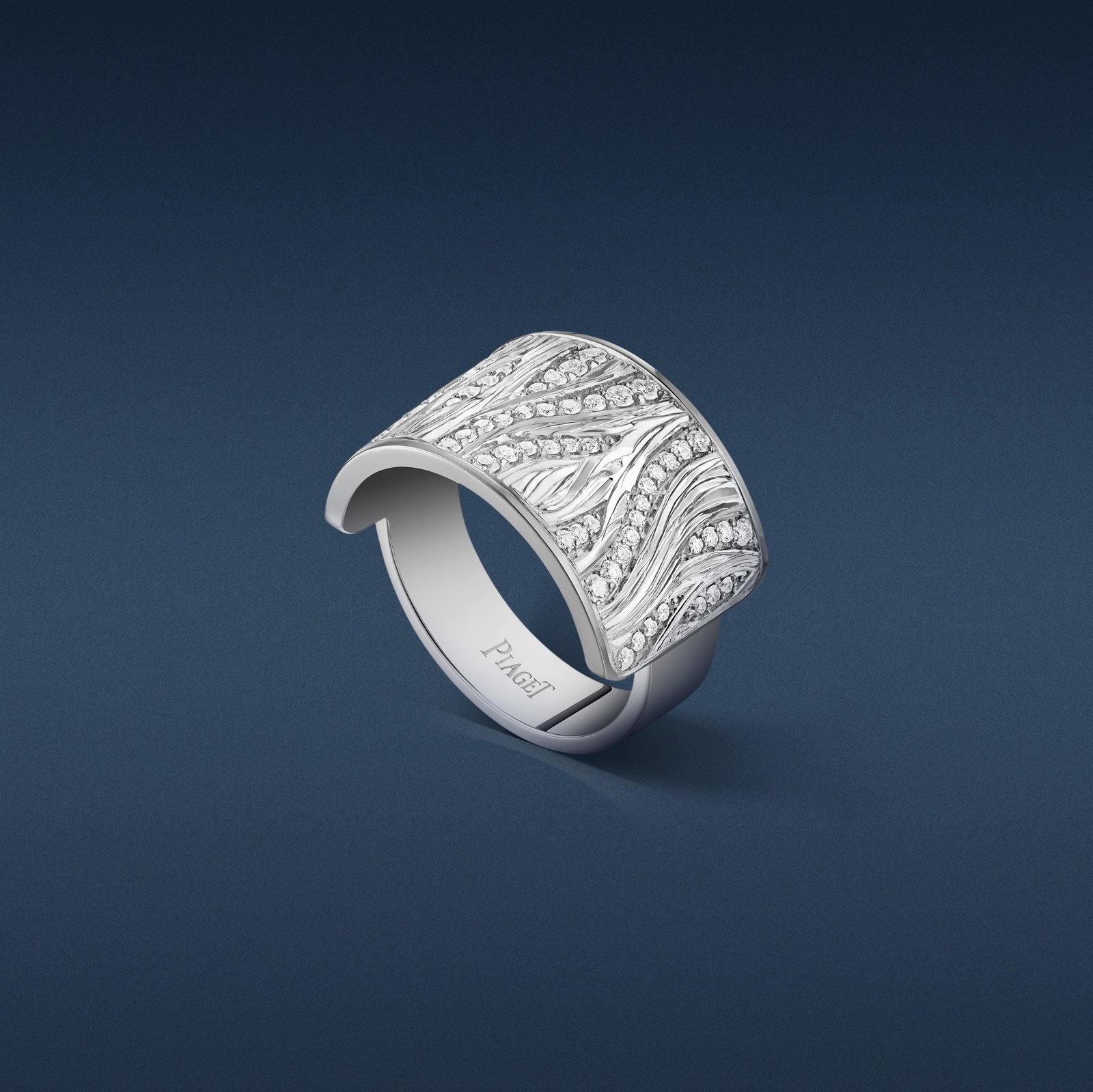
Here, that inheritance is distilled into a focused trio. The rings carry enough presence to stand alone, yet their related proportions invite combinations of colour and texture. With the gold itself doing so much of the expressive work, Glow offers a particularly clear view of the craft that has shaped Piaget’s jewellery.
Featured image: Courtesy of Piaget; photography by Chris Colls.