A jewellery house can reveal something of its character through the rooms surrounding its stones. At 23 Old Bond Street, Boodles has given that idea considerably more space. Its new London flagship, opened on 28 September 2026, occupies 13,170 square feet across seven floors, expanding on the five-floor premises it replaces.
Called the Boodles Townhouse, the address takes its cues from a private residence and the sociability of a members’ club. The family-owned jeweller has organised the interior around its collections, history and longstanding interest in craftsmanship, with rooms that invite different ways of encountering the brand.
Rooms with a story
The Raindance Bar borrows its name from the jewellery collection, a ring from which forms part of the V&A’s permanent jewellery display. The Argyle Lounge turns attention to rare pink diamonds and Boodles’ relationship with stones from the now-closed Argyle Mine.
Elsewhere, two archive rooms look back to the company’s Liverpool origins in 1798. A courtyard garden designed by Catherine Macdonald, who has also created Boodles’ Chelsea Flower Show gardens, brings greenery into the sequence of interior spaces. Together, these rooms give the house’s history and design references a physical presence beyond the display cases.
The makers behind the setting
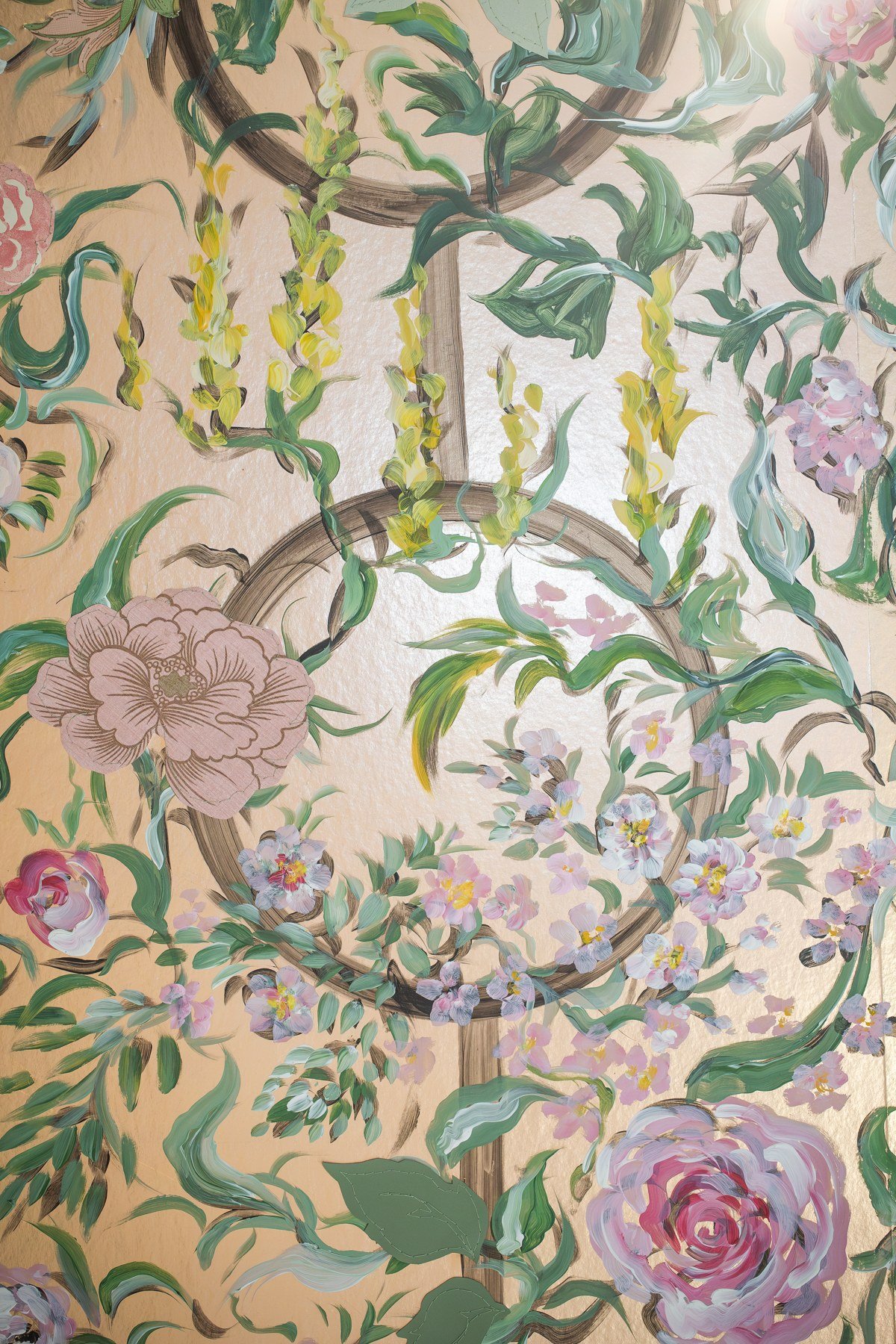
GPstudios, which has worked with Boodles for a decade, leads the design project. Its material story includes Portland stone mined in Dorset, hand-painted ceilings by Norfolk artist Claire Coles, bespoke leatherwork by London-based Aiveen Daly and decorative plasterwork by Sheffield firm Hodkin & Jones.
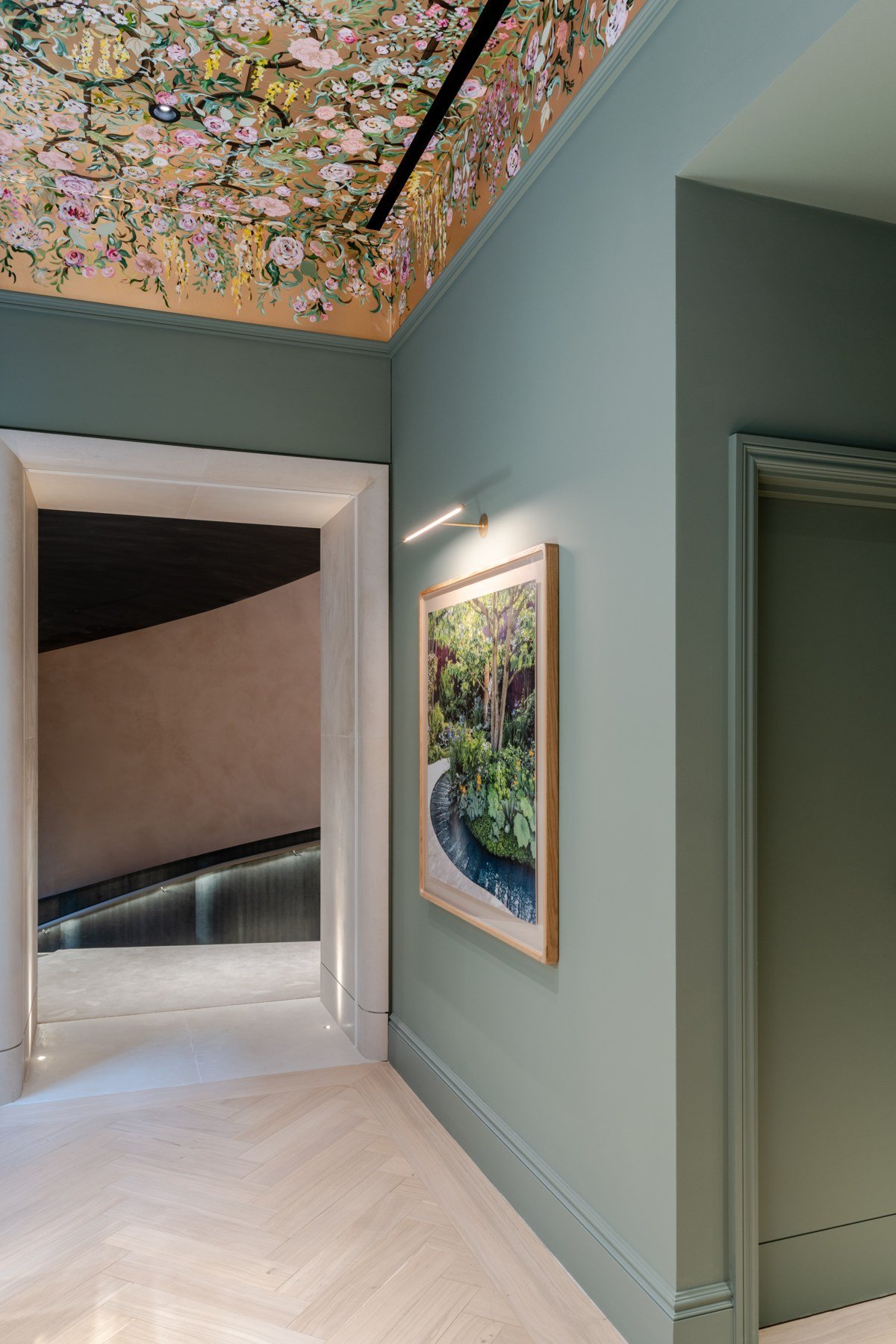
Boodles placed particular importance on involving British, independent and family-run businesses. That intention gives the interiors a relationship to the jeweller’s own structure, while allowing individual craftspeople to contribute recognisable elements of the finished rooms.
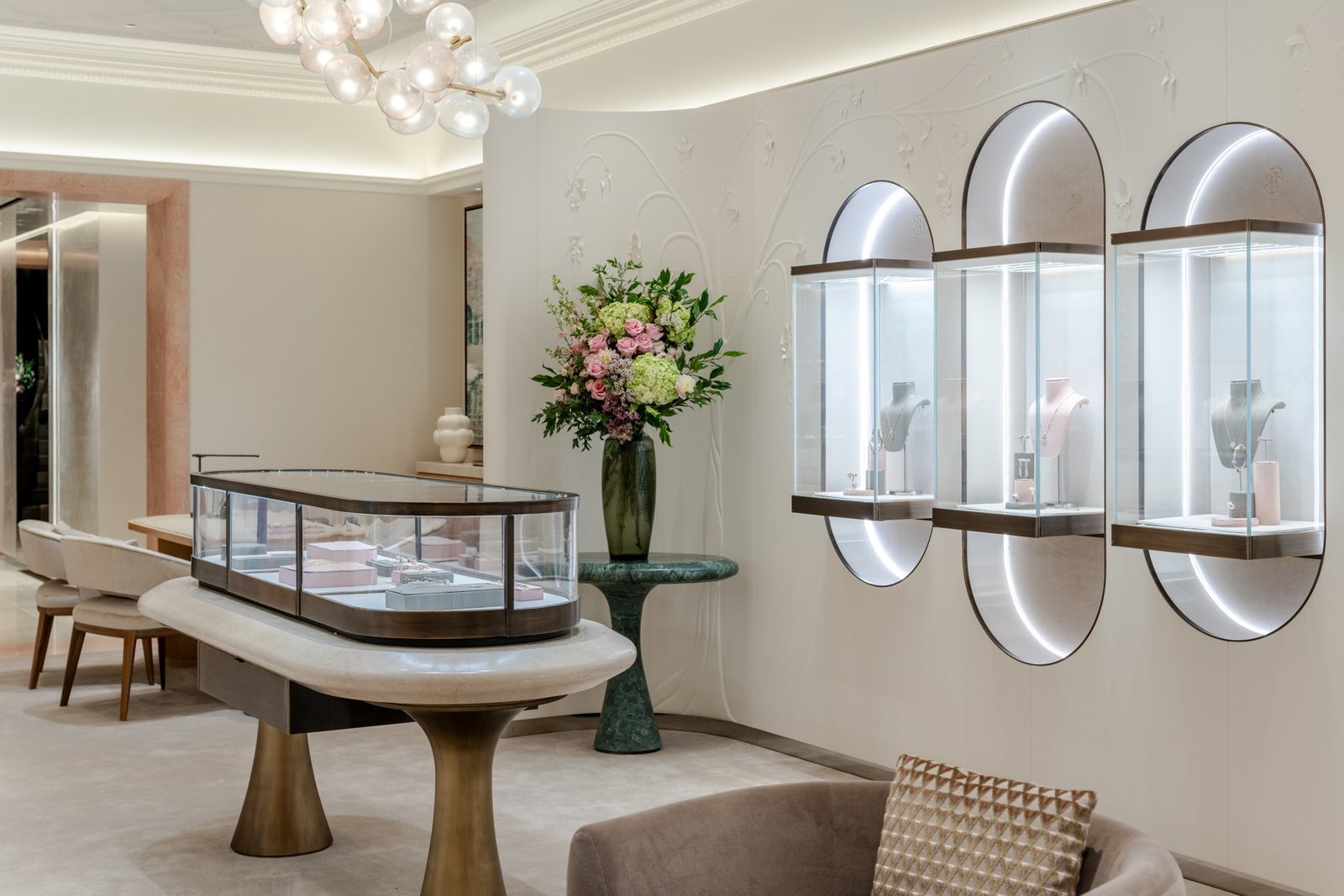
The supplied photographs show painted flowers spreading across a pale ceiling, muted green walls framing a stairway and softly lit, arched jewellery displays. Pattern is concentrated overhead and in selected details; the surrounding surfaces leave the jewellery space to be seen.
The Townhouse’s larger scale provides room for that combination of display, hospitality and history. At its most persuasive, the residential idea makes the craftsmanship of the setting part of the same conversation as the pieces it holds.
Featured image: Courtesy of Boodles.