At Roland-Garros, clay is usually something a player tries to move across. For Lacoste’s Spring/Summer 2027 collection, it became part of the wardrobe. Presented on 4 October on the Philippe Chatrier court, Pelagia Kolotouros’s latest show traced an infinity-shaped runway through an arena occupied by heaps of the red material, allowing the surface of the sport to shape its clothes.
The collection’s title, “Dress Code: No White Required,” places freedom at the centre of that exercise. Its historical starting points include Suzanne Lenglen, whose uncorseted, calf-length tennis silhouette challenged the sporting uniform of the 1920s, and René Lacoste’s pursuit of lighter, more comfortable clothing. Kolotouros carries those references into a wardrobe of softened tailoring, generous polos and fabric that appears to have lived through a match.
A softer sporting structure
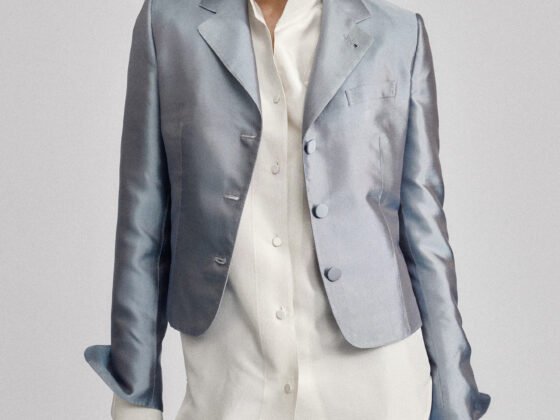
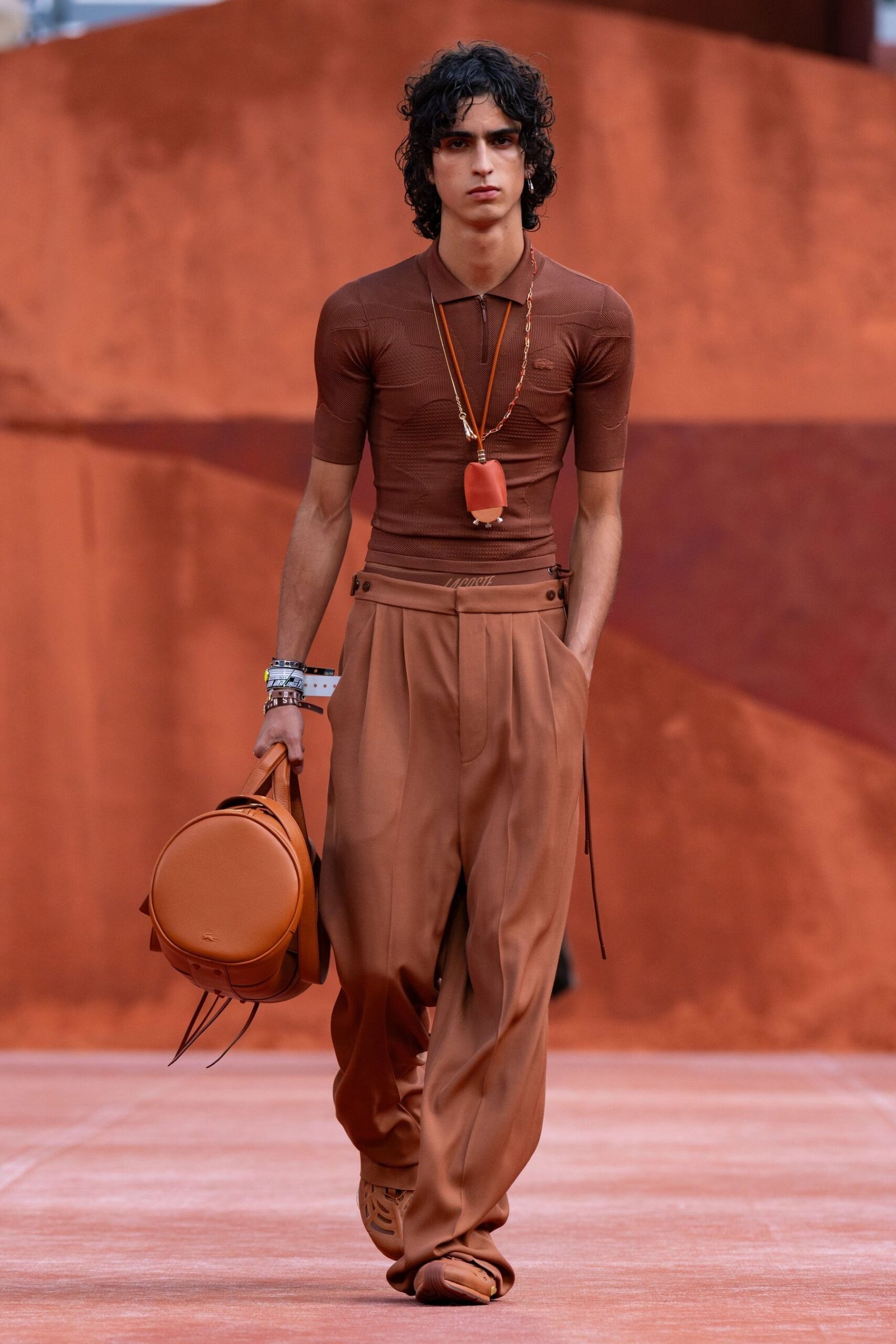
The material work gives the idea substance. Cottons are garment-dyed and enzyme-washed, tropical wools are deconstructed, and washed silks acquire a less formal character. Perforated jersey knits introduce breathability, while technical fabrics appear rolled and layered. These treatments allow familiar sportswear elements to sit beside pieces with a more fluid, dressed-up line.
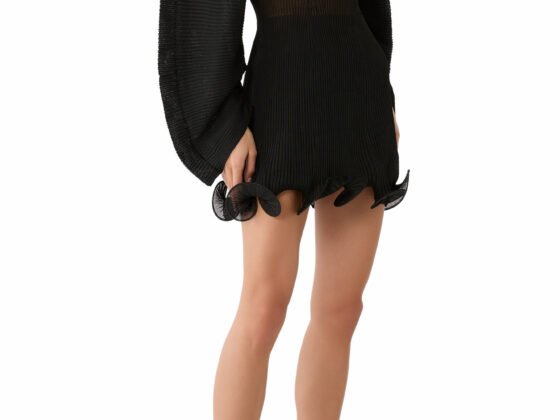
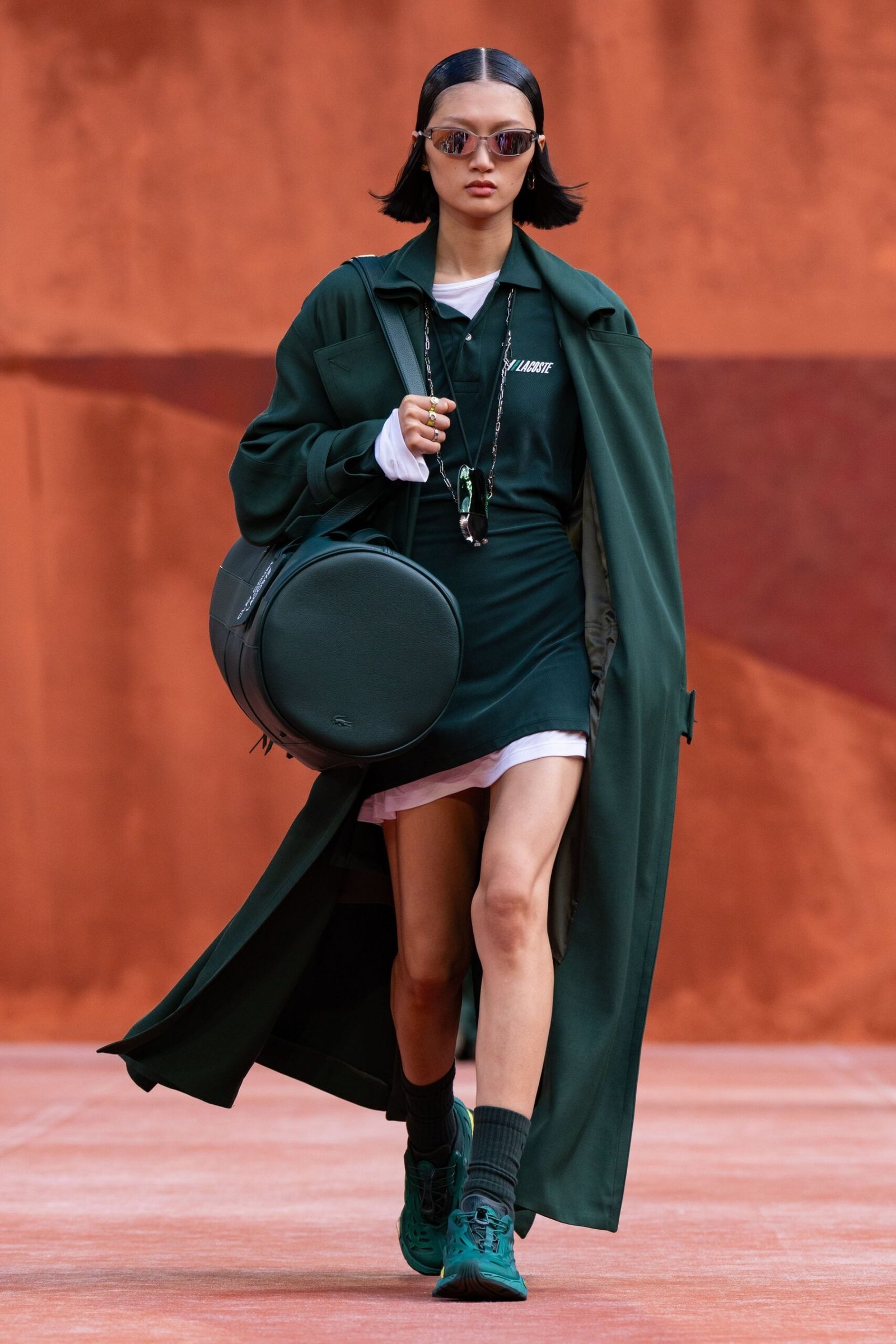
On the womenswear side, the runway images show how far that range can travel. A warm clay-coloured look gathers at the waist; deep teal layers open around the legs; an acid-yellow sleeveless dress brings a bright interruption to the earth-toned setting. Towards the end, pale looks take on the marks of the court, with reddish colour rising from their hems.
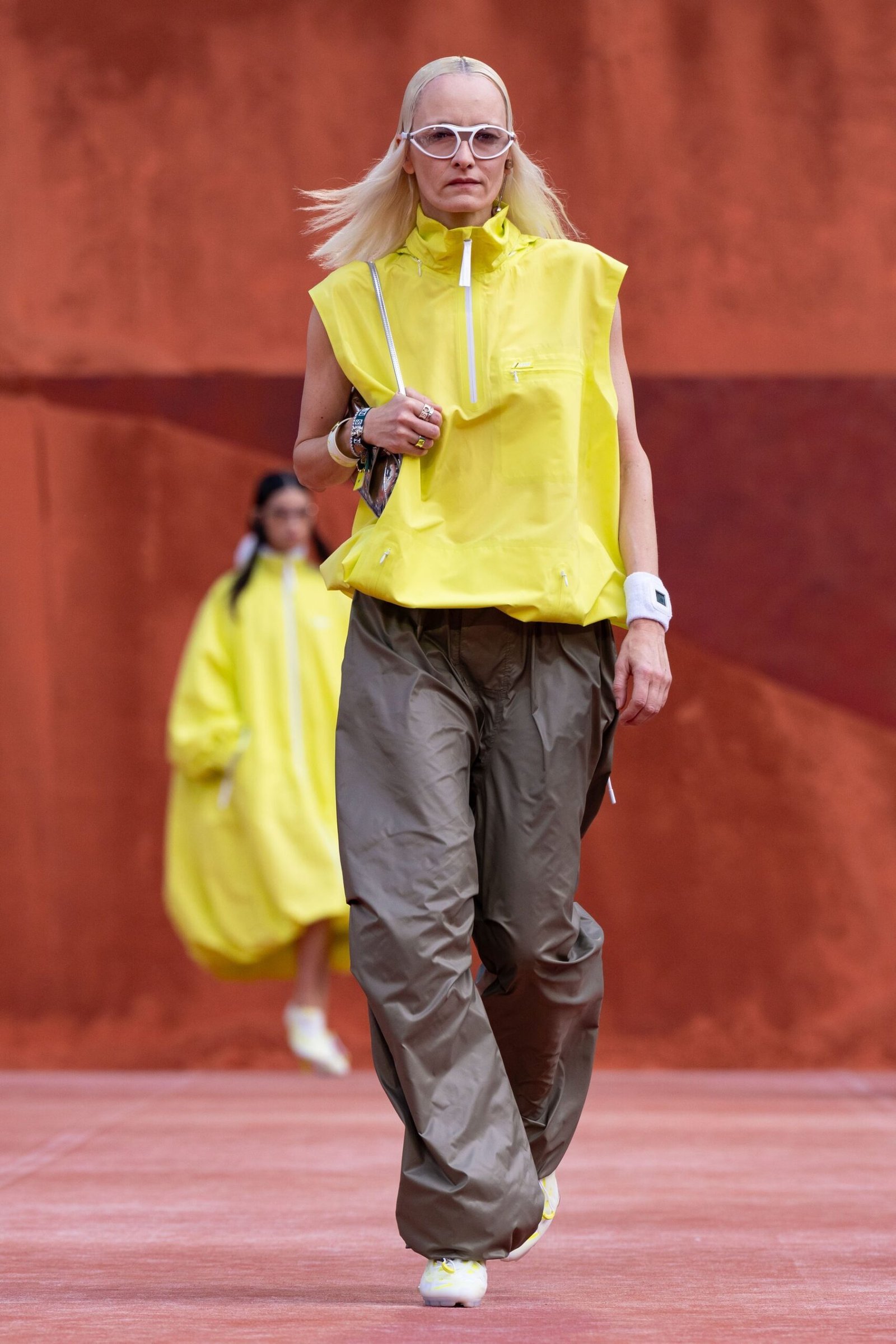
The palette follows that movement between terrain and energy. Mineral and sunbaked tones sit alongside cobalt blue, silver and acid yellow. Half-pleated skirts, oversized piqué polos and loosely belted outerwear keep the language connected to tennis, while lanyards and pendants add a more personal, collected quality.
From the net to the bag
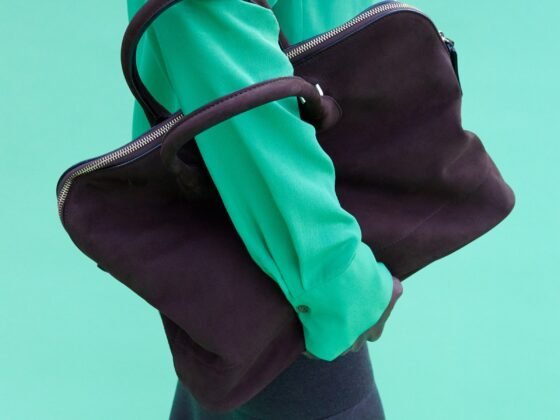
The accessories extend the same set of references. Le René, the soft bag introduced in the collection, draws on Irving Penn’s 1984 photograph of a polo shirt: its diagonal flap recalls the easy fall of a piqué collar. The press notes describe versions in white, a clay gradient and mirror-finish silver.
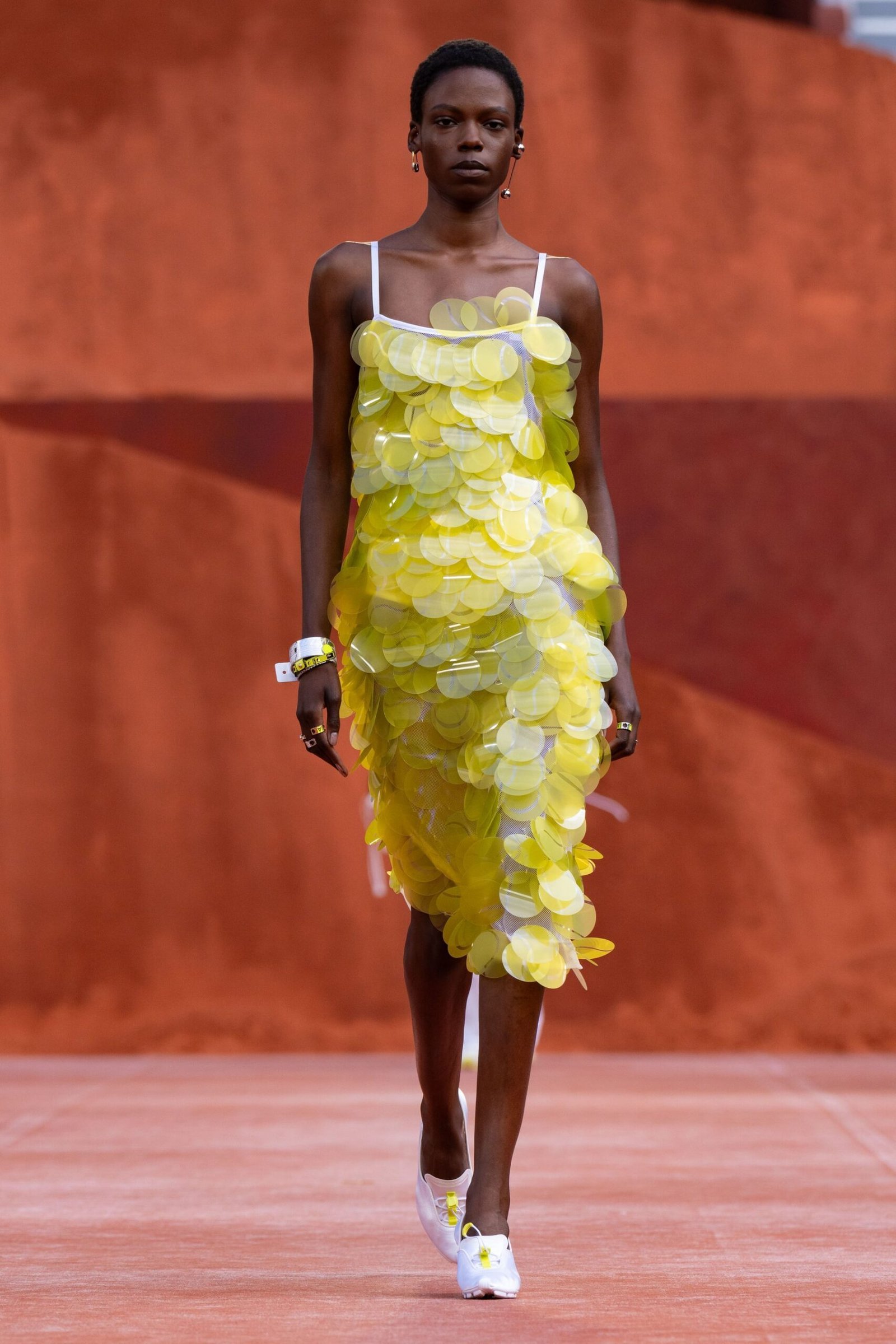
The ACE-T1 footwear takes its sculptural structure from a tennis net under tension. That idea appears across a sneaker, a tennis-ball wedge and a lace-up pump, giving the sporting reference several different attitudes.
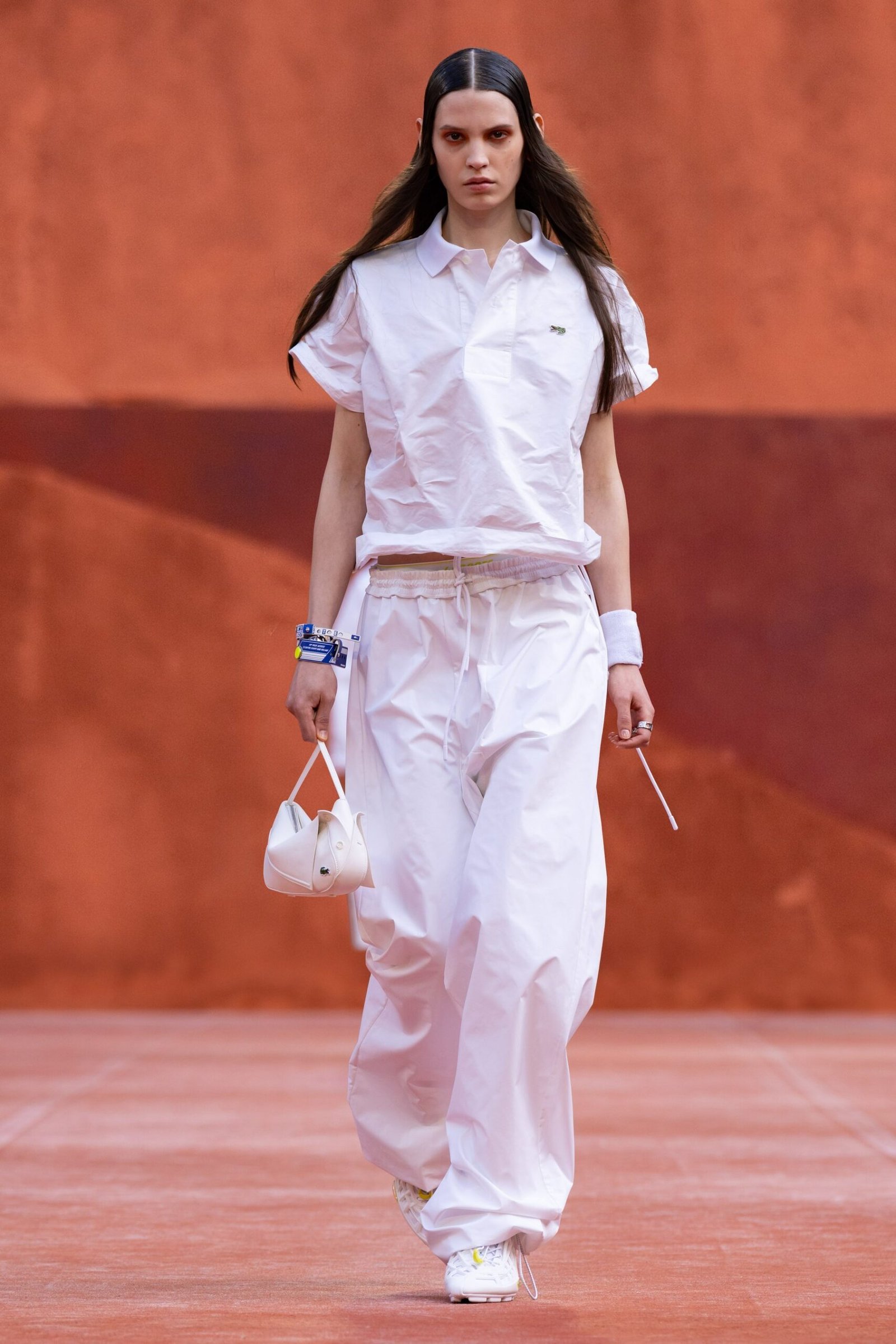
Throughout, the court leaves a visible trace. Kolotouros uses its colours, its movement and even its imperfections to loosen the uniform, creating a summer wardrobe with room for an individual way of wearing it.
Featured image: Edward Wendt / courtesy Lacoste.