The new platform brings together artistic commissions, women’s creative voices and the different ways a jewellery house can become a place for art.
A jewellery house can commission an artist to interpret an object, but it can also invite a different way of seeing. Boucheron Curation, introduced in 2026, makes that exchange its organising idea. The platform is intended to support artists across disciplines, opening the house’s creative world to perspectives that extend beyond gemstones and metal.
For creative director Claire Choisne, the relationship begins with the emotional possibilities of high jewellery. Her statement announcing Curation describes an invitation to artists to bring their own perspectives to the house’s creations. The interesting question is what happens when a shared starting point passes into another medium: an image, a sound, a textile or a living plant can change how a jewel’s idea is understood.
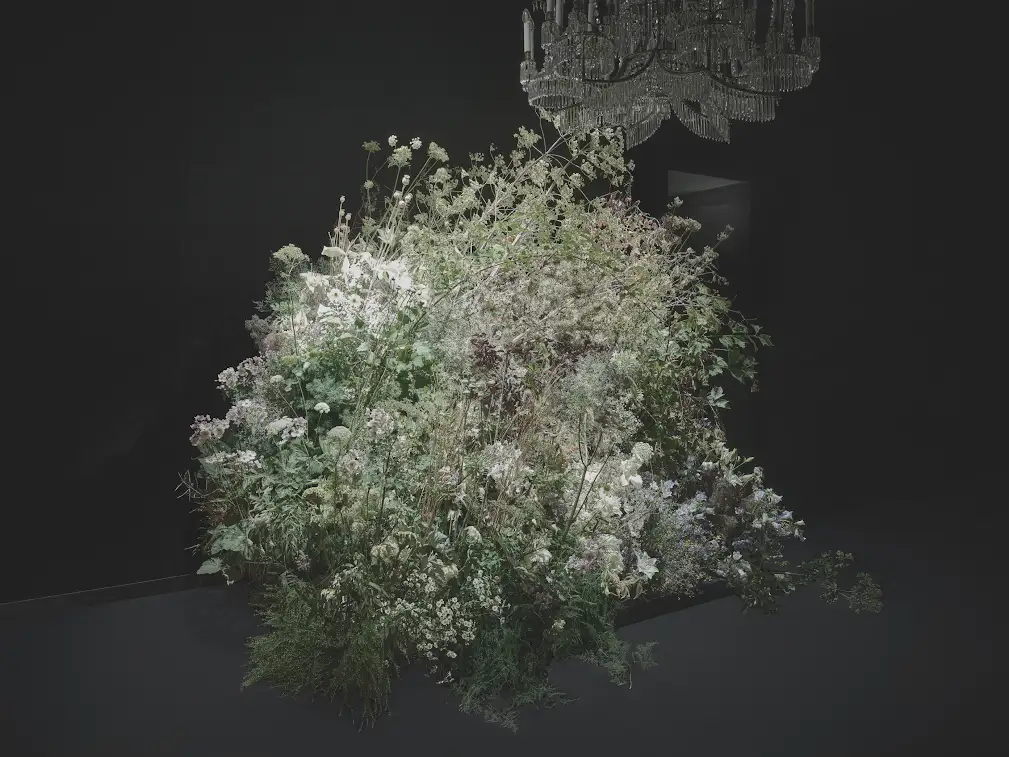
The 2025 Carte Blanche collection, Impermanence, provides a concrete example. Japanese artist Atsunobu Katagiri was invited to make an ephemeral floral installation for its presentation at 26 Place Vendôme. The installation translated the collection’s theme into living material. Beside jewellery, a medium associated with preservation and endurance, the changing flowers gave the idea of impermanence a different timescale.
That collaboration is part of the background to Curation, rather than a newly announced 2026 collection. It shows why an artist’s contribution can have a purpose beyond decorating a room: the installation and the jewels approach the same question through materials with very different lives.
Support for women artists gives this wider conversation a practical dimension. Boucheron partnered with Marie Claire and Art Paris on the Her Art Prize, launched in 2025. The 2026 winner, Elsa Sahal, received a €30,000 grant from the house, together with a promotional campaign organised by Marie Claire and Art Paris. The award connects recognition with resources for an artist’s ongoing work, an important distinction within the language of cultural patronage.
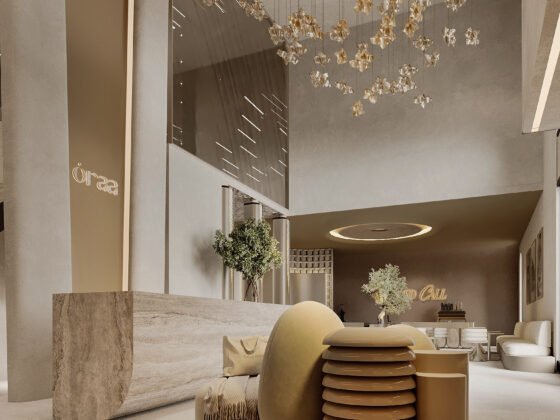
The commissions inside Boucheron’s boutiques offer another form of encounter. At Xintiandi in Shanghai, Claire Nicolet’s painted ceiling creates an imagined world of plants and animals. The same space includes work by textile artist Huihui, whose practice engages with nature and contemporary ecological questions. Each medium brings its own texture and pace to an environment usually read through the precision of its jewellery.
Curation gives these relationships a more explicit framework. Its value will lie in the space afforded to individual artistic voices, and in the work those encounters produce. For a house led creatively by Choisne, the proposition is especially revealing: high jewellery can retain its exacting craft while allowing other disciplines to question, amplify and reinterpret its ideas.