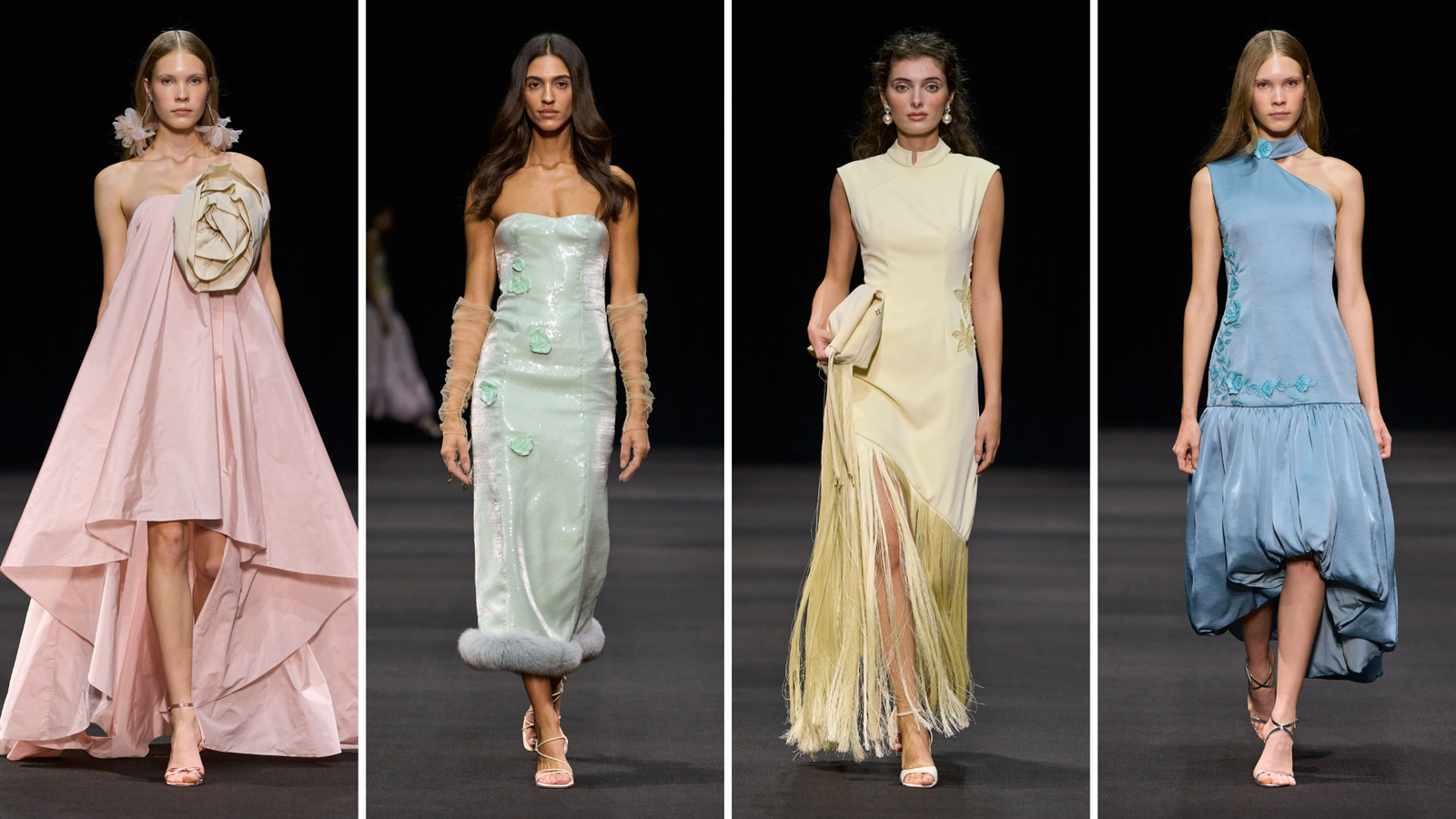
Pastel colour and changing proportions in ONORI’s collection imagery.
An oversized flower gathers a pink dress at the shoulder. Elsewhere, a pale yellow silhouette opens into long strands of fringe, while a blue dress finds its volume below the waist. In ONORI’s runway imagery, decoration changes the outline of a garment: a bloom becomes a point of emphasis; a hem becomes movement; a soft colour acquires a more assertive shape.
That visual language now has an award alongside it. Sharifa AlHashemi, the Emirati designer who founded ONORI, was named Ready-to-Wear Designer of the Year at the EMIGALA Awards on 15 November 2026. Announced by the label the following day, the recognition follows its Dubai Fashion Week runway debut and presentation of Spring/Summer 2027.
The interesting connection is between those two moments. A runway offers the space to establish a vocabulary across a succession of looks. An award brings the designer herself into sharper view. Seen together, they draw attention to a label whose identity is carried through colour, ornament and the changing relationship between fabric and the body.
Flowers with dimension
In its account of the Dubai Fashion Week presentation, ONORI describes a 32-look Pre-Spring/Summer collection inspired by memories of flower arrangements in Sardinia. The label identifies lavender, pastel yellow, ocean blue and light pink among its colours, with handcrafted appliqués, embroidery, beaded flowers and organza supplying depth. Four bridal looks completed the collection.
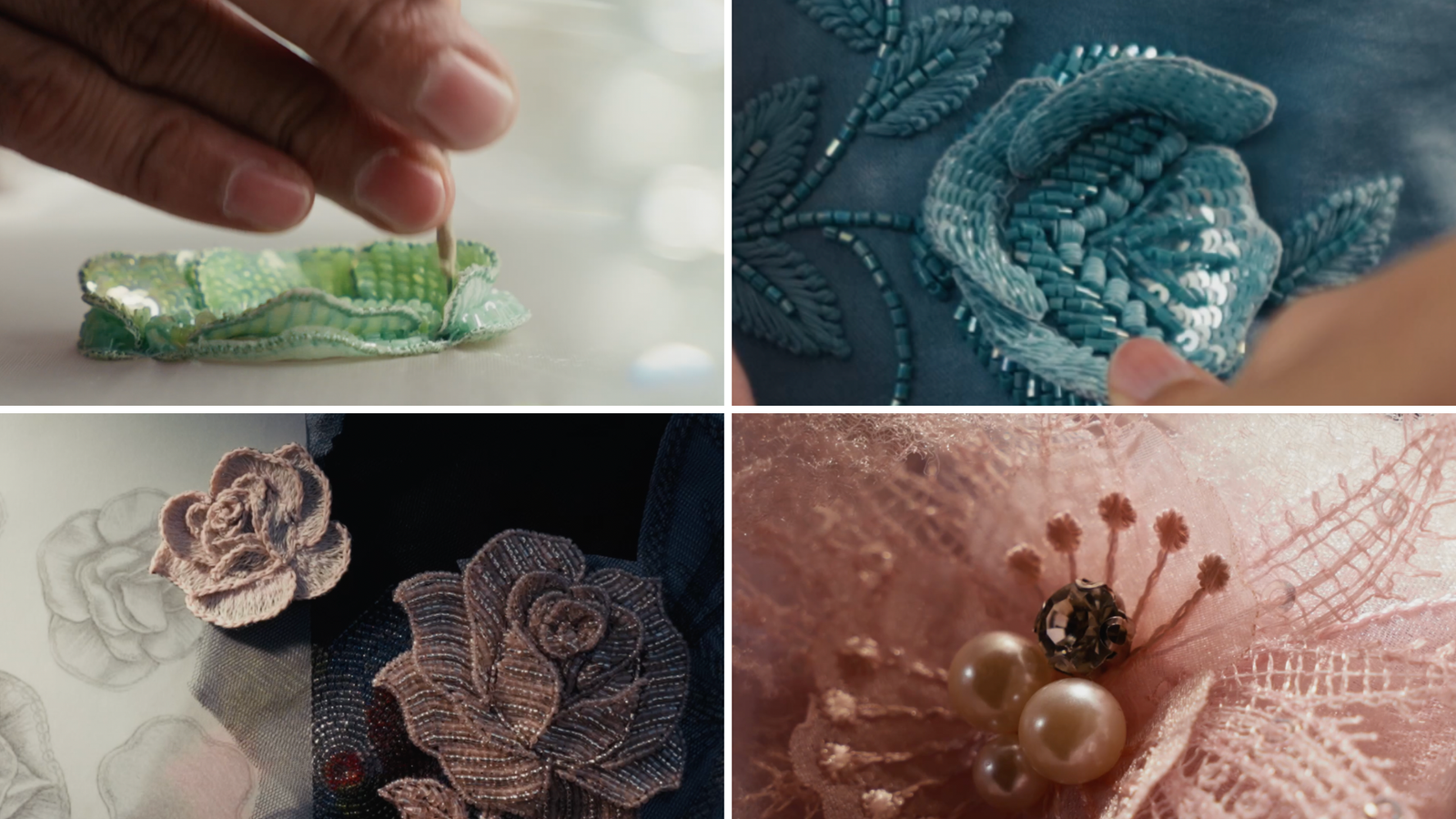
The detail images make that emphasis tangible. Translucent petals sit above the ground of the cloth; beads collect into small points of reflected light. A flower can be read first as a silhouette, then as a surface composed of smaller elements. That difference in scale gives the clothes something to reveal beyond their initial impact.
Across the looks, the palette creates continuity without requiring every garment to behave in the same way. The pink dress spreads outwards, the mint silhouette stays closer to the body, and the yellow fringe extends a comparatively restrained shape. The blue look introduces a different distribution of volume. Each offers another way to organise softness.
A quieter counterpoint
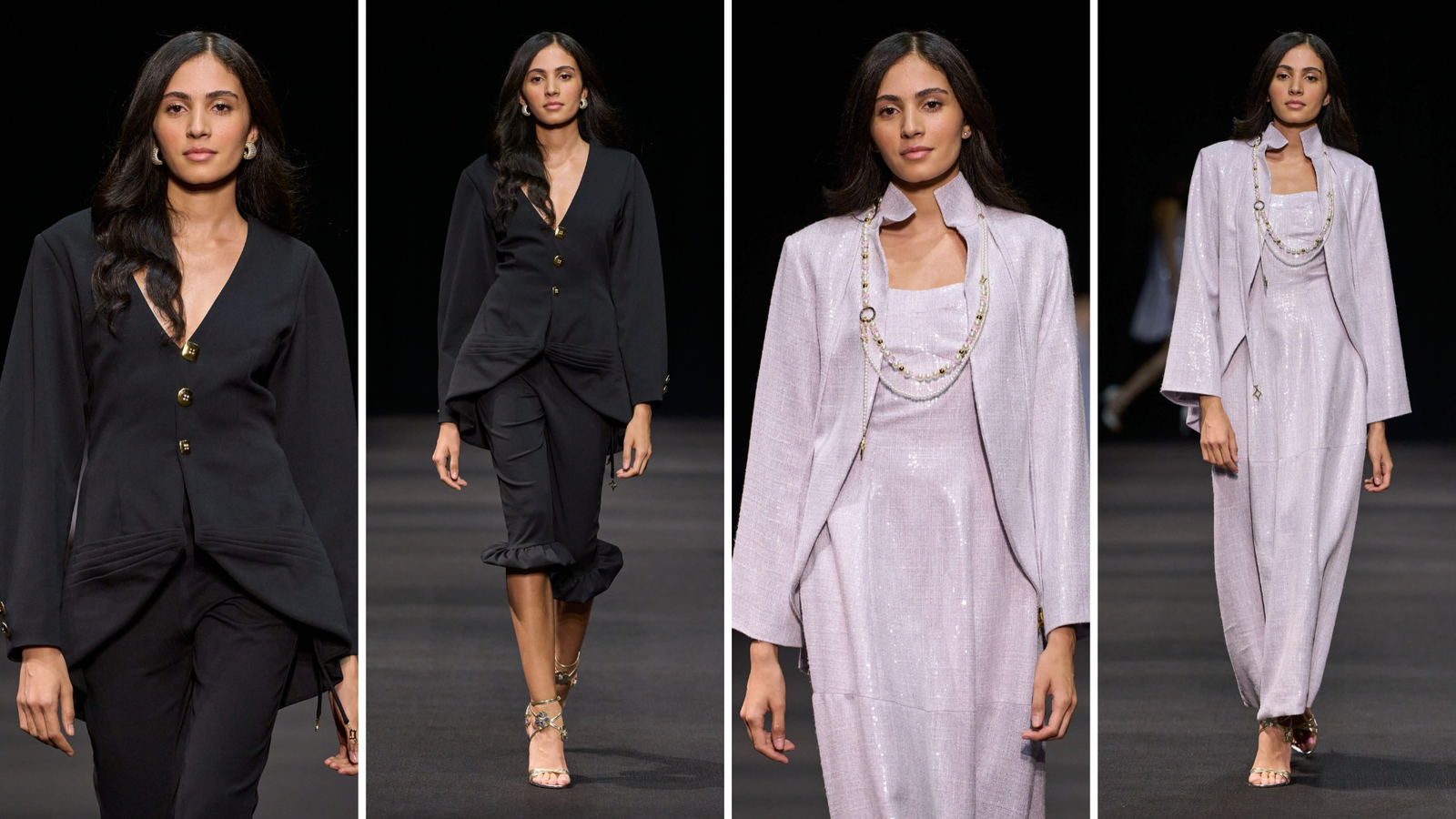
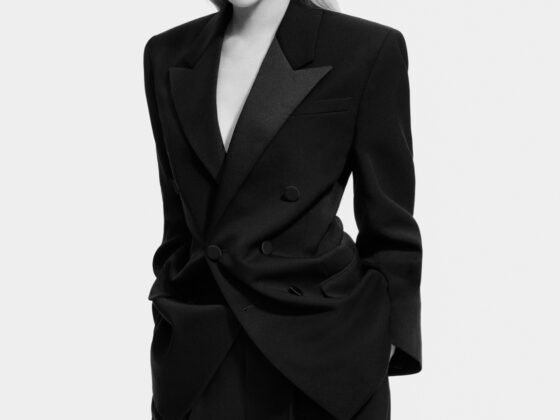
The tailoring in the accompanying imagery brings another register into the picture. Black and lavender looks hold a more contained line through jackets and trousers, with floral details remaining part of the composition. Against the dresses, these silhouettes offer a useful counterpoint: the collection’s decorative vocabulary can occupy a smaller area without disappearing.
For a ready-to-wear label, that range matters visually. A collection needs relationships between pieces, as well as individual looks that hold attention. Here, a recurring flower, a shared colour family and shifts between fluidity and structure provide those connections. They allow the viewer to follow the same idea through different proportions.
AlHashemi’s EMIGALA recognition arrives at this point in ONORI’s development: an Emirati founder with a recent runway debut and a collection through which to read her label. The award is the immediate headline. The clothes give it a richer frame—pastels with presence, flowers built in relief, and silhouettes that make room for both flourish and restraint.