
Before a red-carpet look becomes a single photograph, it exists as a succession of small decisions. Ferragamo’s construction images for Sarah Paulson’s Academy Museum Gala ensemble draw the eye to that quieter stage: a thread pulled through the shoulder, fingers adjusting the neckline, and individual gold-toned discs turning in different directions against a dark ground.
Paulson wore the look in Los Angeles on 17 October 2026, styled by Karla Welch. Ferragamo describes it as a three-piece silk-chiffon ensemble embroidered with gold yarn and embellished with crystal accents and antique-gold sequins. Those specifications explain the ingredients; the close-up photographs reveal the visual effect of putting them together.
A surface made of separate elements
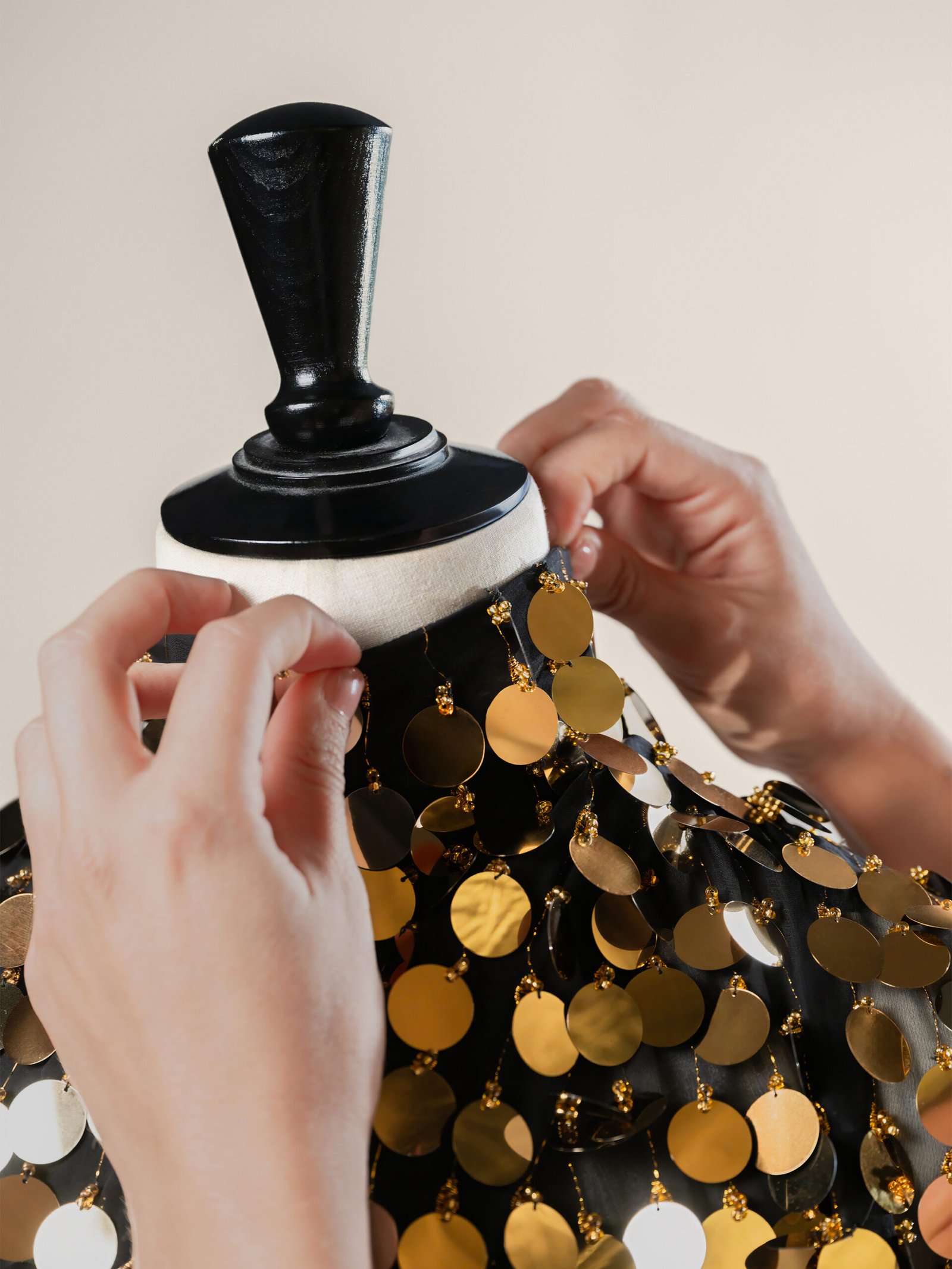
At a distance, the ensemble reads as a continuous field of gold. Closer in, that apparent solidity breaks apart. Round embellishments sit in overlapping rows, with small areas of dark fabric visible between them. Some catch the light directly, others fall into bronze or near-black shadow. The result is a surface whose richness comes from variation within a tightly controlled palette.
The shoulder photograph makes the scale of the work particularly clear. A hand holds the garment while a length of thread is drawn outward; around it, the discs remain individually legible. The image brings attention to the connection between the ornament and its support. What appears effortless in the finished look depends on many small points of attachment.
Ferragamo’s choice of silk chiffon places that ornament over a light fabric rather than a visibly rigid foundation. In the full-length mannequin image, the embellished surface follows the outline of the shoulders and sleeves before continuing into long folds below. Fabric gathers at the base, giving the overall silhouette a softer conclusion than its densely decorated upper half might suggest.

The neckline draws everything together
The second work-in-progress detail shifts the focus to the collar. Fingers hold the edge against the mannequin’s neck, with the line of the fastening and the uppermost embellishments visible at close range. It is a useful counterpoint to the shoulder view: one photograph shows a stitch in progress, while the other brings the boundary of the garment into focus.
That boundary matters visually. The high neckline gives the gold surface a definite beginning, and the dark ground keeps the circular forms distinct. The full ensemble and the close-ups ask to be read at different distances—first for the silhouette, then for the rhythm of the embellishment, and finally for the small finishing decisions at its edge.
A quieter foundation underfoot
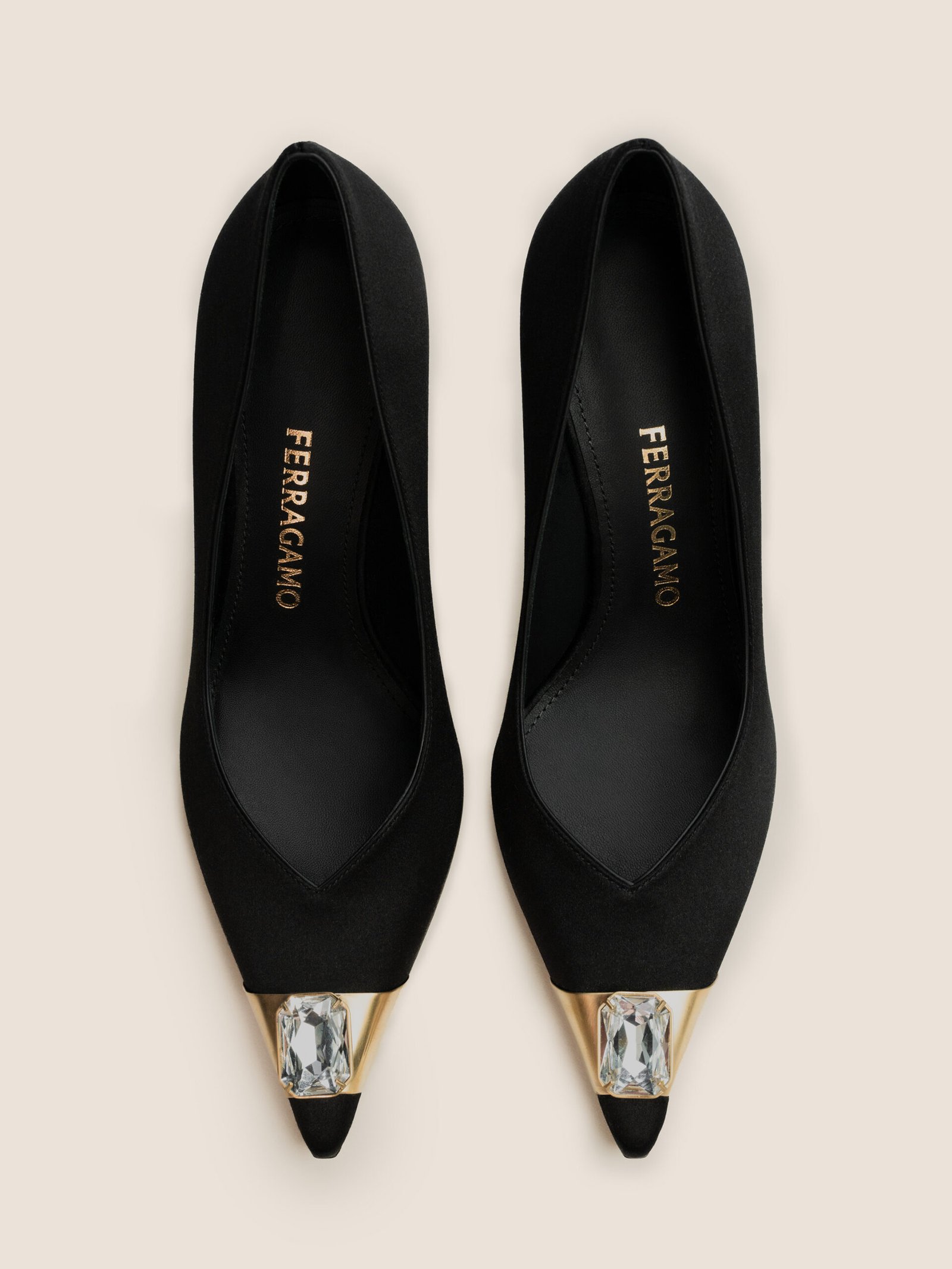
The accompanying black satin pumps reduce the palette to a dark field and a concentrated flash of ornament at each toe. Ferragamo specifies a 95 mm heel and a jewel toe detail. In the supplied overhead photograph, the rectangular ornaments sit within gold-toned settings, echoing the ensemble’s reflective surface without repeating its all-over density.
The shoes give the eye somewhere to rest. Their relatively uninterrupted satin surface contrasts with the many individual reflections above, while the toe ornaments maintain a connection to the gold embellishment. It is a small but deliberate relationship between garment and accessory, reinforced by Welch’s styling.
Seen through these four photographs, Paulson’s Ferragamo look becomes more than an account of who wore what. The story lies in the shift between a complete silhouette and the handwork visible at close range: light broken into small circles, dark chiffon glimpsed between them, and an edge carefully resolved before the garment leaves the mannequin.
Styling by Karla Welch.